How to Tell the Difference: Evaporation Line vs Positive Test

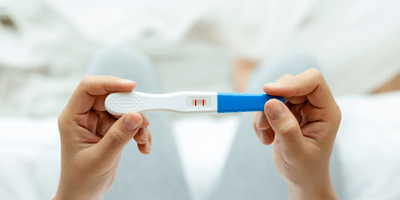
Peeing on a stick can be an emotional experience, and sometimes it can be confusing too. Are you having a hard time figuring out if your test result is a faint positive or an evaporation line? You’re not alone.
According to OBGYN Dr. Kenosha Gleaton, understanding the difference between an evaporation line and a positive pregnancy test result is key. It’s easy to get confused with home pregnancy tests. But knowing how to tell them apart can make all the difference.
Key Takeaways
- Understanding the difference between evaporation lines and positive test results is key.
- Home pregnancy tests can sometimes be confusing.
- Knowing how to interpret test results can reduce anxiety.
- A positive pregnancy test result typically shows a clear line or symbol.
- Evaporation lines are usually faint and appear after the test has dried.
Understanding Pregnancy Tests: The Basics
To get the most out of a pregnancy test, it’s key to know how they work. At-home tests look for human chorionic gonadotropin (hCG) in your urine. This hormone starts when a fertilized egg attaches to the uterine lining.
How Pregnancy Tests Detect hCG Hormone
Pregnancy tests find hCG with special antibodies. When hCG is in your urine, it sticks to these antibodies. This causes a chemical reaction that shows a positive result.
Types of Pregnancy Tests on the Market
There are many types of pregnancy tests out there, including:
- Strip tests: Simple and easy, you just dip a strip into your urine.
- Midstream tests: You hold the test in the urine stream for quick results.
- Digital tests: These show results in words, like “pregnant” or “not pregnant.”
| Test Type | Description | Sensitivity |
|---|---|---|
| Strip Tests | Basic, involves dipping into urine | Typically 25-50 mIU/mL |
| Midstream Tests | Held in urine stream, quick results | Often 20-50 mIU/mL |
| Digital Tests | Displays results in words | Varies, often around 25 mIU/mL |
The Testing Window: When to Read Results
It’s important to read the test results within 3 to 5 minutes. Reading them outside this time can give wrong results.
What Is an Evaporation Line?
Understanding what an evaporation line is is key to reading pregnancy test results right. It’s a faint mark that shows up after urine dries on the test. This can look like a positive result, causing confusion.
Definition and Physical Causes of Evaporation Lines
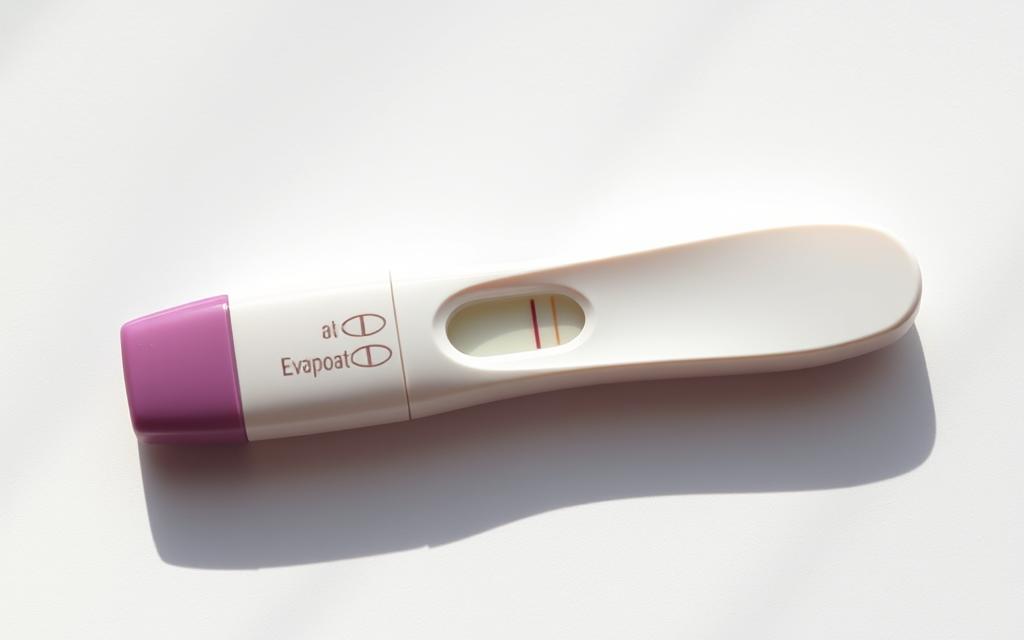
An evaporation line happens when urine dries on the test strip. This leaves a residue that might look like a positive test line. It happens when the test is exposed to air too long or when urine doesn’t soak in well.
Physical Causes: The main reason for an evaporation line is the chemical reaction when urine dries. As it dries, it can create a faint line or mark in the test window.
Visual Characteristics of Typical Evaporation Lines
Evaporation lines are usually colorless or gray. They’re not as strong as a true positive line. They might look like a faint streak or shadow in the test window.
| Characteristics | Evaporation Line | Positive Test Line |
|---|---|---|
| Color | Colorless or Gray | Typically Pink or Blue |
| Intensity | Faint | Clear and Distinct |
Timeframe: When Evaporation Lines Typically Appear
Evaporation lines show up after the test time has passed. Most tests say to read results in 3 to 5 minutes.
“If you wait too long to read the results, you may see an evaporation line, which can be misleading.”
It’s important to follow the test’s instructions. Read the results within the time given to avoid confusion from evaporation lines.
What Is a Positive Pregnancy Test Result?
A positive pregnancy test result is often the first sign of pregnancy. But what does it really mean? It usually means the pregnancy hormone, human chorionic gonadotropin (hCG), is found in your urine.
Identifying a True Positive Test Line
A true positive test line shows as a distinct line or symbol in the test window. The line’s intensity can vary, but it should be clear to see. A faint line can be a positive result, too, if you’re experiencing pregnancy symptoms.
Remember, a faint positive line means hCG levels are low. If you see a faint line, it means hCG levels are low. Try again in the morning when levels might be higher.
How Rising hCG Levels Affect Test Appearance
As hCG levels increase, the test line will get darker. The speed at which hCG levels rise can differ from woman to woman. This affects how the test looks.
- Low hCG levels: Faint test line
- Rising hCG levels: Darkening test line
- High hCG levels: Dark, distinct test line
Expected Timeline for Accurate Positive Results
The accuracy of a positive test result depends on several factors. These include the test’s sensitivity and when you take it. For the most accurate results, take a test after missing a period.
The Evaporation Line vs a Positive Test: How to Tell
When you take a pregnancy test, it’s key to know the difference between a positive result and an evaporation line. This is important to avoid confusion and understand your test results correctly.
Color Differences: Pink/Blue vs. Colorless/Gray
To tell if it’s a positive test or an evaporation line, look at the line’s color. A positive test shows a pink or blue line, similar in color to the control line. An evaporation line is usually colorless or gray, not as vibrant as the control line.
Key Observation: If the test line is as bright as the control line, it’s probably a positive result. If it’s faint and grayish, it might be an evaporation line.
Timing: Immediate Results vs. Delayed Appearance
The timing of when the line shows up is also important. A positive test line usually appears quickly, within a few minutes. Evaporation lines might only show up after the recommended time has passed.
Timing is everything: If a line appears right away, it’s likely a positive result. Lines that show up later are more likely to be evaporation lines.
Line Quality: Width, Clarity, and Consistency
The quality of the line can also give clues. A positive test line is clear and wide, just like the control line. Evaporation lines are faint, irregular, or different in width from the control line.
Using Natural Light to Better Distinguish Lines
Looking at the test under natural light can help. Sometimes, the line is clearer in natural light, making it easier to tell if it’s a positive result or an evaporation line.
Common Reasons for Misleading Evaporation Lines
It’s important to know why evaporation lines on pregnancy tests can be misleading. These lines can confuse people trying to find out if they’re pregnant. They can happen for many reasons.
Reading Tests Beyond the Recommended Time Window
One big reason for evaporation lines is reading the test too late. Most pregnancy tests have a specific time window for accurate results. If you wait too long, you might see lines that aren’t real.
Test Quality Variations Between Brands
Pregnancy tests can vary a lot in quality between brands. Some tests are more likely to show evaporation lines because of how they’re made. Picking a well-known brand can help avoid confusing results.
Environmental Factors: Humidity and Temperature
Weather conditions like humidity and temperature can mess with test results. Extreme weather or high humidity can make the test react in ways that aren’t accurate. This can lead to false or confusing results.
Chemical Interference from Medications or Urine Content
Some medicines or things in your urine can mess with the test. It’s key to know if any medicines or health issues might affect the test. This can help avoid getting misleading results.
How to Avoid Evaporation Line Confusion
To avoid confusion with evaporation lines, follow some simple steps when taking a pregnancy test. Knowing what causes these lines and how to prevent them can help you get accurate results.
Following Package Instructions Precisely
Following the package instructions carefully is key. This means knowing the right testing time, how to hold the test strip, and when to read the results. Not following these steps can lead to wrong results.
Selecting High-Quality Pregnancy Test Brands
Choosing a top-notch pregnancy test brand can also help. Good brands have sensitive tests and clear instructions. They also have fewer chances of user mistakes. Look for brands that get good reviews and are suggested by doctors.
Optimal Testing Techniques and Conditions
Testing at the right time and in the best conditions is important. Testing in the morning, when urine is most concentrated, can make results more accurate. Also, dipping the test strip in urine instead of holding it under a stream can prevent evaporation lines.
Using Timer Apps for Accurate Result Reading
Using a timer app can help you read results on time. This way, you avoid waiting too long and getting confused with an evaporation line.
| Testing Condition | Recommended Practice |
|---|---|
| Time of Day | Test first thing in the morning |
| Testing Method | Dip test strip into a cup of urine |
| Result Reading Time | Use a timer app to ensure timely reading |
Interpreting Faint Lines on Pregnancy Tests
Understanding faint lines on pregnancy tests is key. These lines might show pregnancy, but they can also confuse you.
Early Pregnancy Detection Challenges
Finding out if you’re pregnant early is tough. This is because the body’s hCG levels are very low. Tests done too soon might not catch these levels right, leading to faint or wrong results.
Signs a Faint Line Is Likely a True Positive
A faint line could mean you’re pregnant if:
- The test is taken soon after the embryo implants, when hCG is rising.
- The urine isn’t too diluted, helping the test detect hCG better.
- The test is very good at finding hCG.
Progression Testing: Tracking Line Darkness Over Days
To be sure of a faint line, try progression testing. This means testing every day or a few days to see if the line gets darker. This shows hCG levels are going up.
When to Retest After Seeing an Ambiguous Line
If you see a faint line, test again after 48 hours. This gives hCG levels time to rise if you’re pregnant, making the line clearer.
Always follow the test instructions and consider using a highly sensitive test for more accurate results.
Digital vs. Traditional Line Pregnancy Tests
It’s important to know the difference between digital and traditional line pregnancy tests. The main difference is how they show results and how well they pick up the pregnancy hormone hCG.
Eliminating Evaporation Line Concerns
Digital pregnancy tests don’t worry about evaporation lines because they show results in clear words. You’ll see “pregnant” or “not pregnant.” This makes it easier to understand the results without worry.
Sensitivity Comparison
Traditional line tests are known for being very sensitive. They can detect pregnancy early. But, digital tests have caught up, with many now just as sensitive.
Cost vs. Clarity
Digital tests are more expensive than traditional line tests. But, they’re easier to read and understand. It’s a trade-off between cost and how clear the results are.
| Test Type | Evaporation Line Concerns | Sensitivity | Cost |
|---|---|---|---|
| Digital | No | High | Higher |
| Traditional Line | Yes | High | Lower |
Choosing between digital and traditional line tests depends on what’s important to you. Do you want clear and easy results, or are you looking to save money?
Common Mistakes When Reading Pregnancy Tests
Getting the right result from a pregnancy test is key. Yet, many people make common mistakes. Knowing these can help you understand your results better.
The “Too Early/Too Late” Reading Error
One big mistake is testing too soon or too late. Testing too early might show a false negative. Testing too late can make you think an evaporation line is positive.
Misinterpreting Control Lines and Test Lines
Another common error is getting the control and test lines mixed up. The control line is darker and shows the test is working. The test line, in the test window, means you’re pregnant if it shows up on time.
Testing with Diluted Urine or at Suboptimal Times
Using diluted urine, often from drinking too much water, can mess up results. It’s best to test with the first urine of the day. This is when hCG levels are highest.
The Impact of Lighting on Test Interpretation
Lighting conditions can also affect how you see test results. Too dim or too bright light can make lines hard to see. Always read the test in normal indoor light.
| Common Mistake | Consequence | Prevention |
|---|---|---|
| Reading too early or too late | False negative or evaporation line misinterpretation | Follow the test instructions for the recommended reading time |
| Misinterpreting control and test lines | Incorrect result interpretation | Understand the difference between control and test lines |
| Testing with diluted urine | Inaccurate results | Test with the first morning urine |
When to Seek Medical Confirmation
It’s important to get a medical check if home tests don’t show clear results or match your symptoms. Home pregnancy tests are usually accurate. But, there are times when you need a doctor’s help to confirm.
After Multiple Inconclusive Home Tests
If you’ve done many home tests and they’re all unclear, see a doctor. They can use blood tests to check hCG levels in your blood. This gives a more precise result.
When Pregnancy Symptoms Contradict Test Results
Feeling sick in the morning, tired, or missing periods but getting a negative test? You should get a medical check. A doctor can look at your symptoms and do tests to see if you’re pregnant.
Benefits of Blood Tests and Professional Evaluation
Blood tests can find pregnancy earlier than home tests. A doctor can also give advice based on your health and past medical history.
| Test Type | Sensitivity | Accuracy |
|---|---|---|
| Home Pregnancy Tests | Varied | Generally High |
| Blood Tests | High | Very High |
Conclusion
Knowing how to read pregnancy test results is key to understanding if you’re pregnant. It can be tricky to tell if a line is just an evaporation line or a real positive result.
To get clear results, always follow the test instructions carefully. Be aware of things that might make the results seem wrong. If you’re not sure, try another test a day or two later.
This extra time lets the hCG levels in your urine increase. If you’re pregnant, this makes the test line clearer. Waiting and retesting can help you know for sure if you’re pregnant.
If the line gets darker and clearer on the next test, it’s probably a positive result. But, if you’re unsure, talking to a healthcare professional is always a good idea.