First Solid Foods for Baby: What to Start With
As your baby grows, their nutritional needs change. The American Academy of Pediatrics says it’s time to introduce solid foods around six months. This is in addition to breast milk or infant formula.
Starting baby food introduction is both exciting and daunting for new parents. It’s key to start with the right foods for a smooth transition.
The Dietary Guidelines for Americans say introducing a variety of foods is important. It helps your baby develop healthy eating habits. This is a time of discovery for both your baby and you as you explore starting solids for infants.
Key Takeaways
- Introduce solid foods around six months.
- Start with simple, single-ingredient purees.
- Gradually increase variety to ensure a balanced diet.
- Monitor your baby’s reactions to new foods.
- Consult with your pediatrician for personalized advice.
When Is Your Baby Ready for Solid Foods?
Starting solid foods is a big step. But how do you know when your baby is ready? Every baby grows at their own pace. Readiness for solid foods depends on their development.
Developmental Signs of Readiness
Babies show signs when they’re ready for solid foods. These include:
- Sitting up alone or with support
- Controlling their head and neck
- Showing interest in food
It’s essential to look for these signs as they show your baby is ready for solid foods.
Age Recommendations from Pediatricians
Pediatricians say to start solid foods between 4 to 6 months. But the American Academy of Pediatrics says babies are usually ready around 6 months.
| Age | Developmental Milestones |
|---|---|
| 4-6 months | Starts to show interest in food, can sit up with support |
| 6 months | Can sit up unassisted, shows good head and neck control |
Signs Your Baby Isn’t Ready Yet
If your baby shows these signs, they might not be ready for solid foods:
- Pushing food out with their tongue
- Not showing interest in food
- Having difficulty sitting up
Knowing these signs helps you know when to start your baby on solid foods. This ensures a smooth transition.
First Solid Foods for Baby: What to Start With
Starting solid foods is a big step for your baby. It’s important to pick the right foods for a healthy start. You want to make sure your baby’s first foods are both nutritious and safe.
Single-Grain Cereals: The Traditional First Food
Single-grain cereals are a top pick for first foods. They’re full of nutrients and have a low risk of allergies. Mixing them with breast milk or formula helps your baby get used to eating solids. Rice cereal is a favorite, but oatmeal and barley are good options too.
Vegetable Purees for Early Introduction
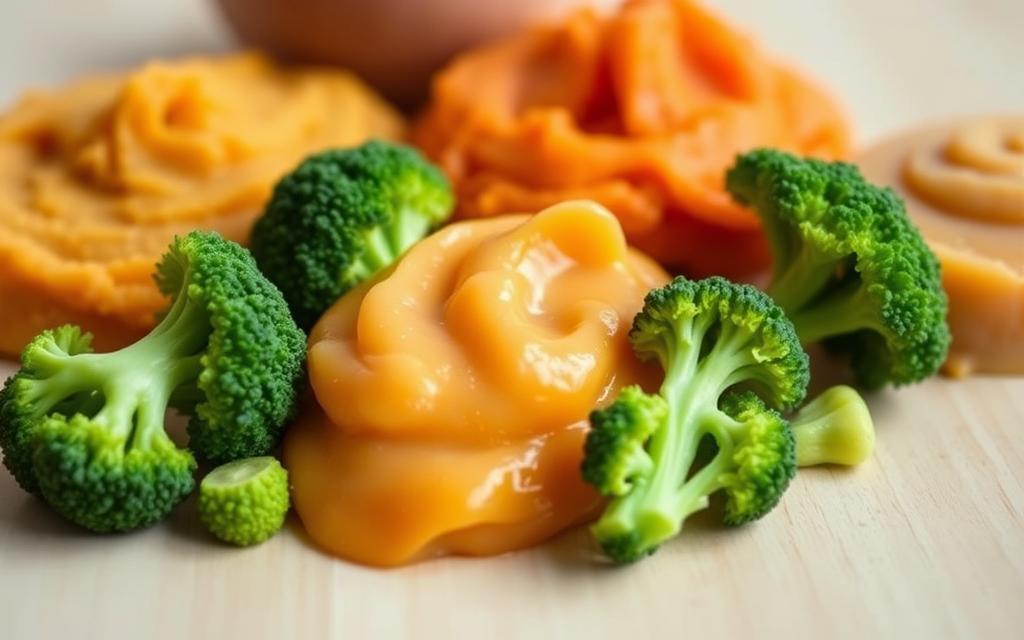
Vegetable purees are great for starting early. They let you watch for any signs of allergy or intolerance. Green peas, carrots, and sweet potatoes are tasty and safe for most babies.
Fruit Options for Beginners
Fruits are a good next step after veggies. They add a sweet taste that babies love. Start with apples, bananas, and pears. But, avoid fruits with pits or seeds and cook apples to prevent choking.
Foods to Avoid in the First Year
It’s just as important to know what not to give your baby. Stay away from nuts, shellfish, and dairy until your doctor says it’s okay. Also, skip foods that can choke, like whole nuts or raw carrots. And don’t give honey in the first year because of botulism risks.
Every baby is different, so what works for one might not work for another. Always talk to your pediatrician before changing your baby’s diet.
“The introduction to solid foods is not just about nutrition; it’s also about creating a positive relationship with food that can last a lifetime.”
Best First Foods by Age
Babies grow fast and need different foods as they get older. It’s important to give them foods that match their age. This helps them grow and develop well.
6-8 Months: Ideal Starter Foods
At 6-8 months, babies can start with simple purees. Some great first foods are:
- Single-grain cereals like rice or oatmeal
- Mashed vegetables such as sweet potatoes or carrots
- Fruit purees like apples or bananas
These foods are easy on their stomach and full of important nutrients.
8-10 Months: Expanding the Menu
By 8-10 months, babies can try more foods. You can add:
- Protein sources like chicken or lentils
- A wider range of fruits and vegetables
- Soft, mashed foods to help with texture development
This variety ensures they get a wide range of nutrients.
10-12 Months: Transitioning to Table Foods
At 10-12 months, babies can start eating like grown-ups. They can have:
- Soft, cut-up pieces of fruits and vegetables
- Small pieces of cooked meat or poultry
- Whole-grain crackers or soft bread
Make sure to cut food into small pieces to avoid choking.
Preparing Baby’s First Foods at Home
Preparing your baby’s first foods at home is rewarding. It lets you choose the ingredients and ensure nutrition. This way, your baby gets a great start and tries new tastes and textures.
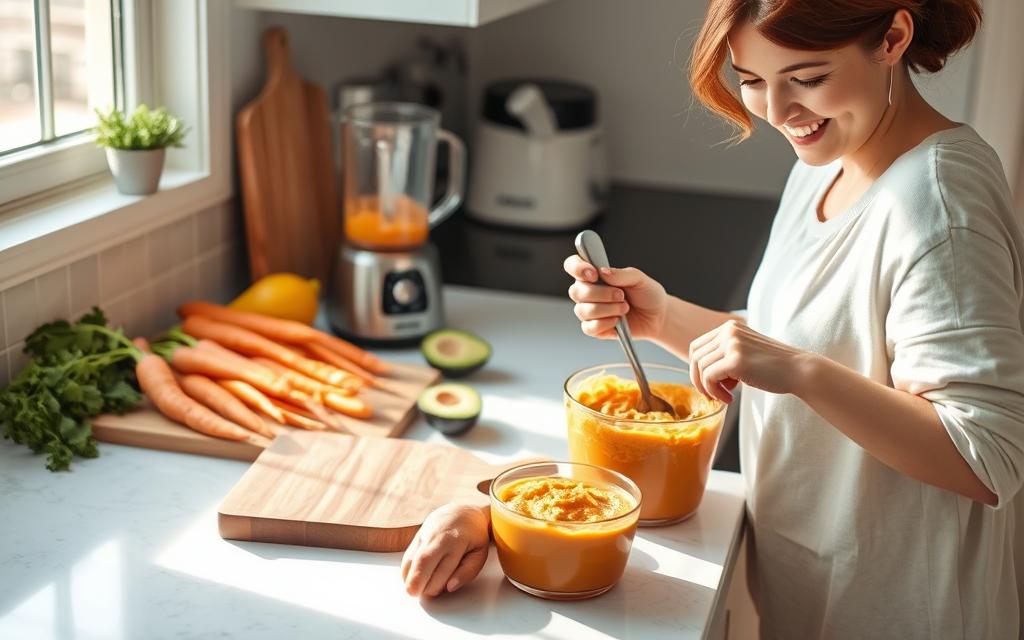
Essential Equipment for Homemade Baby Food
To make baby food at home, you need some key tools. A blender or food processor is essential for pureeing foods. Also, having storage containers is important to keep food fresh. “A good blender is key for smooth baby food,” a pediatric nutrition expert notes.
Simple Puree Recipes for Beginners
Beginners should start with simple purees. Try single-ingredient purees like sweet potato or avocado. As your baby gets used to solids, you can try more complex recipes.
Storage and Safety Tips
Storing homemade baby food safely is critical. Use clean, airtight containers and store them right away. Labeling containers with the date helps avoid using old food.
Batch Cooking Strategies for Busy Parents
Batch cooking is a big help for busy parents. It lets you make lots of baby food and freeze it in portions. This saves time and reduces waste, ensuring your baby always eats well.
By following these tips, parents can confidently make their baby’s first foods. They know what’s in each meal. This builds healthy eating habits and makes mealtime fun for the baby.
Store-Bought Baby Food Options
For parents who prefer or need store-bought baby food, understanding the available options is key. Store-bought baby food is convenient and reliable, making it a favorite among parents.
Reading Labels and Choosing Quality Products
When picking store-bought baby food, reading labels is vital. Look for products with single ingredients and little added sugars and salts. Choose products that are rich in nutrients and have fewer ingredients, so you know what your baby is eating.
Organic vs. Conventional Baby Foods
The debate between organic and conventional baby foods is ongoing. Organic baby foods are made from organic ingredients, grown without synthetic pesticides or fertilizers. They might be pricier, but some parents choose them for their health benefits. Conventional baby foods, on the other hand, are more widely available and often more affordable.
| Feature | Organic Baby Food | Conventional Baby Food |
|---|---|---|
| Ingredients | Organic, no synthetic pesticides | Conventional, may contain synthetic pesticides |
| Price | Generally more expensive | Often more affordable |
| Availability | Widely available in health food stores | Widely available in most supermarkets |
Pouches, Jars, and Frozen Options Compared
Store-bought baby food comes in various packaging formats, including pouches, jars, and frozen options. Pouches are great for feeding on the go, while jars are traditional and cost-effective. Frozen baby foods offer a middle ground between homemade and store-bought convenience.
By understanding the different types of store-bought baby food and their packaging, parents can make informed decisions that best suit their baby’s needs and their lifestyle.
Baby-Led Weaning vs. Traditional Spoon Feeding
There are two popular ways to introduce solid foods to babies: baby-led weaning and traditional spoon feeding. Each method has its own benefits and challenges. Knowing about these can help you choose what’s best for your baby.
Understanding Baby-Led Weaning Approach
Baby-led weaning lets your baby feed themselves solid foods from the start. It skips purees and spoon-feeding. This method encourages independence and makes mealtime fun.
- Allows babies to explore different tastes and textures at their own pace.
- Promotes self-feeding and can reduce the risk of overfeeding.
- May help in developing fine motor skills as babies learn to navigate food.
Benefits of Traditional Purees
Traditional spoon feeding involves parents feeding their babies pureed foods. It introduces thicker textures as they grow. This method has been a staple for many generations and offers several benefits.
Key advantages include:
- Control over the amount of food consumed, helping to monitor and manage intake.
- Easier introduction to a variety of foods by masking flavors.
- Can be less messy compared to baby-led weaning.
Combining Methods for Best Results
Many parents find a mix of baby-led weaning and traditional spoon feeding works best. This mix allows for flexibility and meets the baby’s unique needs and preferences.
For example:You can start with traditional purees for one meal and practice baby-led weaning for another. This gives your baby a varied experience.
Safety Considerations for Each Method
Safety is key when introducing solid foods, no matter the method. For baby-led weaning, it’s important to:
- Cut food into manageable pieces to reduce choking hazards.
- Supervise mealtime closely.
- Ensure the baby is sitting upright while eating.
For traditional spoon feeding, make sure to:
- Check the temperature of the food before serving.
- Avoid feeding when the baby is distracted or not hungry.
- Gradually introduce new textures to prevent gagging.
The choice between baby-led weaning and traditional spoon feeding depends on your baby’s development, your lifestyle, and personal preference. By understanding the benefits and challenges of each method, you can make an informed decision that works best for you and your baby.
Introducing Allergenic Foods Safely
Introducing allergenic foods is a big step in a baby’s diet. New research shows how to do it safely. It advises introducing common allergens early to lower allergy risk.
Current Guidelines on Common Allergens
Studies now say to introduce foods like peanuts and eggs early, around 6 months. This can lower allergy risk. It’s important to introduce these foods carefully and watch for allergic signs.
| Allergenic Food | Age of Introduction | Signs of Allergy to Watch |
|---|---|---|
| Peanuts | Around 6 months | Rash, itching, swelling |
| Eggs | Around 6 months | Digestive issues, skin rashes |
| Fish and Shellfish | 8-10 months | Hives, itching, difficulty breathing |
How to Test for Allergic Reactions
Introduce foods one at a time and in small amounts. Watch for signs of an allergic reaction. These can range from mild rashes to serious breathing problems. If you see any signs, call your pediatrician right away.
When to Consult Your Pediatrician
If your baby has an allergic reaction, see your pediatrician. They can help manage the reaction and advise on introducing the food again.
Cultural Variations in First Foods Around the World
Different cultures introduce first foods in various ways. Some may include foods that could be allergenic. Learning about these practices can offer insights into introducing new foods.
By following current guidelines and talking to healthcare experts, parents can introduce allergenic foods safely. This can help lower the risk of allergies in babies.
Establishing Healthy Eating Habits Early
Creating a positive relationship with food is key for babies starting solid foods. This early time is vital for building healthy eating habits that last.
“The way parents approach mealtime can significantly influence a child’s eating habits and food preferences.”
To create a positive mealtime environment, consider these tips:
- Make mealtime a distraction-free zone.
- Use positive reinforcement, such as praise, to encourage eating a variety of foods.
- Be patient and don’t force feeding if the baby is not interested.
Creating Positive Mealtime Experiences
A positive atmosphere during meals encourages babies to try new flavors and textures. Keeping the environment calm, without TV or mobile devices, is important.
Responding to Food Refusal
Babies often refuse certain foods. Instead of forcing them, offer a variety of foods many times. Persistence and patience are key when introducing new foods.
Balancing Milk Feeds and Solid Foods
As babies start solid foods, balancing milk and solid foods is key. At first, milk should be the main source of nutrition, with solid foods as a supplement.
Involving Baby in Family Meals
Involve your baby in family meals to make mealtime fun and inclusive. It’s also a great way to show them healthy eating habits.
By following these tips, parents can help their babies develop healthy eating habits. This sets them up for a lifetime of good nutrition and a positive food relationship.
Conclusion: Supporting Your Baby’s Food Journey
Every baby is different, and their food journey is unique. It’s important to be patient and listen to your baby’s cues.
Supporting your baby’s food journey is more than just introducing new foods. It’s about creating a positive and nurturing environment. By being responsive to your baby’s needs and seeking guidance when needed, you can help establish healthy eating habits that will last a lifetime.
As a parent, you play a significant role in shaping your baby’s relationship with food. By providing a variety of nutrient-rich foods and making mealtime a positive experience, you can set your baby up for a lifetime of healthy eating. For more parenting tips and guidance on supporting your baby’s food journey, consult with your pediatrician or a trusted resource.