Comparing Baby-Led Weaning and Spoon Feeding: Pros & Cons

Parents often face a tough choice when it comes to feeding their babies. They must decide between baby led weaning and spoon feeding. Each method has its own set of benefits and drawbacks.
Choosing the right way to feed your baby is a big decision. It can affect their eating habits and growth. Parents need to think about their baby’s readiness, nutritional needs, and personality.
This article will compare baby led weaning and spoon feeding in detail. We aim to help parents choose the best feeding method for their baby.
Key Takeaways
- Understanding the differences between baby led weaning and spoon feeding is key for parents.
- Both methods have their pros and cons, which must be considered.
- A baby’s readiness and nutritional needs are important in choosing a feeding method.
- Parents should consider their baby’s individual personality when deciding on a feeding approach.
- A detailed comparison of both methods can help parents make an informed decision.
Understanding the Two Approaches to Introducing Solids
The move to solid foods is a big step for babies. Parents face two main choices: baby-led weaning and spoon feeding. Knowing about these methods helps parents decide what’s best.
What is Baby-Led Weaning?
Baby-led weaning lets babies start eating solids around six months old. They get to try different tastes, textures, and smells on their own. This method helps babies learn to feed themselves and control how much they eat. They are given whole foods like fruits and veggies, cut into easy-to-handle pieces.
What is Traditional Spoon Feeding?
Traditional spoon feeding means caregivers feed the baby with a spoon. It begins with soft, pureed foods and moves to thicker textures as the baby grows. This way, parents can control what and how much their baby eats. It’s seen as a traditional way to introduce solids.
Historical Context of Infant Feeding Methods
Feeding babies has changed a lot over time and across cultures. Lately, there’s been a move towards methods like baby-led weaning. Knowing how these practices have evolved can help parents today.
- Baby-led weaning encourages self-feeding and exploration.
- Traditional spoon feeding offers control over nutrition and intake.
- Both methods have their place in the history of infant feeding.
Understanding baby-led weaning and spoon feeding helps parents choose the right way to introduce solids to their babies.
When to Start Introducing Solid Foods
Finding the right time to introduce solid foods to your baby can be tricky. The American Academy of Pediatrics suggests starting around six months. But, every baby is unique, and signs of readiness can differ.
Developmental Readiness Signs
Babies show clear signs when they’re ready for solid foods. These include:
- Sitting up with support
- Showing interest in food
- Having good head and neck control
- Losing the “tongue-thrust reflex”
Age Recommendations from Experts
Pediatricians and health experts usually say babies are ready for solid foods between 4 to 6 months. The World Health Organization and the American Academy of Pediatrics both suggest starting at about 6 months.
Cultural Variations in Starting Solids
Cultural practices affect when and how babies start solids. Some cultures start as early as 4 months, while others wait beyond 6 months. Knowing these differences helps parents make informed choices.
By watching for developmental signs and following expert advice, parents can choose the best time for their baby.
Baby-Led Weaning vs. Spoon Feeding: Pros and Cons
Parents often debate between baby-led weaning and spoon feeding when introducing solid foods. Each method has its benefits and drawbacks. It’s important to know these to make a good choice.
Key Differences at a Glance
Baby-led weaning lets babies feed themselves and try new tastes and textures. Spoon feeding, on the other hand, lets parents control what their baby eats. Baby-led weaning promotes independence and can make meals less stressful. Spoon feeding is easier for tracking what your baby eats.
Impact on Parent-Child Feeding Dynamics
The choice affects how parents and children interact during meals. Baby-led weaning makes meals more relaxed and helps babies learn to control their eating. Spoon feeding can lead to power struggles if not handled right. Knowing this helps choose the best method.
When Each Method Might Be Preferred
Choosing between baby-led weaning and spoon feeding depends on many things. This includes the child’s personality, what parents prefer, and their lifestyle. For example, babies who are more adventurous might do well with baby-led weaning. Those who are more cautious might start with spoon feeding.
In the end, both methods have their good points and bad points. What works best can change a lot from one family to another. By understanding the differences and how they affect mealtime, parents can make a choice that fits their family’s needs.
Benefits of Baby-Led Weaning
Baby-led weaning is more than just a way to feed babies. It helps them grow in many ways. It lets them take charge of their meals, which is good for their development.
Development of Fine Motor Skills
One big plus of baby-led weaning is it helps babies improve their fine motor skills. They get better at using their hands and eyes together. This is key for them to grow up and feed themselves.
Self-Regulation of Food Intake
Baby-led weaning teaches babies to know when they’re full. They learn to stop eating on their own. This skill helps them avoid eating too much and can shape their eating habits for life.
Exposure to Various Textures and Flavors
It also lets babies try different foods. This can make them more open to new tastes and reduce food issues later. Trying new foods is important for kids to learn what they like.
Family Mealtime Integration
Lastly, it helps babies join in family meals. This makes them feel part of the family and encourages them to eat like everyone else. It also makes meals more fun for everyone.
In short, baby-led weaning has many benefits for a child’s growth and eating habits. Knowing these advantages helps parents choose the best way to introduce solid foods.
Potential Drawbacks of Baby-Led Weaning
The BLW method has many benefits but also some concerns. Parents need to consider these to make a good choice.
Choking Concerns and Safety Issues
Choking is a big worry with BLW. But, studies show it’s not more dangerous than spoon feeding. It’s key for parents to know the risks and take steps to prevent them.
- Ensure the baby is sitting upright while eating.
- Stay with the baby during mealtime.
- Avoid foods that are common choking hazards, such as nuts or round candies.
Nutritional Adequacy Considerations
Parents might worry if their baby gets enough nutrients with BLW. It’s important to give a variety of foods to ensure they get all they need.
“Offering a range of foods at mealtime can help ensure that babies receive a balanced diet.”
Messiness and Time Commitment
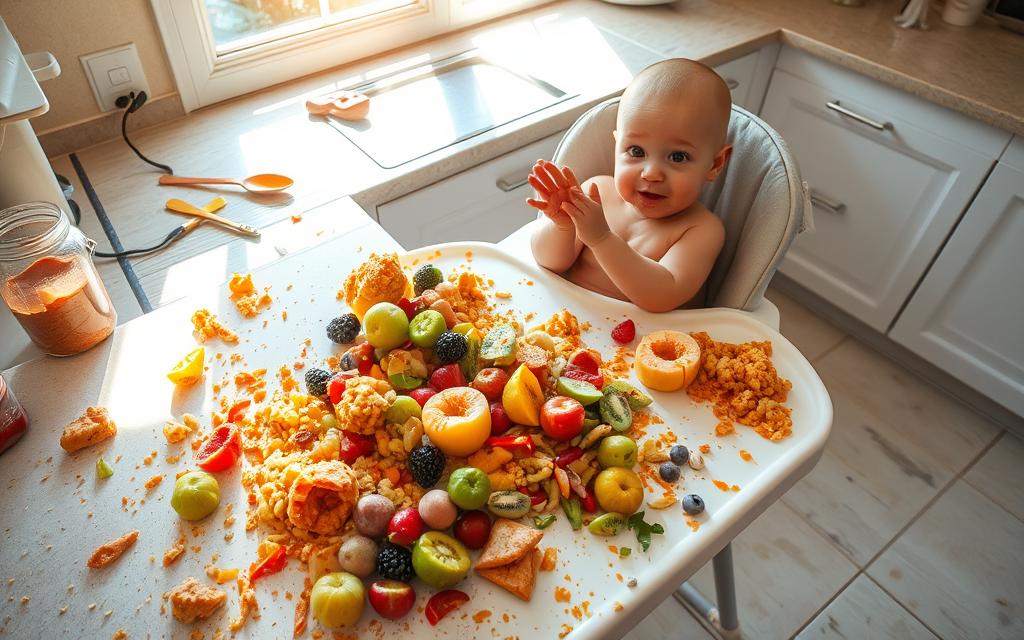
BLW can be messy and takes a lot of time, at least at first. Parents should be ready for this.
Parental Anxiety and Confidence
Some parents might feel anxious or unsure about BLW. Getting advice from healthcare professionals can help ease these feelings.
By knowing the possible downsides and how to deal with them, parents can feel confident in their choice for their family.
Advantages of Traditional Spoon Feeding
Spoon feeding has many benefits for parents starting their babies on solids. It lets caregivers control the feeding, ensuring the baby gets the right nutrients.
Control Over Nutrition and Intake
Parents can manage the food their baby eats with spoon feeding. This is great for meeting nutritional needs, even with special diets or allergies.
Cleanliness and Convenience
Spoon feeding is less messy than baby-led weaning. It keeps food in one place, reducing spills.
Easier Tracking of Food Consumption
Parents can track how much their baby eats with spoon feeding. This is helpful in the early stages of solid foods.
Gradual Texture Progression
It lets parents introduce different textures slowly. Starting with purees and moving to thicker foods helps babies learn to eat.
| Method | Nutritional Control | Mess Level | Texture Progression |
|---|---|---|---|
| Spoon Feeding | High | Low | Gradual |
| Baby-Led Weaning | Low | High | Variable |
A pediatrician says, “Spoon feeding is a structured way to introduce solids. It’s good for parents worried about their baby’s nutrition.” This structured approach is a big plus for many caregivers.
Limitations of Spoon Feeding Approach
There are several limitations to the spoon feeding approach that caregivers should be aware of. While it is a common method for introducing solids, it may not be the best approach for every family.
Potential for Overfeeding
Spoon feeding can lead to overfeeding if caregivers are not attentive to the baby’s cues. When parents control the feeding process, it can be challenging to gauge the baby’s fullness and hunger signals accurately.
Delayed Development of Self-Feeding Skills
One of the significant drawbacks of spoon feeding is that it can delay the development of self-feeding skills. Babies who are spoon-fed may not learn to feed themselves as quickly as those who follow baby-led weaning.
Limited Exposure to Food Textures
Spoon feeding often involves pureed foods, which can limit a baby’s exposure to various food textures. This limited exposure might make it more challenging for babies to accept different textures later on.
Possible Food Aversions
Some research suggests that spoon feeding may contribute to food aversions in children. When babies are not allowed to explore foods at their own pace, they may develop negative associations with certain foods.
| Limitation | Description |
|---|---|
| Potential for Overfeeding | Caregivers may not accurately gauge baby’s fullness and hunger signals. |
| Delayed Self-Feeding Skills | Babies may not learn to feed themselves as quickly. |
| Limited Food Textures | Pureed foods limit exposure to various textures. |
| Possible Food Aversions | Babies may develop negative associations with certain foods. |
Understanding these limitations can help parents make informed decisions about their approach to feeding their babies.
Practical Implementation Guide
Starting solids can be smooth with the right method. Whether it’s baby-led weaning or spoon feeding, knowing the practical steps is key.
Setting Up for Baby-Led Weaning Success
Baby-led weaning needs careful planning for safety and success. Start with the right foods and prepare them well.
First Foods to Offer
Start with soft, easy-to-grasp foods. Good first foods include:
- Soft fruits like bananas and avocados
- Steamed vegetables such as broccoli and carrots
- Soft cheese or strips of cooked chicken
Food Preparation and Safety
Make sure all foods are safe to avoid choking. Cut foods right and avoid nuts, seeds, and hard raw veggies.
Effective Spoon Feeding Techniques
Spoon feeding lets you control what your baby eats. Start with purees and slowly add textured foods.
Introducing Purees Progressively
Begin with single-ingredient purees to watch for allergies. Then, mix foods for variety.
Transitioning to Textured Foods
When your baby gets used to eating, add thicker purees. Then, introduce textured foods to help with chewing.
Essential Equipment for Both Methods
Some tools are needed for both baby-led weaning and spoon feeding.
| Equipment | Baby-Led Weaning | Spoon Feeding |
|---|---|---|
| Bibs | Essential for minimizing mess | Helpful for keeping clothes clean |
| High Chair | Necessary for safe feeding | Crucial for feeding |
| Soft-Tipped Utensils | Optional, for baby’s use | Essential for feeding baby |
Knowing the practical sides of baby-led weaning and spoon feeding helps parents choose what’s best for their family.
Research and Expert Opinions
Research is growing on baby-led weaning versus spoon feeding. It helps parents choose wisely. Both methods can work well, as long as they meet the baby’s needs.
Scientific Studies on Both Approaches
Studies look at how baby-led weaning and spoon feeding affect nutrition and growth. A 2018 study in the Journal of the Academy of Nutrition and Dietetics found similar iron levels in both groups. But, more research is needed to understand long-term effects.
“The key to successful introduction of solids, regardless of the method, is responsiveness to the infant’s cues and ensuring a variety of nutrient-dense foods.”
Pediatrician Recommendations
Pediatricians suggest a flexible approach. They say to mix baby-led weaning and spoon feeding based on the child’s needs. Dr. Jane Smith, with over 10 years of experience, advises parents to “follow their child’s lead and be patient during the transition to solid foods.”
Nutritionist Perspectives
Nutritionists stress the need for a diverse diet. Nutritionist Lisa Johnson says “parents should focus on providing a variety of whole foods, not just processed baby foods.” This advice works for both methods.
Real Parent Experiences
Many parents have tried both baby-led weaning and spoon feeding. They often mix both to fit their lifestyle. Success comes from being responsive to the baby’s needs and adjusting as needed.
In conclusion, both baby-led weaning and spoon feeding have their fans. Experts agree that the best approach is one that fits the child’s unique needs and stage of development.
Conclusion: Choosing the Right Approach for Your Family
The choice between baby-led weaning and spoon feeding depends on your family’s needs. Both methods have their advantages and disadvantages. It’s important to weigh these when deciding.
When choosing the right approach, think about your lifestyle and your baby’s stage of development. Consider their unique needs and your personal preferences. Also, listen to your pediatrician’s advice.
Understanding the different baby feeding methods helps you make a choice that fits your family. You might choose baby-led weaning, spoon feeding, or a mix of both. The most important thing is that your baby gets the nutrients they need.
Remember, every baby is unique, and what works for one might not work for another. Be open to trying different things, stay informed, and trust your instincts. This way, you can make the best choice for your child.