Traditional Pregnancy Diets Around the World
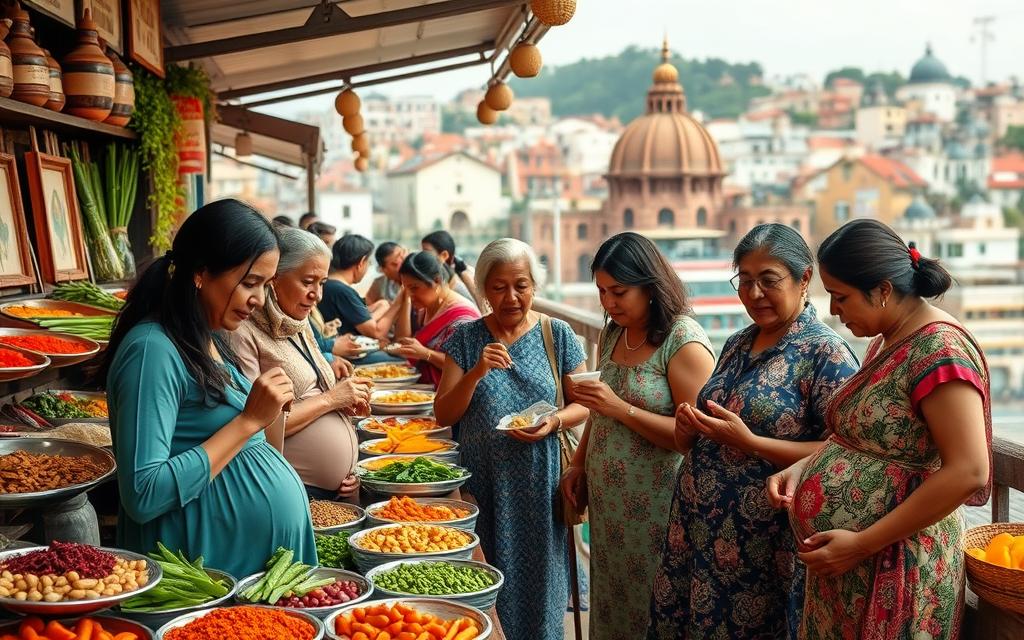
Pregnancy is a time of big changes and hopes. Good nutrition is key for the health of mom and baby. Global pregnancy diet traditions show how different cultures eat during this time.
In India, spicy foods are common. In Africa, foods are rich in nutrients. Prenatal nutrition is influenced by many things like tradition and where you live. Learning about these diets can help us understand how cultures support mom and baby’s health.
Key Takeaways
- Diverse global pregnancy diet traditions reflect local customs and available foods.
- Prenatal nutrition varies significantly across cultures, influenced by tradition and geography.
- Understanding global dietary practices can offer insights into supporting maternal and fetal health.
- Cultural beliefs play a significant role in shaping pregnancy diets worldwide.
- Nutrient-rich foods are a common theme across many global pregnancy diet traditions.
The Cultural Significance of Pregnancy Nutrition
Around the world, what expecting mothers eat is shaped by culture. Cultural prenatal diets reflect generational wisdom, cultural values, and societal norms. This makes maternal nutrition in different cultures both fascinating and complex.
How Food Traditions Support Maternal Health
In many cultures, traditional foods for expecting mothers are chosen for their health benefits. For instance, in some African cultures, pregnant women eat foods like dates or certain fish. These foods are believed to help ensure a healthy pregnancy.
The Intersection of Culture and Prenatal Care
Cultural beliefs about pregnancy nutrition meet prenatal care in important ways. In some Asian cultures, the idea of “hot” and “cold” foods guides dietary choices. It’s believed that balancing these can lead to a healthy pregnancy and baby.
Generational Wisdom in Pregnancy Nutrition
Generational wisdom is key in shaping cultural prenatal diets. Older generations share their knowledge and beliefs about good foods. This influences the dietary choices of expecting mothers, adding to the rich diversity of maternal nutrition in different cultures.
Traditional Pregnancy Diets Around the World: An Overview
Traditional pregnancy diets show the rich cultural diversity and nutritional wisdom found globally. These diets are influenced by culture, ethnicity, and geography. This results in a wide range of nutritional practices.
Common Nutritional Themes Across Cultures
Despite the differences in pregnancy diets, some common themes appear. Many traditional diets focus on nutrient-rich foods like fruits, vegetables, whole grains, and lean proteins. For example:
- In many African cultures, pregnant women are encouraged to eat foods rich in iron, such as leafy greens and beans.
- In Asian cultures, foods like ginger and ginseng are believed to promote health and vitality during pregnancy.
Hot and Cold Food Theories in Pregnancy
The idea of “hot” and “cold” foods is common in many traditional pregnancy diets. This theory comes from ancient medical practices like Ayurveda and Traditional Chinese Medicine. It suggests that certain foods can affect the body’s balance and the pregnancy. For instance:
- Some cultures believe that “hot” foods, such as spicy dishes, can stimulate labor or cause miscarriage.
- On the other hand, “cold” foods, like cucumber or mint, are thought to cool the body and ease pregnancy-related discomforts.
The Role of Protein and Iron in Global Pregnancy Diets
Protein and iron are key nutrients during pregnancy, and many traditional diets emphasize their importance. Foods rich in these nutrients are often highlighted to support fetal development and maternal health. For example, in many Latin American countries, pregnant women are encouraged to eat beans and lean meats for protein and iron.
East Asian Pregnancy Diet Traditions
East Asian cultures have long valued traditional diets during pregnancy. These diets vary across China, Japan, and Korea. They are rooted in cultural heritage and believed to ensure the health of mother and child.
Chinese Pregnancy Nutrition Practices
Chinese traditional prenatal diets focus on balance, based on Traditional Chinese Medicine (TCM).
The Role of Balance in Chinese Prenatal Diets
The diet aims to balance “yin” and “yang” elements. Foods are classified as “cold” or “hot.” The right foods are chosen based on the individual’s constitution and the season.
Bone Broths and Congee for Postpartum Recovery
After giving birth, Chinese women eat nourishing bone broths and congee. These foods are rich in nutrients and help restore energy.
Japanese Maternal Nutrition Customs
Japanese pregnancy diets focus on nutrient-rich foods for fetal development.
Seaweed and Fish in Japanese Pregnancy Diets
Seaweed and fish are key, providing iodine and omega-3 fatty acids. These are vital for the baby’s brain and nervous system.
Korean Pregnancy Food Traditions
Korean culture emphasizes certain foods during pregnancy, with Miyeok Guk (Seaweed Soup) being a highlight.
Miyeok Guk (Seaweed Soup) and Its Importance
Miyeok Guk is rich in iodine and helps with milk production and recovery. It’s a dish for new mothers, showing the importance of postpartum care.
East Asian dietary traditions aim to support pregnant women’s health. They use culturally significant and nutrient-rich foods. Understanding these customs helps us appreciate the diverse prenatal nutrition approaches worldwide.
South Asian Maternal Dietary Practices
South Asian countries have unique and vibrant ways of eating during pregnancy. These ways are shaped by local customs and Ayurvedic principles. The rich cultural heritage of the region greatly influences the nutritional habits of pregnant women.
Indian Ayurvedic Approaches to Pregnancy Nutrition
Ayurveda, an ancient medicine system, deeply impacts pregnancy nutrition in India. It focuses on eating foods that balance the three doshas (Vata, Pitta, and Kapha). This balance is key to the well-being of both the mother and the fetus.
Regional Variations in Indian Pregnancy Foods
India’s diverse regions have their own special pregnancy foods. For example:
- In the south, coconut and rice are staples.
- In the north, wheat and dairy products are commonly consumed.
- In the east, fish and rice are predominant.
Pakistani and Bangladeshi Pregnancy Food Customs
In Pakistan and Bangladesh, pregnancy diets are shaped by local ingredients and cultural traditions. Protein-rich foods like lentils and meat are seen as essential.
The Role of Dairy in South Asian Prenatal Diets
Dairy products are highly valued in South Asian prenatal diets for their nutritional benefits. Milk, yogurt, and ghee are consumed for their richness in calcium and proteins.
The Significance of Spices in South Asian Prenatal Diets
Spices are crucial in South Asian cuisine, including during pregnancy. Turmeric, ginger, and fenugreek are especially valued for their health benefits.
Turmeric, Ginger, and Fenugreek Benefits
These spices are known for their medicinal properties:
- Turmeric is recognized for its anti-inflammatory properties.
- Ginger aids digestion and alleviates nausea.
- Fenugreek is believed to help manage blood sugar levels.
The diverse and rich dietary practices in South Asia during pregnancy show the importance of cultural and traditional knowledge in maternal nutrition.
Middle Eastern and North African Pregnancy Foods
The Middle East and North Africa are rich in cultural heritage. They have traditional pregnancy diets passed down through generations. These diets are important for their cultural value and for supporting maternal health.
Traditional Arabic Prenatal Nutrition
In Arabic cultures, some foods are believed to give strength and nourishment during pregnancy. Dates and nuts are especially valued for their nutritional benefits.
Persian Pregnancy Diet Customs
Persian pregnancy diet customs focus on herbs and wholesome foods. These practices are thought to support the health of both mother and baby.
North African Maternal Food Practices
In North Africa, countries like Morocco and Egypt have their own pregnancy dietary traditions. These traditions often include nutrient-rich, locally available foods.
Moroccan and Egyptian Pregnancy Traditions
Moroccan cuisine during pregnancy includes dishes with spices and herbs. These are believed to promote health. Egyptian pregnancy diets also focus on nutrient-dense foods, like dates and legumes.
| Region | Traditional Foods | Nutritional Benefits |
|---|---|---|
| Arabic | Dates, Nuts | Iron, Protein, Healthy Fats |
| Persian | Herbs (Saffron, Turmeric), Wholesome Foods | Anti-inflammatory, Nutrient-rich |
| North African | Spices, Herbs, Legumes | Varied Nutrients, Health Promoting |
European Pregnancy Diet Traditions
European countries have unique pregnancy diet traditions. These reflect their cultural heritage. They are shaped by local ingredients, history, and beliefs about maternal health.
Mediterranean Approaches to Maternal Nutrition
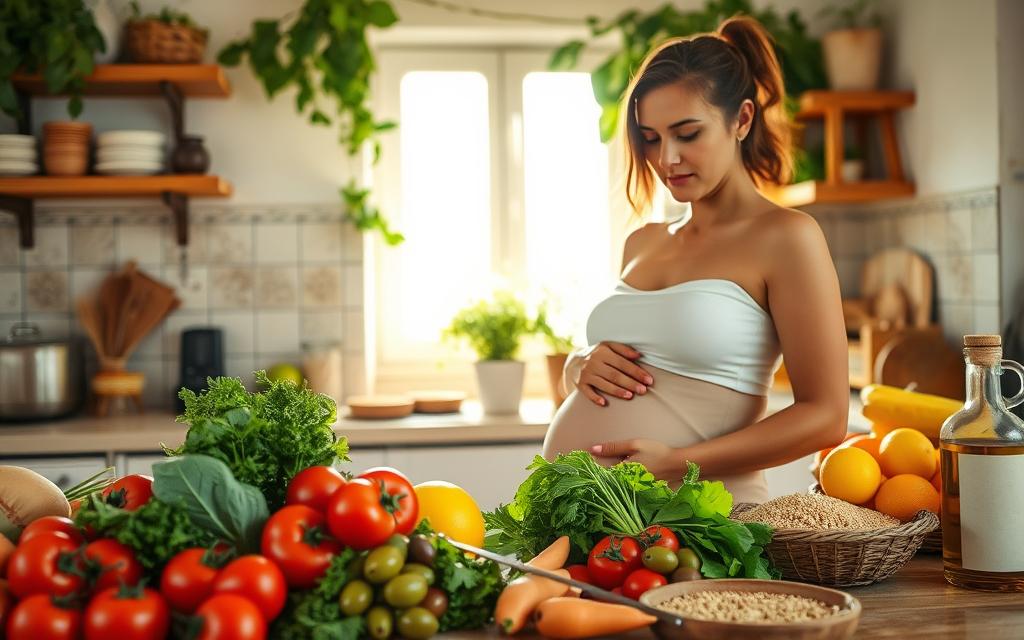
The Mediterranean diet is famous for its health benefits. It focuses on foods that are good for expectant mothers. Foods like olive oil, fish, and fresh produce are key.
Olive Oil, Fish, and Fresh Produce Benefits
Olive oil is full of healthy fats, which help the fetus grow. Fatty fish like salmon are rich in omega-3 fatty acids. These are important for brain development. Fresh fruits and vegetables give vital vitamins and minerals.
Northern European Pregnancy Food Customs
In Northern Europe, diets during pregnancy include local foods like dairy and fish. Scandinavian countries focus on the nutritional value of these foods.
Scandinavian Emphasis on Dairy and Fish
Dairy products are full of calcium, which is good for fetal bone development. Fatty fish in Scandinavian diets provide omega-3 fatty acids. Research shows these diets lead to healthier babies.
“The traditional Scandinavian diet, rich in fish and dairy, supports maternal and fetal health.” – Dr. Nutrition
Eastern European Prenatal Diet Practices
Eastern European countries have their own pregnancy diet traditions. These often include fermented foods and hearty broths.
Fermented Foods and Bone Broths
Fermented foods like sauerkraut are full of probiotics. These support gut health. Bone broths are rich in collagen and minerals, which are good for fetal development.
| Region | Key Foods | Nutritional Benefits |
|---|---|---|
| Mediterranean | Olive oil, fish, fresh produce | Healthy fats, omega-3 fatty acids, vitamins, minerals |
| Northern Europe | Dairy, fish | Calcium, omega-3 fatty acids |
| Eastern Europe | Fermented foods, bone broths | Probiotics, collagen, minerals |
These diverse European pregnancy diet traditions show the importance of cultural influences on maternal nutrition. Understanding these differences helps expectant mothers make better diet choices.
African Traditional Pregnancy Nutrition
Africa’s diverse cultures have their own ways of feeding pregnant women. These traditions are influenced by local customs, available foods, and the continent’s rich biodiversity.
West African Maternal Food Traditions
In West Africa, pregnant women eat stews and soups full of nutrients. These foods are packed with proteins and vitamins.
Nutrient-Dense Stews and Soups
These stews use meat, fish, and veggies. They give vital nutrients to both the mom and the baby.
East African Pregnancy Diet Customs
East Africa, like the Maasai, has its own pregnancy diet ways.
The Role of Milk and Blood in Maasai Pregnancy Diets
Milk and blood are key in the Maasai diet during pregnancy. They offer proteins and iron.
Southern African Prenatal Nutrition Practices
In Southern Africa, plants are key for prenatal nutrition.
Indigenous Plants and Their Nutritional Benefits
Plants like moringa and baobab are full of vitamins and minerals. They offer great health benefits.
| Region | Traditional Foods | Nutritional Benefits |
|---|---|---|
| West Africa | Nutrient-dense stews and soups | Rich in proteins and vitamins |
| East Africa | Milk and blood | High in proteins and iron |
| Southern Africa | Indigenous plants (moringa, baobab) | Rich in vitamins and minerals |
Latin American and Caribbean Pregnancy Foods
Expectant mothers in Latin America and the Caribbean enjoy a diet rich in nutrients. These traditional foods support both the mother and the growing baby. They have been passed down for generations.
Mexican Maternal Nutrition Traditions
Mexican food is packed with nutrients good for pregnant women. Corn, beans, and chili are key. They offer vitamins, minerals, and fiber.
Corn, Beans, and Chili in Pregnancy Diets
Corn gives you complex carbohydrates. Beans are a source of plant-based protein and iron. Chili peppers add vitamin C and capsaicin for better digestion.
South American Pregnancy Diet Customs
South America has its own prenatal diet traditions. Quinoa and other Andean superfoods play a big role.
Quinoa and Other Andean Superfoods
Quinoa is a complete protein and full of iron, magnesium, and fiber. Superfoods like maca and lucuma offer more nutritional benefits.
Caribbean Prenatal Food Practices
The Caribbean diet focuses on fish and tropical fruits. These are rich in omega-3 fatty acids and vitamins.
Fish and Tropical Fruits for Maternal Health
Fatty fish like salmon help the baby’s brain grow. Tropical fruits like mangoes and papayas give vitamin C and beta-carotene.
These diets not only feed expectant mothers but also connect them with their culture. By honoring these traditions, we support healthier pregnancies and keep cultural heritage alive.
Indigenous Pregnancy Diet Traditions
Indigenous peoples’ prenatal diets show how culture and health meet. These traditions have been passed down for generations. They often connect deeply with nature.
Native American Maternal Nutrition Practices
Native American diets vary by tribe. For example, the Navajo eat blue cornmeal, wild game, and plants. These foods are full of nutrients.
Traditional Foods of Different Tribal Nations
Each tribe has its own foods. The Ojibwe, for instance, eat wild rice, berries, and fish. These are high in protein and omega-3s.
| Tribal Nation | Traditional Foods | Nutritional Benefits |
|---|---|---|
| Navajo | Blue cornmeal, wild game | Rich in fiber, protein |
| Ojibwe | Wild rice, berries, fish | High in protein, omega-3 fatty acids |
Aboriginal Australian Pregnancy Food Customs
Aboriginal Australians eat bush foods. These foods are nutritious and tied to their culture.
Bush Foods and Their Nutritional Properties
Bush foods like kangaroo, Kakadu plums, and lemon myrtle are full of vitamins and antioxidants. They’ve been part of Aboriginal diets for thousands of years.
Indigenous Arctic Prenatal Diets
In the Arctic, indigenous groups like the Inuit eat fish, marine mammals, and survival foods. These help them through pregnancy.
Fish, Marine Mammals, and Survival Foods
Foods like whale meat, seal oil, and fish are rich in vitamins and omega-3s. They’re key for fetal growth in cold climates.
The Science Behind Traditional Pregnancy Foods
Looking into traditional pregnancy foods helps us see their importance. Diets from around the world are packed with nutrients vital for a baby’s growth.
Nutritional Analysis of Common Traditional Pregnancy Foods
Many foods eaten during pregnancy are full of important nutrients. For example:
- Leafy greens like spinach and kale are high in iron and folate.
- Fatty fish such as salmon are rich in omega-3 fatty acids.
- Legumes like lentils and chickpeas provide protein and fiber.
Micronutrients Essential for Fetal Development
Micronutrients are key for a baby’s growth. Important ones include:
- Folic acid, which prevents neural tube defects.
- Iron, essential for the production of red blood cells.
- Calcium, crucial for bone development.
Modern Research Supporting Ancient Practices
Today, science backs up the benefits of traditional pregnancy foods. Research shows these foods can lower pregnancy risks and help in fetal growth.
Scientific Studies on Traditional Pregnancy Foods
Recent studies have shown the value of traditional diets. For example, a study on the Mediterranean diet found it lowers gestational diabetes rates.
When Traditional Wisdom Meets Contemporary Nutrition
The mix of old wisdom and new research is changing how we view prenatal nutrition. It helps us support diverse nutrition practices that are both effective and respectful of cultures.
Validating Cultural Practices Through Research
Research is key to understanding traditional foods’ role in prenatal health. By studying these foods, we can find best practices for different cultures.
Incorporating Global Traditions into American Pregnancy Diets
Expectant mothers in the United States can make their prenatal nutrition richer by exploring diverse cultural traditions from around the world. “Cultural exchange in prenatal nutrition can be a powerful tool for improving maternal health,” as noted by a recent study on global pregnancy diets.
Adapting International Recipes for American Kitchens
One way to bring global traditions into American kitchens is by adapting international recipes. For instance, Japanese daikon soup can be made with radishes found in local markets. Similarly, Indian dal can be prepared with lentils that are easy to find.
Where to Find Traditional Ingredients
Finding traditional ingredients is easy. Just visit local international markets or shop online. Ingredients like Korean gochujang or Mexican cumin are now found in many supermarkets.
Balancing Cultural Traditions with Modern Nutritional Guidelines
It’s crucial to mix cultural traditions with modern nutritional guidelines. Expectant mothers should talk to their healthcare providers. This ensures their diet meets current nutritional standards.
Consulting with Healthcare Providers
Healthcare providers can give personalized advice. They can help mix traditional foods into a pregnancy diet that follows modern nutritional standards.
Creating a Diverse Pregnancy Meal Plan
A diverse meal plan can be made by adding elements from different cultures. For example, a menu might include Chinese stir-fried vegetables, Indian lentil soup, and Mexican grilled chicken.
Sample Menus Inspired by Global Traditions
Here’s a daily menu inspired by global traditions: Breakfast – Greek yogurt with honey and walnuts; Lunch – Indian lentil soup with whole grain bread; Dinner – Grilled salmon with Japanese-style steamed vegetables.
Conclusion: The Wisdom of Global Pregnancy Food Traditions
Looking into Traditional Pregnancy Diets Around the World shows us a variety of cultural practices. These practices help support the health and well-being of mothers. From East Asia’s hot and cold food theories to South Asia’s spice-filled diets, each culture brings its own unique insights into what’s good to eat during pregnancy.
These global pregnancy diet traditions are more than just interesting cultural practices. They are based on nutritional wisdom that can help shape today’s prenatal care. By learning from and respecting these traditions, healthcare providers can give expectant mothers more tailored and culturally aware advice.
Adding parts of these traditions to today’s pregnancy diets can make them better and healthier. As we learn more about what’s best for pregnant women, it’s key to use the knowledge from cultures all over the world.