
Room-Sharing vs. Independent Sleeping: Which is Right for You?
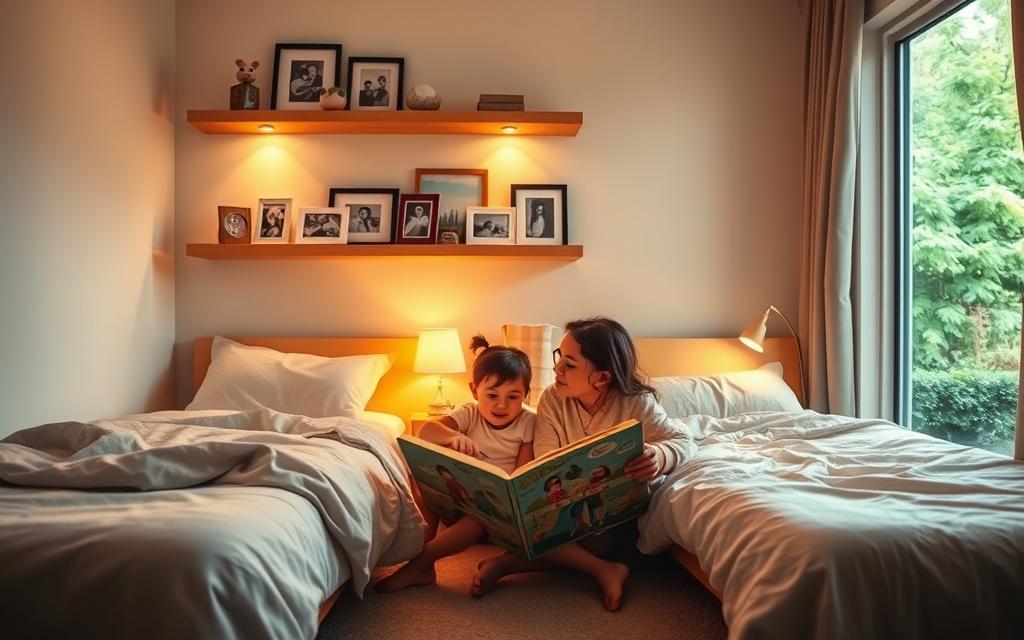
Choosing the right sleep setup for your family can be tough.
Do you go for room-sharing or independent sleeping? Each has its advantages and disadvantages.
Room-sharing offers many benefits. It boosts security and makes nighttime feedings easier.
Independent sleeping, on the other hand, helps kids learn to soothe themselves. It also improves their sleep quality.
We’ll dive into the pros and cons of both. This will help you decide what’s best for your family.
Key Takeaways
- Understand the benefits of room-sharing for families.
- Learn about the pros and cons of independent sleeping.
- Discover how to choose the best sleep arrangement for your family.
- Get insights into the impact of sleep arrangements on child development.
- Find out how to make a smooth transition between sleep arrangements.
Understanding Sleep Arrangements and Their Impact
Sleep arrangements for kids are more than just about where they sleep. They show what a family values and how they work together. The choices parents make can shape their kids’ growth, their bond, and the family’s peace.
Defining Room-Sharing and Independent Sleeping
Room-sharing means kids sleep with their parents or siblings. Independent sleeping is when they have their own room. Each choice affects their sleep, how parents watch over them, and family life.
Cultural and Historical Perspectives
How families sleep has changed over time and across cultures. Some always sleep together, while others want kids to sleep alone early on. Knowing this can help parents decide what’s best for their family.
How Sleep Arrangements Affect Family Dynamics
Choosing between room-sharing and independent sleeping changes family life. Room-sharing helps parents keep an eye on their kids and makes breastfeeding easier. But it can also mess with parents’ sleep. Independent sleeping helps kids grow up but might make bedtime routines harder.
| Sleep Arrangement | Impact on Parents | Impact on Children |
|---|---|---|
| Room-Sharing | Enhanced monitoring, easier breastfeeding | Potential disruption in sleep patterns |
| Independent Sleeping | Improved sleep quality, increased privacy | Fosters independence, self-soothing skills |
Room-Sharing vs. Independent Sleeping: The Science Behind Each
The science behind room-sharing and independent sleeping shows us how they affect kids’ growth and sleep.
Research on sleep cycles and child development has given us key insights.
Sleep Cycles and Development Research
Studies show that sleep cycles in young kids are shaped by their sleep space.
Room-sharing might cause more wake-ups and more light sleep. This can hurt a child’s sleep quality.
On the other hand, sleeping alone can help kids stay in deep sleep longer. This is good for their body and mind.
AAP Recommendations and Guidelines
The American Academy of Pediatrics (AAP) says room-sharing is safe for babies. It lowers the risk of SIDS.
The AAP suggests room-sharing for babies up to 6 months. Then, parents can start teaching them to sleep alone.
But the AAP also stresses the need for a safe sleep environment. This includes a firm mattress and a clear crib.
Long-term Studies on Sleep Arrangements
Long-term studies have looked into how room-sharing and sleeping alone affect kids.
A study in the Pediatrics journal found room-sharing helps with breastfeeding and maternal-infant bonding.
But other studies show independent sleeping can improve sleep quality and self-soothing skills in kids.
In the end, whether to room-share or sleep alone depends on what’s best for each family.
Benefits of Room-Sharing for Families
Room-sharing offers many benefits for families. It improves safety and emotional security. This practice, where a family shares a room with the baby, has several advantages.
Enhanced Monitoring and Safety
One key benefit is better monitoring and safety. Parents can easily check on their baby. They can respond to their needs and keep them safe at night.
Emotional Security and Attachment
Room-sharing also boosts emotional security and attachment. Being close helps parents quickly meet their baby’s needs. This strengthens their bond.
Breastfeeding Convenience and Sleep Support
For breastfeeding moms, room-sharing makes nighttime feeding easier. It also supports sleep. Moms can feed their babies without leaving bed.
Practical Tips for Nighttime Feeding
Here are some tips for easier nighttime feeding:
- Keep the nursery or room-sharing area calm and dark to promote better sleep.
- Use a breastfeeding pillow or a supportive pillow to ease feeding.
- Avoid stimulating conversations or activities during nighttime feedings.
Some families find it useful to keep a log or chart. It helps track their baby’s feeding schedule and sleep patterns. Here’s an example:
| Time | Feeding Type | Duration |
|---|---|---|
| 2:00 AM | Breastfeeding | 15 minutes |
| 4:00 AM | Breastfeeding | 10 minutes |
| 6:00 AM | Formula | 20 minutes |
Advantages of Independent Sleeping Arrangements
Choosing independent sleeping can change how a family sleeps. As kids get older, they need their own beds. This brings many benefits to the whole family.
Improved Sleep Quality for Parents and Children
Independent sleeping means better sleep for everyone. Kids and parents can sleep without being woken up by each other. This leads to deeper, more restorative sleep for all.
Fostering Independence and Self-Soothing Skills
Independent sleeping helps kids become more independent. They learn to fall asleep on their own, without needing their parents. This skill is key for their growth and makes them more confident and self-reliant.
Privacy and Personal Space Benefits
Kids get their own space, which is good for their privacy and personal area. As they get older, they need more time alone. Parents also get their own space, helping them recharge and improve their relationship.
Creating Healthy Sleep Associations
To make independent sleeping work, it’s important to create good sleep habits. This means having a regular bedtime routine and a sleep-friendly environment. Here’s a comparison of sleep environments:
| Sleep Environment Factor | Independent Sleeping | Room-Sharing |
|---|---|---|
| Noise Level | Generally Quieter | Can be Noisier |
| Temperature Control | Easier to Control | Shared Space |
| Bedtime Routine | More Consistent | Can be Disrupted |
Age-Specific Considerations for Room-Sharing
Different ages mean different things when it comes to room-sharing. It’s key to know these differences. Room-sharing affects families in many ways, based on their children’s age and development.
Infants and SIDS Risk Reduction (0-12 months)
For babies, sharing a room with parents is often advised. It can lower the risk of Sudden Infant Death Syndrome (SIDS). The American Academy of Pediatrics says babies should sleep in the same room as parents but not in their bed. This is to keep SIDS risk low.
Some important room-sharing safety tips include making sure the baby’s sleep area is safe. This means a firm mattress and tight sheet. Avoid soft bedding or toys that could be a suffocation risk.
Toddlers and Preschoolers (1-5 years)
As kids grow into toddlers and preschoolers, their needs change. At this age, they start to want their independence. How parents handle room-sharing can either help or hinder this.
Parents can use this time to set boundaries and help their child feel secure.
School-Age Children and Beyond
For older kids, room-sharing can mean different things. It’s about privacy and personal space. Parents need to think about their child’s needs and personality when deciding on room-sharing.
Addressing Nighttime Fears and Anxieties
Room-sharing can lead to nighttime fears and anxieties in older kids. Parents can help by creating a soothing bedtime routine. Being there to reassure and encouraging independence are key.
Some strategies include:
- Creating a consistent bedtime routine
- Using a nightlight or comfort object
- Gradually reducing bedtime time spent with the child
By understanding these age-specific needs, families can make room-sharing decisions that work for them.
Implementing Independent Sleeping Successfully
Starting your child on independent sleep needs careful planning and patience. It’s important to know when they’re ready and what they need. Parents must consider several key factors for a smooth transition.
Readiness Signs for Different Age Groups
Knowing when your child is ready for sleep alone is key. Infants show readiness by soothing themselves and needing fewer nighttime feedings. Toddlers are ready when they sleep through the night and want their own bed.
Age-specific readiness signs include:
- Infants (0-12 months): Self-soothing, less frequent nighttime feedings
- Toddlers (1-3 years): Consistent nighttime sleep, interest in their own bed
- Preschoolers (3-5 years): Ability to communicate needs, showing independence
Creating a Comfortable Sleep Environment
A good sleep environment is essential for independent sleep. The room should be dark, quiet, and at a comfortable temperature. A comfy mattress and blackout curtains or a white noise machine can help a lot.
“A dark, quiet room is not just a preference, it’s a necessity for quality sleep.” – Dr. Jane Smith, Sleep Specialist
Establishing Effective Bedtime Routines
A bedtime routine signals it’s time to sleep. It can include reading, storytelling, or a warm bath. The goal is a routine that calms your child and works for your family.
Managing Sleep Regressions and Transitions
Sleep regressions are normal but can upset independent sleep plans. To manage them, keep bedtime routines consistent, offer reassurance without old habits, and be patient.
| Strategy | Description | Benefit |
|---|---|---|
| Consistency | Stick to the established bedtime routine | Provides a sense of security and predictability |
| Reassurance | Offer comfort without picking up or feeding to sleep | Helps child learn to self-soothe |
| Patience | Understand that regressions are temporary | Reduces parental stress and anxiety |
Understanding readiness signs, creating a cozy sleep space, and setting up good bedtime routines are key. These steps help toddlers become independent and improve sleep for everyone.

Special Circumstances and Adaptations
Families often face unique challenges with sleep arrangements. They need to be adaptable and find creative solutions. Life is complex, and sleep arrangements can be influenced by many factors. These include cultural norms, personal preferences, and practical considerations.
Siblings Sharing Rooms: Strategies for Success
When siblings share a room, creating a sleep-conducive environment is key. This can be done by using dividers or curtains to create separate sleeping areas. It’s also important to maintain a consistent sleep schedule. Older children should respect younger siblings’ sleep needs.
Limited Space Solutions
In cases where space is limited, families can explore alternative sleep arrangements. For example, converting a closet into a sleeping area or using bunk beds or loft beds to save floor space. Creativity and flexibility are essential in these situations.
Travel, Illness, and Temporary Arrangements
Travel, illness, or other temporary disruptions can require changes to sleep arrangements. It’s important to maintain consistency while adapting to new circumstances. Establishing a temporary sleep routine can help minimize disruptions.
Adapting During Major Life Changes
Major life changes, like moving to a new home or welcoming a new family member, can impact sleep arrangements. Being prepared to adjust sleep arrangements can help reduce stress. It promotes a smoother transition for the family.
Common Challenges and Troubleshooting
Both room-sharing and independent sleeping have their challenges. Families might face sleep disruptions or emotional issues.
Room-Sharing Difficulties and Solutions
Room-sharing can cause sleep disruptions because family members are close. To solve this, try consistent sleep schedules and a sleep-friendly room.
- Establish a bedtime routine to signal sleep time
- Use white noise machines to minimize disturbances
- Ensure the room is dark and at a comfortable temperature
Independent Sleeping Obstacles
Independent sleeping can lead to separation anxiety in young children. To help, parents can gradually transition their child to sleeping alone.
- Start by having the child sleep in their own bed but in the same room as the parents
- Gradually move the child’s bed to their own room
- Establish a consistent bedtime routine to provide reassurance
When to Seek Professional Help
Sleep issues might signal sleep disorders. If you or your child have ongoing sleep problems, getting professional help is wise.
Addressing Sleep Disorders and Concerns
Talking to a healthcare professional can help with sleep disorders like sleep apnea or insomnia. They can give advice and treatment plans.
Making the Decision: Factors to Consider
Understanding your family’s needs is key to deciding between room-sharing and independent sleeping.
Many factors influence this choice, like family values, individual temperaments, and practical needs.
Family Values and Parenting Philosophy
Your family’s values and parenting style are important in choosing a sleep arrangement for your kids.
Some parents like the closeness of room-sharing, while others value independence and personal space.
Individual Temperaments and Sleep Needs
Every child is different, with unique temperaments and sleep needs.
Some kids do well with room-sharing, while others need their own space to sleep well.
Home Layout and Practical Considerations
The layout of your home and practical factors, like bedroom numbers and home size, affect your decision.
Key considerations include:
- The number of children and their ages
- The size and layout of your home
- Your family’s lifestyle and schedule
Balancing Everyone’s Needs
The decision balances the needs of all family members.
It’s essential to consider the needs of both parents and children when making a decision.
By weighing these factors and finding a balance, you can make a choice that meets everyone’s needs.
Conclusion: Finding Your Family’s Sleep Solution
Choosing between room-sharing and independent sleeping is a personal choice. It depends on family values, individual temperaments, and practical needs.
Room-sharing offers benefits like better monitoring and emotional security. On the other hand, independent sleeping promotes independence and better sleep for everyone.
The goal is to find a sleep solution that fits your family. By considering your unique situation, you can create a sleep arrangement that supports healthy habits and strengthens family bonds.
Every family is different, and what works for one may not work for another. Being aware of options and willing to adapt can help you find the right sleep solution for your family.