
Is Circumcision a Medical or Ethical Issue?
The debate on circumcision has been going on for years. It has sparked a lot of talk among medical professionals, ethicists, and the public.
People have different views on circumcision. Some think it’s a medical necessity that prevents health problems. Others see it as an ethical issue that questions personal autonomy and human rights.
This section will give you a quick look at the circumcision debate. We’ll explore the different views that will be discussed in the article.
Key Takeaways
- The circumcision debate is a complex issue.
- There are different opinions on whether circumcision is medical or ethical.
- The controversy centers on the balance between medical need and personal freedom.
- Doctors, ethicists, and the public are all involved in the debate.
- The issue brings up questions about human rights and personal choice.
Understanding Circumcision: History and Prevalence
Circumcision has a long history, spanning thousands of years and many continents. It has been done for religious, cultural, and health reasons.
Historical Context of Circumcision Practices
Circumcision is one of the oldest surgeries, with roots in ancient Egypt, Mesopotamia, and among the Jewish people. The historical context of circumcision is tied to religion and culture. For example, in Jewish tradition, circumcision is called Brit Milah and is done on the eighth day after birth. It symbolizes a covenant with God.
Global Prevalence and Regional Differences
Circumcision’s popularity varies greatly around the world. In Africa and the Middle East, it’s common for religious or cultural reasons. But in many European countries, it’s less common. The World Health Organization (WHO) says about 30% of men globally are circumcised, with big differences by region.
Evolution of Medical Perspectives
Doctors’ views on circumcision have changed over time. Early debates focused on its health benefits and risks. Recent circumcision research shows it might lower risks of UTIs and STIs. Yet, the male circumcision debate goes on, balancing health gains against ethical concerns.
The circumcision debate is complex, touching on medical, cultural, and ethical sides. As research grows, so does the global conversation.
The Circumcision Procedure Explained
It’s important to know about circumcision to make good choices. This surgery removes the foreskin, done at different ages. It can be from babyhood to adulthood.
Medical Techniques and Methods
There are many ways to do circumcision. These include the Plastibell method, Gomco clamp, and Mogen clamp. Each method has its own benefits. It depends on the patient’s age and the doctor’s skill.
- The Plastibell method is often used for babies. It uses a plastic ring that falls off when the foreskin heals.
- The Gomco clamp is used for newborns. It cuts the foreskin before removing it.
- Adults usually get circumcised under local anesthesia. They use more traditional surgery methods.
Recovery and Aftercare
Recovery time varies with age. Babies heal fast, while adults take longer. Aftercare is key. It includes keeping the area clean and dry. Also, use petroleum jelly to prevent sticking and watch for infection signs.
When Circumcision Is Performed
Circumcision can happen at any age. It’s done for cultural, religious, or health reasons. Babies get circumcised soon after birth. Adults choose it for health or personal reasons.
In summary, circumcision is a detailed process with different methods and care. Knowing this helps those thinking about circumcision.
Medical Benefits: What Research Shows
Many studies have found that circumcision offers several health benefits. These include lower risks of infections and certain cancers. Let’s explore these benefits in more detail.
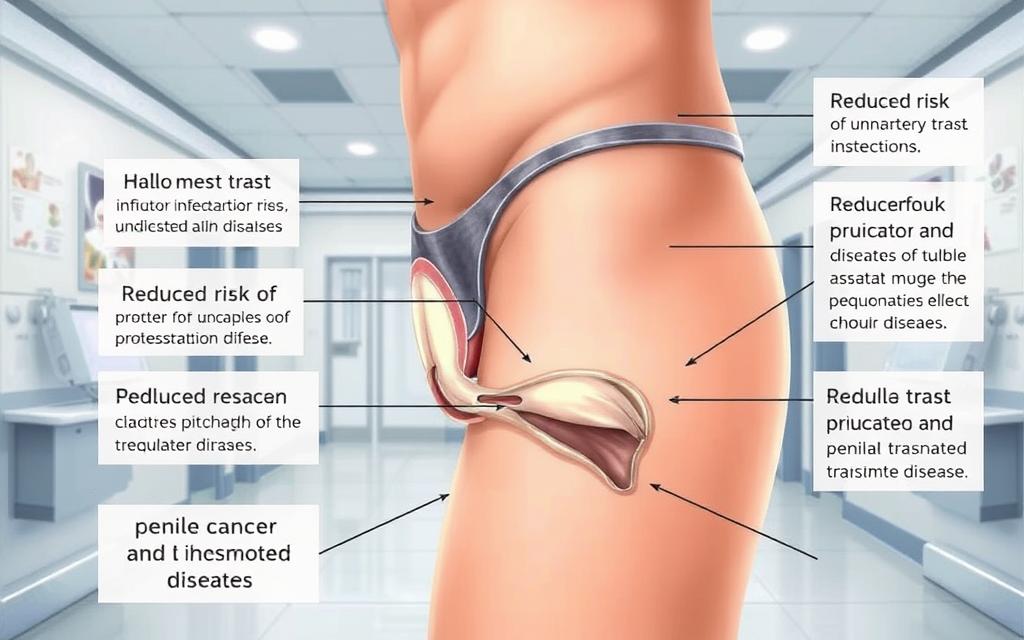
Reduced Risk of UTIs and STIs
Circumcision can help prevent urinary tract infections (UTIs) and sexually transmitted infections (STIs). Research shows it can lower UTI risk, mainly in babies, by reducing bacteria in the foreskin.
A study on circumcision and STIs found that circumcised men face a lower risk of getting some STIs, including HIV.
Penile Cancer Prevention
Circumcision is also linked to a lower risk of penile cancer. Studies indicate that circumcision in infancy or early childhood greatly reduces penile cancer risk later in life.
Hygiene Considerations
Circumcision can also improve genital hygiene. Removing the foreskin prevents bacterial and smegma buildup, which can cause infections and hygiene problems.
Evidence Quality and Scientific Consensus
Many high-quality studies support the medical benefits of circumcision.
“The American Academy of Pediatrics (AAP) believes circumcision’s benefits, like UTI prevention, penile cancer risk reduction, and STI decrease, justify access to it for families who choose it.”
Here’s a summary of circumcision’s medical benefits:
| Medical Benefit | Description | Evidence Level |
|---|---|---|
| Reduced Risk of UTIs | Circumcision decreases bacterial colonization, reducing UTI incidence | High |
| Reduced Risk of STIs | Circumcision lowers the risk of acquiring certain STIs, including HIV | High |
| Penile Cancer Prevention | Circumcision significantly reduces the risk of penile cancer | High |
| Improved Hygiene | Removal of the foreskin reduces bacterial and smegma accumulation | Moderate |
Medical Risks and Complications
Circumcision, like any surgery, has risks and complications. It’s important to know these to make a good choice.
Potential Surgical Complications
Complications from circumcision include bleeding, infection, and poor wound healing. Bleeding can be mild or severe, sometimes needing a blood transfusion. Infection is a risk, treated with antibiotics, but can be serious if not treated fast.
Other issues might be damage to the penis, like urethra injury or too much foreskin removal. These can cause long-term pain, discomfort, and might need more surgery.
Pain Management Concerns
Pain control is key, more so in babies and young kids who can’t get enough anesthesia. Pain during and after circumcision is a big worry. Doctors use local anesthesia and painkillers to help.
Long-term Physical Effects
The long-term effects of circumcision vary. Some might feel less sensitive, while others won’t notice much difference. The effect on sex life is debated, with some studies showing a possible decrease in satisfaction.
Weighing Risks Against Benefits
When thinking about circumcision, weigh the risks against the benefits. Consider your health, reasons for circumcision, and possible problems. Making an informed choice is vital, looking at both medical and personal aspects.
Choosing circumcision should be after careful thought of the risks and benefits. Always talk to healthcare experts before making a decision.
Circumcision: Medical or Ethical Issue?
The debate on circumcision is intense. It’s about whether it’s a medical or ethical issue. At the center is the mix of medical reasons and ethical values.
The Intersection of Medicine and Ethics
Circumcision has been done for centuries. It comes from cultural, religious, and medical traditions. Doctors say it might prevent some infections and health problems. But, there are ethical concerns about body rights, consent, and the rights of newborns.
Doctors face a tough choice. They must weigh health benefits against the ethics of surgery on those who can’t give consent.
Bodily Autonomy Arguments
One key ethical argument against circumcision on minors is bodily autonomy. The right to decide about one’s body is a basic ethical principle. Critics say circumcising a child without their okay goes against this right. It raises questions about the balance between parents’ rights and the child’s future freedom.
Informed Consent Considerations
Informed consent is key in medical ethics. With circumcision, it’s tricky when it’s done on babies or kids. Supporters say parents can make informed choices for their children. Opponents argue that the person should decide about their body when they can give informed consent.
Medical Necessity Versus Elective Procedure
If it’s medically necessary, the ethics are different from when it’s done for other reasons. This shows we need detailed talks that look at both the medical and ethical sides.
The debate on circumcision is complex and ongoing. As society changes, so will our talks about this topic. We need to keep talking among doctors, ethicists, and the public.
Parental Rights and Decision-Making
Parents have a tough choice when deciding on circumcision for their child. This choice is shaped by many factors.
These factors include cultural, religious, medical, and personal reasons. Each one plays a role in the decision-making process.
Factors Influencing Parental Choices
Many things affect a parent’s decision on circumcision. These include cultural and religious beliefs, medical advice, and personal views.
- Cultural and Religious Beliefs: For many, circumcision is a cultural or religious tradition.
- Medical Advice: Medical opinions on circumcision’s benefits and risks also influence parents.
- Personal Preferences: Parents’ beliefs about their child’s body and the need for circumcision are important too.
Balancing Parental Authority and Child’s Rights
The circumcision decision brings up questions about parental rights and a child’s rights.
Parents legally decide on medical treatments for their kids. But circumcision is a permanent choice made for a child who can’t consent.
This has led to a circumcision controversy. Some say parents should decide, while others believe in the child’s right to their body.
Psychological Implications for Parent-Child Relationship
The circumcision choice can affect the parent-child relationship. It can change how they trust each other and view body autonomy.
Studies on the male circumcision debate show the importance of thinking about long-term effects. Parents need to consider these impacts.
It’s key to understand what influences parents’ choices and circumcision’s effects. This helps navigate the complex world of circumcision laws and practices.
Religious and Cultural Perspectives
For many, circumcision is a sacred ritual tied to their religious or cultural identity. It’s not just a medical procedure. It’s a significant act filled with deep meaning, often performed with great reverence.
Jewish Traditions and Brit Milah
In Jewish tradition, circumcision is called Brit Milah, or the covenant of circumcision. It’s done on the eighth day after birth. It’s seen as a key part of Jewish identity.
This ritual is rooted in the biblical covenant between God and Abraham. It symbolizes a lifelong commitment to the faith.
The Brit Milah is more than just a cut. It connects people to their heritage and community. It’s a rite of passage, observed with great solemnity, and is vital for the child’s religious upbringing.
Islamic Practices and Khitan
In Islamic tradition, circumcision is called Khitan. Though not in the Quran, it’s seen as a sunnah (a practice based on the Prophet Muhammad’s actions and sayings). It’s widely practiced among Muslims.
Khitan is a symbol of cleanliness. It’s often done in childhood, though the timing can vary.
Cultural Identity and Circumcision
Circumcision is not just a religious practice but also a cultural one. In some cultures, it marks the transition to manhood. In others, it’s about hygiene or aesthetic preference. The cultural significance of circumcision is evident, even without religious reasons.
Religious Freedom Versus Medical Ethics
The debate around circumcision often focuses on religious freedom versus medical ethics. Some argue that religious practices should be respected. Others say medical procedures should follow medical ethics and informed consent.
| Religion | Terminology | Timing | Significance |
|---|---|---|---|
| Jewish | Brit Milah | Eighth day after birth | Covenant with God |
| Islamic | Khitan | Varies, often in childhood | Symbol of cleanliness |
The debate between religious freedom and medical ethics is complex. It requires understanding both the religious and medical aspects of circumcision.
Legal Frameworks and Policy Debates
Circumcision is a topic with big medical, cultural, and religious meanings. It’s covered by different laws and debates around the world. The laws on circumcision change a lot, showing different views on culture, religion, and health.
International Legal Perspectives
Across the globe, circumcision laws are not the same. Some places have clear rules, while others don’t. For example, in Europe, there’s a big debate about cutting the foreskin of kids. It’s about respecting religion and protecting children’s rights.
Human rights groups have their say too. They sometimes see circumcision as a child rights issue. But others see it as a right to practice religion or culture.
U.S. Policy and Medical Guidelines
In the U.S., circumcision laws come from medical groups and state rules. The American Academy of Pediatrics (AAP) says circumcision has benefits but doesn’t suggest it for everyone. They don’t recommend it for all babies.
State laws on circumcision differ. Some have rules, mainly for kids.
Legal Challenges and Court Cases
There have been many legal fights over circumcision. They’re about parents’ rights versus kids’ rights. Courts have to figure out how to balance freedom of religion, parents’ choices, and the risks of circumcision.
- A big case in Germany sparked a lot of talk about circumcision for religious reasons.
- In the U.S., courts have looked at if parents can make circumcision choices for their kids.
Evolving Standards and Future Directions
The debates and laws on circumcision are always changing. This is because of new medical knowledge, cultural changes, and court decisions. As we learn more about circumcision’s health effects, the laws might change too.
In the future, we might see more uniform rules. These could be shaped by human rights and the latest in medical science.
Conclusion: Navigating the Complex Debate
The debate on circumcision is complex, touching on both medical and ethical sides. It has been practiced for centuries, with its use varying across cultures and regions. Knowing the history, health benefits, and risks is key to understanding the circumcision controversy.
Whether circumcision is a medical or ethical issue is a hot topic. Both sides have strong arguments. Some see health benefits, while others value personal freedom and consent.
To make a decision on circumcision, one must understand all sides. This includes both health and ethical viewpoints. By doing so, people can choose what fits their values and situation. The ongoing debate calls for respect and an open mind, recognizing the many views on circumcision.