How to Transition from Milk to Solids Easily & Stress-Free
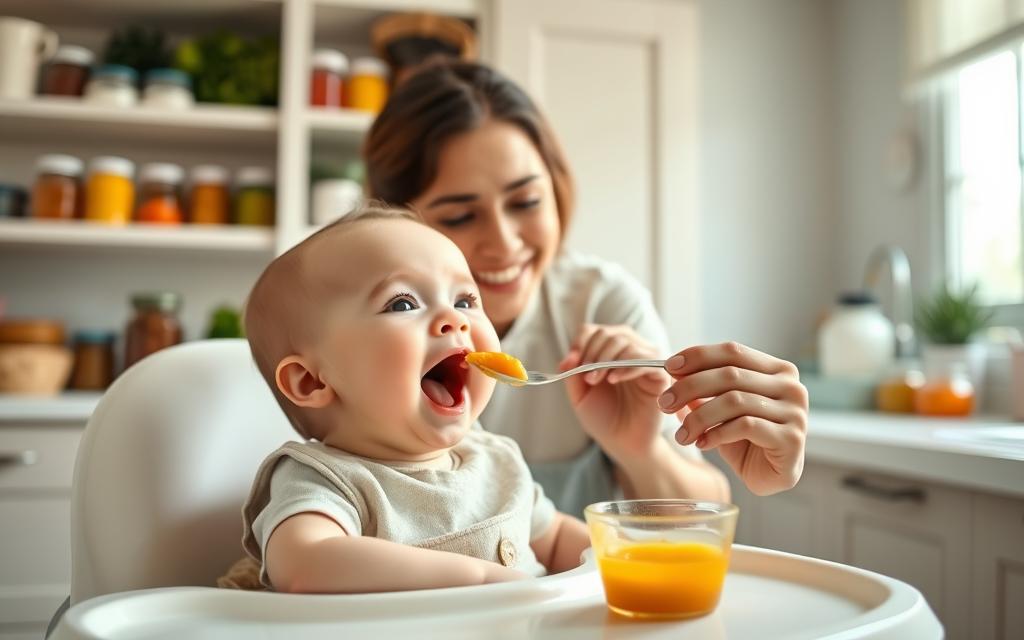
Introducing solid foods to your baby is a big step in their growth. Around six months, babies need to start eating solids along with breastmilk or formula. This step is not just for nutrients but also for trying new tastes and textures.
It’s a journey that can be both exciting and overwhelming for parents. Knowing when and how to introduce solids safely makes the journey easier. When your baby can sit up with support, has good head control, and is curious about food, they’re ready.
As you begin, knowing the signs of readiness and best practices for infant feeding is key. This ensures a smooth transition and a good experience for you and your baby.
Key Takeaways
- Start introducing solid foods at around six months.
- Look for signs of readiness, such as sitting up with support and showing interest in food.
- Begin with simple, single-ingredient purees.
- Gradually increase the variety and texture of foods.
- Breastmilk or formula should always be a main source of nutrition.
When Is Your Baby Ready for Solid Foods?
Finding the right time to start your baby on solid foods can be tricky. It’s not just about their age. It’s also about if they’re developmentally ready.
Developmental Signs of Readiness
Babies show signs when they’re ready for solid foods. They sit up with little help, show interest in food, and lose the tongue-thrust reflex. It’s important to watch for these signs as they show your baby is ready to start eating solids.
Age Recommendations from Pediatricians
Pediatricians usually suggest starting solid foods around 6 months. Before then, breast milk or formula gives all the needed nutrients. Following your pediatrician’s advice is key to making sure your baby gets the right nutrition.
What to Discuss with Your Doctor First
Talk to your doctor before starting solids. Consider your baby’s health and any family allergy history. This talk is important for a smooth start to solid foods.
| Signs of Readiness | Description | Age Reference |
|---|---|---|
| Sitting up with minimal support | Indicates good head and neck control | Around 6 months |
| Showing interest in food | Watches others eat, may try to grab food | Variable, often around 6 months |
| Loss of tongue-thrust reflex | No longer pushes food out with their tongue | Typically by 4-6 months |
How to Transition from Milk to Solids Smoothly: The Basics
Starting your baby on solid foods can be easy with the right help. It’s a big step in their life, showing them the world of food.
Understanding the Milk-to-Solids Journey
Switching from milk to solids is a slow process. Begin with simple purees to watch for any allergies. As they get used to eating, you can add more foods and textures.
Setting Realistic Expectations
It’s key to have realistic hopes when starting solids. At first, they might not eat much because milk is their main food. Be patient and focus on introducing new tastes and textures.
Essential Tools and Equipment
Having the right tools helps a lot. You’ll need a baby-safe spoon, a comfy high chair, and places to store baby food. A high chair that’s easy to clean and stable is great. You might also want a food processor or blender for making baby food at home.
Knowing the journey, setting realistic goals, and having the right tools makes starting solids easier for your baby.
First Foods to Introduce to Your Baby
Choosing the right first foods is key for your baby’s health. Starting solids is a big step in their nutrition journey.
Single-Ingredient Purees
Start with single-ingredient purees to spot any food allergies. Iron-fortified cereals are a good first choice because they’re nutritious.
Iron-Rich Food Options
It’s important to include iron-rich foods in your baby’s diet. Pureed meats and iron-fortified cereals are great sources of iron.
Fruits and Vegetables to Start With
Start with a variety of fruits and vegetables in cooked and pureed forms. This helps your baby get used to different tastes and textures.
Foods to Avoid in the First Year
Avoid foods high in sugar, salt, and common allergens in the first year. Unless a pediatrician says it’s okay, stay away from nuts and shellfish.
Introducing solid foods needs patience and watching your baby closely. By choosing the right foods, you can make the transition smooth and healthy for your baby.
Baby-Led Weaning vs. Traditional Spoon Feeding
When introducing solid foods to their baby, parents must choose between baby-led weaning and spoon feeding. Each method has its pros and cons. Knowing these can help parents pick what’s best for their baby and their parenting style.
Benefits of Baby-Led Weaning
Baby-led weaning lets babies start eating solids on their own. It boosts their independence and helps them learn how much to eat. This approach can also prevent overeating, as babies decide how much they want.
Independent eating can make babies more comfortable with food.
Benefits of Traditional Spoon Feeding
With spoon feeding, parents control what and how much their baby eats. This can be comforting for parents worried about their baby’s diet. It also lets parents introduce new foods slowly, which can lower the risk of choking.
Parents can adjust how much food their baby gets.
Combining Both Approaches
Many families mix baby-led weaning and spoon feeding. Starting with purees and then adding finger foods can be the best of both worlds. This way, parents can meet their baby’s unique needs and likes.
| Feeding Method | Key Benefits | Considerations |
|---|---|---|
| Baby-Led Weaning | Independence, self-regulation | Potential for mess, choking risk |
| Traditional Spoon Feeding | Parental control, gradual introduction to foods | Risk of overfeeding, less independence |
| Combined Approach | Flexibility, balanced benefits | Requires adaptability from parents |
Creating a Feeding Schedule That Works
To make the transition to solid foods easier, it’s essential to develop a feeding schedule that works for your baby. Initially, breast milk or formula should remain the primary source of nutrition.
Balancing Milk and Solid Foods
As you introduce solids, gradually adjust the feeding schedule to accommodate both milk feeds and solid food meals. Start with small amounts of solids and gradually increase the proportion of solids to milk as your baby grows.
Sample Feeding Schedules by Age
| Age | Milk Feeds | Solid Food Meals |
|---|---|---|
| 4-6 months | 4-5 feeds | 1-2 meals |
| 6-8 months | 3-4 feeds | 2-3 meals |
| 8-12 months | 2-3 feeds | 3-4 meals |
Adjusting to Your Baby’s Hunger Cues
Be flexible and adjust the schedule based on your baby’s cues, ensuring they’re getting enough to eat without feeling forced. Pay attention to signs of hunger and fullness to tailor the feeding schedule to your baby’s needs.
Preparing Homemade Baby Food: Tips and Techniques
Preparing homemade baby food lets parents choose what their baby eats. It’s a great way to ensure healthy meals during the baby food introduction phase.
To start, you’ll need some essential equipment. You’ll need a blender or food processor, storage containers, and a steamer for veggies.
Essential Equipment for Baby Food Preparation
A good blender or food processor is key for smooth purees. Choose airtight, BPA-free storage containers for safety.
Storage and Food Safety Guidelines
Keep baby food in airtight containers in the fridge or freezer. Use labels to track dates. Reheat food until it’s steaming hot, then cool it down.
Time-Saving Batch Cooking Methods
Batch cooking saves time and keeps your baby fed with healthy meals. Cook big batches, portion them out, and freeze for later.
Store-Bought vs. Homemade Options
Store-bought baby food is easy, but homemade gives you control over what your baby eats. It supports healthy baby nutrition. Store-bought can be handy for quick meals or when you’re out.
By using these tips, parents can make transitioning to solid foods easier and healthier for their baby.
Food Allergies and Safety Considerations
When your baby starts eating solid foods, it’s important to watch out for food allergies. Introducing new foods is exciting, but it must be done safely.
Common Allergens and When to Introduce Them
Common allergens include peanuts, eggs, and dairy. Experts now say to introduce these foods early to lower allergy risk. Start with one food at a time and watch for any allergic signs.
| Allergen | Age to Introduce | Signs of Allergy |
|---|---|---|
| Peanuts | 6 months | Rash, itching, swelling |
| Eggs | 6-8 months | Digestive issues, skin rashes |
| Dairy | 6-12 months | Digestive issues, skin rashes |
Signs of Allergic Reactions to Watch For
Watch for signs of an allergic reaction, from mild to severe. Look for rashes, itching, swelling, and digestive problems. In serious cases, anaphylaxis can happen. If you see these signs, call your pediatrician right away.
“The key to managing food allergies is awareness and preparedness. Always introduce new foods in a controlled environment where you can monitor your baby’s reaction.”
Choking Hazards and Prevention
Choking is another big risk with solid foods. Cut food into small pieces to lower this risk. Don’t give your baby nuts, seeds, or hard candies because they can block their airway.
Knowing about these dangers and how to prevent them helps keep your baby safe and healthy as they start eating solid foods.
Navigating Common Challenges During Transition
When your baby starts eating solid foods, they might face some hurdles. But with patience and understanding, you can help them through. This time is key for trying new foods and learning good eating habits.
Dealing with Food Refusal and Picky Eating
Babies often take time to get used to new foods. They might go through phases where they only want certain foods. Keep giving them different foods, but don’t force them to eat. Being patient and consistent is important during this time.
Managing Gastrointestinal Changes and Constipation
Changes in the stomach are common when babies start eating solids. Watch for signs of discomfort or allergies. If you see any bad reactions, talk to your pediatrician. Drinking enough water and eating foods high in fiber can help with constipation.
Handling Messy Mealtimes
Mealtimes can get messy, but they’re also great for learning. Use a bib to keep clothes clean, and think about a messy mat for easy clean-up. Make mealtime fun by playing with your baby and letting them try new foods.
Progressing Through Food Textures and Varieties
Once your baby gets used to purees, it’s time for more complex textures. This step is key for their growth and getting ready for a diverse diet.
Advancing to Mashed Foods
Begin with mashed foods that are thicker than purees. This step is vital for moving to more textured foods. Use a fork to mash cooked veggies and fruits, ensuring they’re soft and safe for swallowing.
Introducing Finger Foods Safely
When your baby is about 8-10 months old, they can start with finger foods. Opt for soft, easy-to-handle pieces like cooked carrots or ripe fruit. Always watch over them during meals to avoid choking.
Timeline for Texture Progression
The pace of texture advancement differs for each baby. Typically, start with purees, then move to mashed foods, and eventually finger foods. Here’s a basic guide:
- Purees: 4-6 months
- Mashed foods: 6-8 months
- Finger foods: 8-10 months
By following this progression, you’ll support your baby in developing good eating habits and a varied taste.
Creating Positive Mealtime Experiences
Making mealtime fun is key for a healthy food relationship in your baby. A good mealtime atmosphere helps your baby’s eating habits and growth.
Setting Up a Comfortable Eating Environment
Make a quiet space by turning off the TV and putting away phones. Make sure the dining area is bright and comfy. Use a safe and comfy high chair or booster seat for your baby.
- Minimize distractions during meals
- Maintain a comfortable dining environment
- Use appropriate seating for your baby
Making Mealtimes Social and Fun
Talk to your baby during meals, even if they can’t talk yet. Make mealtime fun by eating together as a family. This makes mealtime enjoyable and positive for your baby.
Tips for a social mealtime:
- Talk to your baby during meals
- Eat together as a family
- Make mealtime interactive
Modeling Healthy Eating Behaviors
Babies learn by watching, so show them healthy eating. Enjoy different foods yourself to show your baby it’s fun. This might make your baby more open to trying new foods.

By following these tips, you can make mealtime a positive experience. This supports your baby’s nutrition and helps them have a healthy food relationship.
Conclusion: Embracing Your Baby’s Food Journey
Starting solids is a big step for your baby, beginning a lifelong food adventure. Knowing when they’re ready and how to introduce foods can make this transition easier. It can also reduce stress for both you and your baby.
Every baby is different, and their food journey is unique. Be patient and stay informed as you explore infant feeding and introducing baby food. Creating a positive mealtime atmosphere is key for healthy eating habits.
By following the right steps, you can make the transition from milk to solids smooth. Celebrate each milestone and don’t hesitate to ask for help when you need it.