
How Often Should You Bathe a Newborn?

Welcoming a newborn is a joyous moment, but it raises many questions. One big question is how often to bathe them.
Bathing a newborn is more than just cleanliness. It’s about protecting their sensitive skin. Too much bathing can dry out their skin and cause irritation. Not bathing enough can also lead to skin problems. So, finding the right balance is key.
Knowing when and how to bathe a newborn is important. It’s about creating a routine that keeps them clean without overdoing it. Using gentle bathing tips and considering the baby’s health and activity level helps parents make good choices.
Key Takeaways
- Newborns don’t need daily baths; 2-3 times a week is often sufficient.
- Gentle, fragrance-free soap is recommended to avoid skin irritation.
- Bathing frequency may vary based on the baby’s health, activity level, and climate.
- Soft, lukewarm water is best for newborn baths.
- Keep the bath short to avoid stressing the baby.
Understanding Newborn Bathing Needs
It’s important to know how to care for a newborn’s skin. Newborns have special skin needs that are different from adults.
Newborn Skin Characteristics
Newborn skin is very delicate and sensitive. It’s thinner than adult skin and can easily get irritated or dry. It’s also not as good at protecting itself, so we need to be extra gentle when we clean it.
The Purpose of Bathing for Newborns
Bathing a newborn does more than just clean them. It helps remove birth debris and lowers the chance of infection. It also makes the baby feel good and helps bond with their caregiver.
Differences Between Newborn and Adult Skin
Newborn skin is very different from adult skin. It’s more open to substances and has a different pH level. This changes as the baby grows. Knowing these differences helps us create the right skincare routine for newborns.
By understanding these differences, we can take better care of a newborn’s skin. This helps ensure their skin stays healthy from the start.
How Often Should You Bathe a Newborn: Expert Recommendations
New parents often wonder how often to bathe their newborn. The answer is based on expert advice that focuses on the baby’s health and cleanliness.
American Academy of Pediatrics Guidelines
The American Academy of Pediatrics (AAP) offers insights on newborn care, including bathing. They say newborns should be bathed 2-3 times a week in the first few weeks. This helps keep their skin’s natural oils and prevents dryness.
Pediatrician Perspectives on Bathing Frequency
Pediatricians advise a careful approach to bathing newborns. They warn that over-bathing can remove natural oils, causing dryness and skin problems. Instead, they suggest a gentle, less frequent bathing schedule to keep the baby clean without harming their skin.
The “Less is More” Approach to Newborn Hygiene
The “Less is More” approach to newborn hygiene means bathing less. It’s based on the fact that newborns don’t get dirty like adults or older kids. Spot cleaning is often advised for areas that need it, like the face, neck, and diaper area, instead of full baths.
| Bathing Frequency | Benefits | Precautions |
|---|---|---|
| 2-3 times a week | Maintains natural skin oils, prevents dryness | Avoid over-bathing |
| Spot cleaning | Keeps baby clean without full baths | Focus on face, neck, and diaper area |
By following these expert tips, parents can meet their newborn’s hygiene needs without over-bathing. This promotes healthy skin and overall well-being.
Signs Your Baby Needs a Bath
Knowing when your baby needs a bath is key. Newborns have unique needs. It’s important to keep them clean and comfy without bathing too much.
Normal Newborn Body Functions
Newborns have body functions that might surprise new parents. They might have vernix caseosa, a protective coating on their skin. They also have transitional stools as their digestive system gets used to eating. These are normal and don’t mean they need a bath.
When to Schedule Extra Baths
There are times when your baby might need an extra bath. This could be after being very dirty or during a diaper blowout. Watching for these moments helps decide if a bath is needed. For example, if your baby has sweated a lot or got dirty during an outing, a bath might be right.
Spot Cleaning vs. Full Baths
For newborns, spot cleaning is often better than full baths, at least in the first few weeks. This means cleaning just the dirty areas, not the whole body. It’s gentler and less stressful for your baby.
By knowing these signs and adjusting your approach, you can keep your newborn clean and happy. This follows good bathing tips for newborns that meet their needs.
Essential Supplies for Newborn Bathing
Knowing what you need for your newborn’s bath is key to their comfort and safety. Getting ready for bath time means having the right stuff. This makes the experience smooth and fun for everyone.
Bath Products Safe for Newborn Skin
Choosing the right bath products is very important. Look for ones that are gentle on your baby’s sensitive skin. Fragrance-free and hypoallergenic products are best to avoid irritation. Gentle baby wash and baby shampoo made for newborns are good choices.
Setting Up a Safe Bathing Environment
Creating a safe bath area is as important as the products you use. Make sure the water is not too hot or cold. Always check the water with your elbow or the back of your hand before putting your baby in. A non-slip mat or stickers in the tub can help prevent slipping.
Must-Have vs. Nice-to-Have Bath Items
There are many bath items for newborns, but not all are essential. You really need a soft washcloth, gentle baby wash, and a hooded towel for drying. Bath toys or a bath support are nice but not necessary for safety or hygiene.
| Must-Have Items | Nice-to-Have Items |
|---|---|
| Soft washcloth | Bath toys |
| Gentle baby wash | Bath support |
| Hooded towel | Bath thermometer |
Focus on the essentials and make sure the bath area is safe. This way, bath time can be a positive experience for your newborn.
Step-by-Step Guide to Bathing Your Newborn
Bathing a newborn needs careful attention to keep their skin clean and safe. It can be tough for new parents, but it’s a great way to bond. With the right steps, it can be a special time.
Sponge Bath Techniques for Newborns
For the first few weeks, sponge baths are best. You’ll need a soft washcloth, warm water, and baby soap. Clean your baby’s face, neck, and body gently, focusing on skin folds.
Tip: Clean the eyes with a damp washcloth, starting from the inside. For the rest, use a soapy washcloth and then rinse with a clean, damp one.
Transitioning to Tub Baths
When your newborn is ready for tub baths, make sure the water is just right. The American Academy of Pediatrics says to test the water with your elbow. It should feel warm, not hot. Use only a few inches of water to keep your baby safe.
Handling Your Baby During Bath Time
It’s important to support your baby’s head and neck during bath time. Hold their head with one hand and their body with the other. Move slowly and gently to avoid scaring them.
Supporting the Head and Neck
Always have a hand under your baby’s head and neck. This keeps them safe and comfortable. It’s key for their safety and your peace of mind.
Maintaining Proper Water Temperature
The water for bathing a newborn should be between 98°F and 100°F. Use a bath thermometer to check the temperature. Never leave your baby alone in the bath. Wrap them in a towel right after to keep them warm.
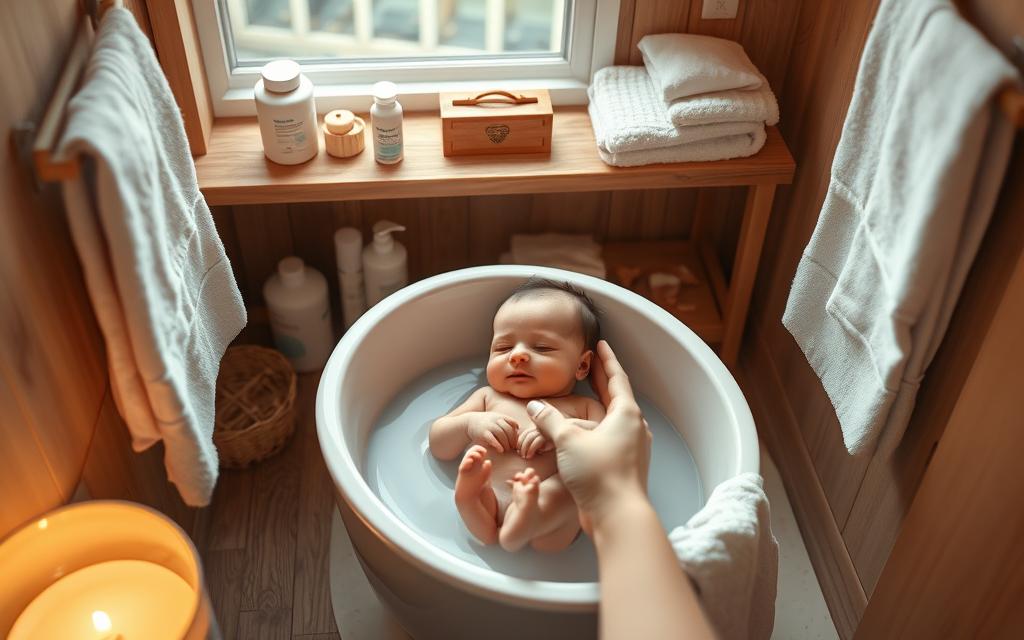
By following these steps and tips, bath time can be a calm and enjoyable experience. Be gentle, patient, and watchful of your baby’s needs.
Special Considerations for Newborn Bathing
When bathing a newborn, parents need to know some special things. Newborns need special care, mainly in the first few weeks. Knowing these needs helps parents give their baby a great start.
Umbilical Cord Care
One important thing is taking care of the umbilical cord stump. It’s vital to keep it dry until it falls off, which usually happens in the first few weeks. Sponge baths are best until the cord stump falls off and the navel heals.
Circumcision Site Care
Parents of circumcised newborns must take good care of the circumcision site. Keeping it clean and following the doctor’s advice helps avoid infection and aids healing. Use warm water for gentle cleaning.
Bathing Premature Babies
Premature babies have different bathing needs than full-term babies. Their skin is very delicate, and they might need to be bathed less often. Always check with a healthcare provider for the best bathing schedule for a premature baby.
Seasonal Adjustments to Bath Frequency
The frequency of bathing can change with the seasons. In warmer months, babies might need to be bathed more often because of sweat and diaper rash. In colder months, they might need to be bathed less to avoid dry skin.
By considering these special factors, parents can adjust their newborn’s bathing routine. This ensures their baby starts life healthy and comfortable.
Common Newborn Skin Conditions and Bathing
It’s important to know about common newborn skin issues to create a good bathing routine. Newborns often face skin problems because their skin is sensitive and is growing. Using the right bathing methods and skincare can help manage these issues and keep the baby comfortable and healthy.
Managing Cradle Cap
Cradle cap, or seborrheic dermatitis, is a common scalp problem in newborns. It looks like a scaly, crusty scalp. To treat it, gently shampooing with a soft brush can help remove the scales. Being gentle is key to avoid making the scalp worse.
Dealing with Diaper Rash
Diaper rash is a common issue, often caused by being in a wet diaper too long. Keeping the diaper area clean and dry, and using a barrier cream can help. Changing diapers often is very important.
Addressing Baby Acne and Dry Skin
Baby acne and dry skin might need changes in the bathing routine. Using gentle, fragrance-free cleansers helps keep the skin balanced. For dry skin, applying moisturizer after baths helps keep moisture in.
When to Consult a Doctor About Skin Issues
Some newborn skin issues can be handled with care, but others need a doctor’s help. If a condition doesn’t get better, gets worse, or comes with a fever, see a pediatrician. They can give advice and treatment.
Understanding these common skin issues and adjusting the bathing routine can help keep newborn skin healthy and comfortable. Gentle skincare is key for good infant skincare routine and overall newborn hygiene.
Post-Bath Care for Your Newborn
After bathing your newborn, it’s key to follow a gentle care routine. This keeps their delicate skin healthy. It involves steps to keep your baby comfy and their skin safe.
Drying Techniques to Protect Delicate Skin
Gently pat your baby dry with a soft, warm towel. Don’t rub, as it can irritate their skin. Make sure to dry the neck, armpits, and groin area well.
Moisturizing Options for Newborns
Moisturizing after a bath keeps your newborn’s skin moist and protected. Use a gentle, fragrance-free moisturizer made for newborns. Apply it when their skin is a bit damp for better absorption.
| Moisturizer Type | Benefits | Skin Type |
|---|---|---|
| Fragrance-Free Cream | Soothes and protects dry skin | Dry or Sensitive Skin |
| Hypoallergenic Lotion | Gentle and non-irritating | Normal to Dry Skin |
| Natural Oil (e.g., Coconut Oil) | Moisturizes and nourishes | Normal Skin |
Dressing Your Baby After Bath Time
When dressing your newborn after a bath, choose soft, breathable fabrics like cotton. Make sure the clothes aren’t too tight and match the room’s temperature. Dress your baby in one more layer than you are wearing.
By following these steps, you can keep your newborn comfy and their skin healthy.
Creating a Soothing Bath Time Routine
A well-structured bath time routine can make bathing a newborn a joy for everyone. It becomes a time for relaxation and bonding.
Making Bath Time Enjoyable
To make bath time fun, create a cozy and inviting space. Keep the room warm and have everything you need close by. Gentle care and soft words also make a big difference.
Incorporating Bath Time into Sleep Routines
Bath time can signal bedtime to your baby. Being consistent is key. Stick to the same routine, like bath, then feed, and sleep. This helps your baby’s body get into a rhythm.
Managing Bath Time Challenges and Fussiness
Some babies get upset during baths. Calming techniques like stroking, soft music, or staying calm can help. Also, make sure the water isn’t too hot or cold.
Calming Techniques During Baths
Using calming techniques like soft speaking or gentle movements can keep your baby calm during baths.
Building Positive Associations
To make bath time a positive experience, keep it as nice as possible. Use warm water, gentle products, and a happy atmosphere.
| Bath Time Tips | Benefits |
|---|---|
| Maintain a consistent schedule | Helps regulate baby’s internal clock |
| Use gentle products | Reduces skin irritation |
| Keep bath time short | Prevents overstimulation |
By following these tips, you can make bath time a calming and enjoyable experience for both you and your newborn.
Conclusion: Establishing a Healthy Bathing Routine
Creating a good bathing routine for your newborn is very important. It helps keep their skin healthy and prevents skin problems. Knowing how often to bathe them is key.
Following the American Academy of Pediatrics’ advice is a good start. It helps you make a skincare plan for your baby. The right bathing schedule depends on your baby’s age, health, and daily activities.
Pay attention to your baby’s needs and adjust the bathing schedule as needed. This ensures they stay comfortable and healthy. A good bathing routine also strengthens your bond and helps your baby relax.