Homemade Baby Food Recipes for 6–12 Months
Starting your baby on solid foods can feel scary. You might be thinking, “Where do I begin? What should I feed my baby?”
Experts say to keep breastfeeding until 6 months. Then, it’s time to introduce solid foods. This 6-12 months period is key for your baby’s nutrition.
In this article, we’ll talk about the importance of healthy baby meals. We’ll also give you a detailed guide to help you start this journey.
Key Takeaways
- Breast milk is recommended until 6 months.
- Solid foods should be introduced between 6-12 months.
- A well-planned introduction to solids is key for nutrition.
- Healthy baby meals are vital for growth and development.
- Gradually introducing solid foods is best.
Getting Started with Solid Foods
Starting your baby on solid foods is a big step. It needs careful thought and preparation. You must know when your baby is ready, what you need, and how to keep them safe.
Signs Your Baby is Ready for Solids
Before you start, look for signs that your baby is ready. The American Academy of Pediatrics says babies are ready around six months. They look for these signs:
- Sitting upright with support
- Holding their head up steadily
- Showing interest in solid food
Seeing these signs means your baby is ready to start eating solids.
Essential Equipment for Making Baby Food
You’ll need some basic tools to make baby food. A blender or food processor is key for pureeing fruits and veggies. A steamer helps cook veggies until they’re soft. And, ice cube trays are great for portioning and storing food.
Safety Guidelines and Precautions
When introducing solid foods, safety is top priority. Start with single-ingredient foods to watch for allergies. Avoid common allergens like peanuts, eggs, and fish. Make sure the food is warm but not hot to prevent burns. Always watch your baby while they eat and be careful of choking hazards.
By following these tips, you can safely introduce solid foods to your baby.
Nutritional Needs of Babies 6-12 Months Old
Nutrient-rich baby food is key for babies 6-12 months old. They grow a lot and need more complex foods.
Key Nutrients for Growing Babies
Babies 6-12 months need many important nutrients. Iron, protein, and healthy fats are essential. Iron helps prevent deficiency.
Protein is important for muscles. Healthy fats, like those in breast milk and avocado, help the brain grow. It’s important to make sure baby food has these nutrients.
Foods to Introduce and When
It’s important to introduce different foods at the right time. At 6 months, start with simple purees like veggies or fruits. By 8-9 months, introduce thicker textures and new tastes, like chicken or beans.
| Age | Foods to Introduce |
|---|---|
| 6 months | Single-ingredient purees (e.g., sweet potato, avocado) |
| 8-9 months | Thicker textures, protein sources (e.g., chicken, lentils) |
| 10-12 months | Chunky textures, finger foods (e.g., soft fruits, vegetable sticks) |
Organic vs. Conventional Ingredients
Parents often choose between organic and conventional baby food. Organic ingredients are grown without harmful chemicals. But, they might cost more.
Conventional ingredients are cheaper and nutritious. The choice depends on what you prefer and can afford. Just make sure the food is fresh and safe.
Homemade Baby Food Recipes for 6-12 Months: Stage by Stage Guide
From purees to finger foods, the journey of homemade baby food is a step-by-step guide. It helps you understand your baby’s food journey.
6-7 Months: First Foods and Simple Purees
At 6-7 months, babies start with their first foods, simple purees. These are gentle on their stomach. Start with purees like pea and banana, which are full of nutrients and easy to digest. As your baby gets used to eating solids, you can add new flavors and textures.
“The American Academy of Pediatrics suggests introducing a variety of foods to babies,” says Dr. Sarah Jones, a pediatrician. “Starting with simple purees is a great way to start this journey.”
8-9 Months: Thicker Textures and New Flavors
As your baby grows, they can handle thicker textures better. At 8-9 months, you can give them thicker purees and new flavors, like pumpkin and chicken. These foods are full of nutrients and help your baby get used to different tastes and textures.
- Pumpkin puree with a hint of cinnamon
- Chicken and vegetable medley
- Mashed sweet potatoes with breast milk or formula
10-12 Months: Chunky Textures and Finger Foods
By 10-12 months, babies are ready for chunky textures and finger foods. These are important for their motor skills and independence. Offer soft fruits and vegetables, like mashed avocado or soft berries, and start introducing more complex finger foods.
As Dr. Jones says, “Finger foods are great for self-feeding and help your baby develop fine motor skills.”
Fruit-Based Baby Food Recipes
Fruit purees are not only tasty but also full of nutrients. They are essential for your baby’s growth. Introducing different fruits to your baby’s diet ensures they get a wide range of vitamins and minerals.
Apple and Pear Purees with Variations
Apples and pears are great for babies because they are mild and soft. To make apple puree, peel, core, and chop an apple. Then, steam it until it’s tender. Blend it into a smooth puree. You can mix apples with pears for a tasty twist.
Nutritional Benefits: Apples are full of fiber, and pears are rich in vitamin C. Together, they offer a nutritious start for your baby’s fruit journey.
Banana and Avocado Blends
Bananas and avocados blend into a creamy, nutritious mix. Mash a ripe banana and avocado together. Add a squeeze of lemon juice to prevent browning. This mix is packed with healthy fats and potassium.
Tip: For younger babies, strain the mix through a fine-mesh sieve to remove lumps.
Berry Medleys for Older Babies
Berries like blueberries, strawberries, and raspberries are great for older babies. Mix different berries together and puree them. You can also add bananas or apples to the mix.
| Fruit | Nutritional Benefit | Age to Introduce |
|---|---|---|
| Blueberries | Rich in antioxidants | 8+ months |
| Strawberries | High in vitamin C | 8+ months |
| Raspberries | Good source of fiber | 8+ months |
Tropical Fruit Introductions
Tropical fruits like mangoes and pineapples can be introduced around 8-9 months. Mango puree is rich in vitamins A and C. Pineapple is a good source of manganese. Make sure to remove any tough or fibrous parts before pureeing.
Precaution: Always check with your pediatrician before introducing new foods, specially if there’s a family history of allergies.
Vegetable Purees and Combinations
Nutrient-rich vegetable purees are perfect for babies starting on solid foods. They provide essential nutrients and fiber. Sweet potatoes and carrots are great first veggies because they’re sweet and nutritious.
Sweet Potato and Carrot Recipes
Sweet potatoes are rich in vitamin A. Carrots are high in beta-carotene. Mixing these two veggies makes a puree that’s both healthy and tasty for your baby.
- Steam sweet potatoes and carrots until tender.
- Puree them together with a little breast milk or water to achieve the desired consistency.
- Add a pinch of cinnamon for extra flavor.
Green Vegetable Introductions
Green veggies like broccoli, green beans, and peas are full of vitamins and minerals. Start with mild flavors when introducing these.
Tips for Introducing Green Vegetables:
- Start with small amounts to check for any signs of allergy.
- Steam or boil until tender, then puree.
- Mix with other veggies for a variety of flavors.
Vegetable Medleys with Herbs
Adding herbs to veggie purees can make them taste better and be more nutritious. Try carrots with parsley or sweet potatoes with sage.
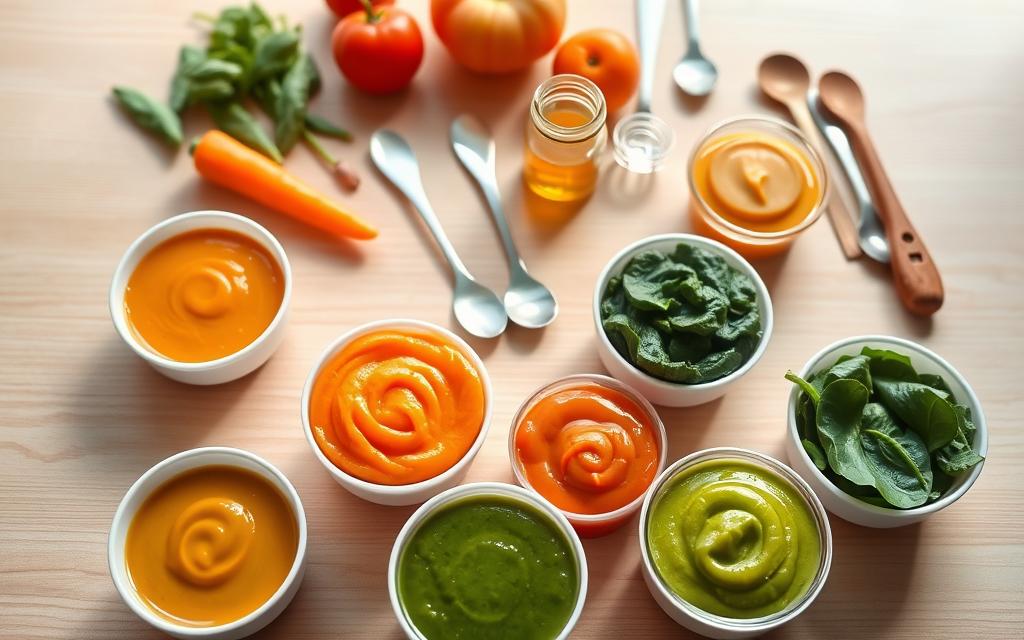
Butternut squash is great with apples or carrots. Its sweet taste is a hit with babies.
Pea and Zucchini Blends
Pea and zucchini puree is a refreshing and nutritious choice. Just steam the veggies and blend until smooth.
| Vegetable | Nutritional Benefits | Tips for Preparation |
|---|---|---|
| Sweet Potatoes | Rich in Vitamin A | Steam until tender, then puree. |
| Carrots | High in Beta-Carotene | Steam or boil until soft. |
| Green Beans | Packed with Vitamins and Minerals | Steam until tender, then chop or puree. |
Protein-Rich Baby Food Options
Protein is key for babies, helping them grow and stay healthy. As they start eating solids, adding protein-rich foods is important. It helps with muscle growth and repair, vital for their development.
Introducing Meats and Poultry
Meats and poultry are great for babies because they’re full of protein. Start with pureed forms to avoid choking risks.
Chicken and Turkey Purees
Chicken and turkey are good first choices because they’re mild and soft. Cook the meat until it’s tender, then blend it until it’s smooth. You can also add veggies or fruits to make a complete meal.
Beef and Lamb Recipes
Beef and lamb are good later, around 8-9 months. They’re packed with iron and other nutrients. Cook them well and blend them until smooth. Mixing with foods your baby already likes can help them get used to new tastes.
| Meat | Age to Introduce | Preparation Tip |
|---|---|---|
| Chicken/Turkey | 6-7 months | Puree cooked meat until smooth |
| Beef/Lamb | 8-9 months | Cook thoroughly, then puree |
Plant-Based Protein Sources
For those who prefer plant-based diets, beans, lentils, and tofu are great. They can be pureed or mashed. Lentils, for example, are full of protein and fiber, making them a healthy choice.
“Incorporating a variety of protein sources into your baby’s diet ensures they receive a broad range of essential nutrients.”
Fish and Seafood for Babies
Fish and seafood are not just protein-rich but also full of omega-3s, important for brain growth. Choose low-mercury fish like salmon or cod. Cook it well and flake it to lower the risk of choking.
Grain and Legume Recipes for Babies
As your baby grows, adding grain and legume recipes is a great idea. Grains like iron-fortified cereals and oatmeal are full of important nutrients. Legumes, such as lentils and beans, are packed with protein and fiber.
Iron-Fortified Cereals and Oatmeal
Iron-fortified cereals are a top choice for babies, giving them a key nutrient for growth. Oatmeal is also great, with lots of fiber and easy to digest. Just mix the cereal or oatmeal with breast milk or formula to get the right consistency.
Here are some tips for introducing these foods:
- Start with a single-ingredient cereal to watch for any allergy signs.
- Slowly thicken the mixture as your baby gets used to eating solids.
- Add fruits or vegetables to make it sweeter and tastier.
Lentil and Bean Purees
Lentils and beans are full of protein and fiber, perfect for your baby’s diet. To make purees, cook the legumes until soft, then blend until smooth.
| Legume | Nutritional Benefits | Preparation Tip |
|---|---|---|
| Lentils | High in protein and fiber | Cook with vegetables for added flavor |
| Black Beans | Rich in iron and antioxidants | Mix with sweet potatoes for a nutrient-rich puree |
Quinoa and Rice Dishes
Quinoa and rice are great grains for babies. Quinoa is a complete protein, perfect for growing babies. Rice is easy to digest and goes well with fruits and veggies.
“Quinoa is an excellent source of protein and fiber, making it a nutritious addition to a baby’s diet.” – Pediatric Nutrition Expert
Try making quinoa porridge or rice and veggie mixes for your baby. Make sure the grains are well cooked to avoid any tummy troubles.
Baby-Led Weaning Approach and Recipes
The baby-led weaning method lets babies feed themselves whole foods. It skips spoon-feeding and lets them pick up and eat solid foods on their own.
Principles of Baby-Led Weaning
Baby-led weaning lets babies start eating solid foods from the beginning. They choose from a variety of healthy foods. This way, they can explore different tastes, textures, and smells at their own pace.
Key Principles:
- Offer a variety of whole foods.
- Let the baby set the pace.
- Supervise mealtime closely.
Safe Finger Foods by Age
As your baby grows, introducing the right finger foods is key. Here’s a guide to safe finger foods by age:
| Age | Safe Finger Foods |
|---|---|
| 6-8 months | Soft fruits like bananas, avocados |
| 8-10 months | Steamed vegetables, soft cheese |
| 10-12 months | Small pieces of cooked meat, toast strips |
Combining Purees and Baby-Led Weaning
Many parents mix purees with baby-led weaning for the best results. Purees introduce new flavors and nutrients. Baby-led weaning helps with self-feeding and motor skills. You can mix purees with finger foods for a balanced meal.
Storage, Freezing, and Meal Planning Tips
Learning how to store and freeze homemade baby food is key. It keeps the food nutritious and safe for your baby. The right methods help keep the food quality high and make mealtime easier.
Safe Storage Guidelines
Choosing the right containers is vital for storing baby food. Go for airtight containers made for food storage. Glass containers with tight lids are best because they’re safe and don’t hold smells or stains.
Always mark the containers with the date and what’s inside. Keep them in the fridge at a cold temperature. Use the food within 3 to 5 days.
Batch Cooking and Freezing Methods
Batch cooking saves time by making lots of baby food at once. Cook and puree different foods, then put them in ice cube trays. Once they’re frozen, move them to freezer-safe bags or containers for longer storage.
This keeps the food fresh and makes thawing only what you need easy. Freeze food at 0°F (-18°C) or below. Use it within 3 to 4 months for the best taste.
Weekly Meal Planning for Baby
Good meal planning for your baby considers their age, diet, and any allergies. Plan meals for the week, focusing on foods they like. Make a shopping list and prep as much as you can ahead of time.
Think about making a batch of purees on the weekend. Freeze them for later use. This saves time and ensures your baby gets a variety of nutrients.
Conclusion
Starting your baby on solid foods is a big step. It’s the start of a lifelong journey of eating well. By following the tips and recipes in this article, you can give your baby a healthy start.
Making homemade baby food recipes lets you pick the ingredients. This way, you can make sure your baby gets the best nutrition. You can make everything from pureed fruits and veggies to protein-rich meals.
A good start with introduction to solids is just the beginning. Keep giving your baby a variety of healthy baby meals. This helps them love nutritious foods, which will benefit them as they grow up.
As you go through this exciting time, stay informed, be patient, and enjoy watching your baby grow and thrive.