
Parenting with AI: Raising Kinder Kids
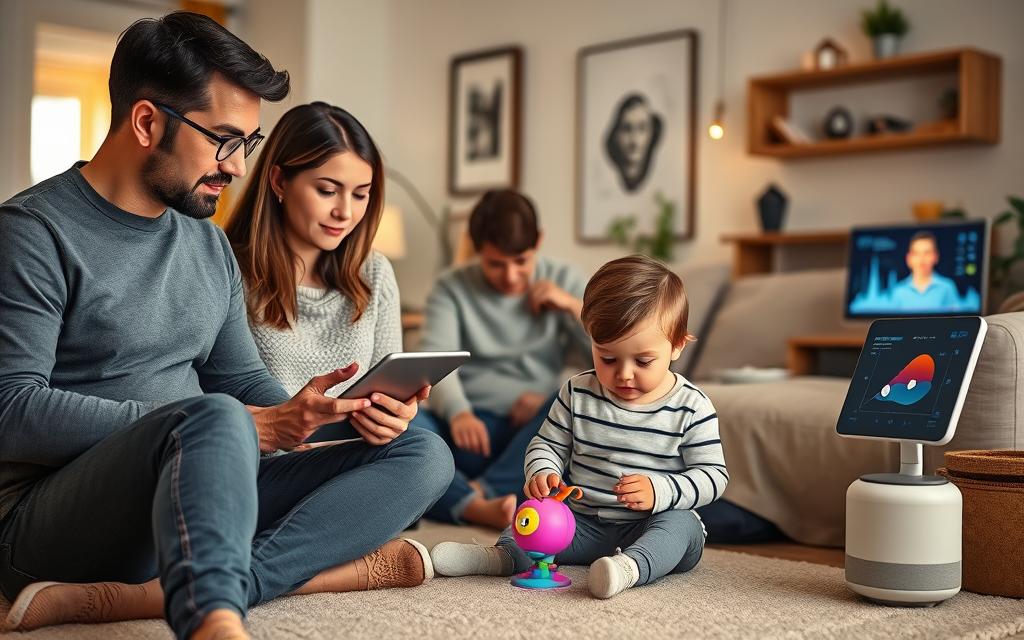
Raising kids today is different because of technology. AI parenting tools are changing how we care for our children. They offer personalized help and support.
Technology is key in modern parenting. Technology helps parents create a caring space for their kids. This is thanks to AI.
This article looks at the good and bad sides of AI in parenting. It shows how these tools can help parents raise their kids.
Key Takeaways
- Understanding the role of AI in modern parenting.
- Exploring the benefits of AI parenting tools.
- Addressing the challenges associated with AI in childcare.
- Discovering how AI can support personalized parenting.
- Learning how to effectively integrate AI tools into daily parenting.
The Modern Parenting Landscape
Modern parenting is a complex task, filled with many challenges that were unheard of just a decade ago. The rapid evolution of technology and changing societal norms have significantly impacted how parents raise their children.
Challenges Facing Today’s Parents
Today’s parents face a multitude of challenges, from managing screen time to ensuring their children’s emotional well-being. The pressure to be perfect parents, coupled with the influence of social media, can be overwhelming. AI technology for raising kids is emerging as a valuable tool to help parents navigate these challenges.
Some of the key difficulties include:
- Managing children’s screen time and ensuring healthy digital habits
- Fostering emotional intelligence and empathy in children
- Balancing work-life responsibilities while spending quality time with children
The Digital Generation Gap
The digital generation gap refers to the differences in technology adoption and usage between parents and their children. This gap can lead to misunderstandings and difficulties in guiding children’s digital behavior. AI-powered tools can help bridge this gap by providing insights into children’s online activities and suggesting appropriate interventions.
| Challenge | Traditional Approach | AI-Enhanced Approach |
|---|---|---|
| Managing Screen Time | Setting strict time limits | Using AI-driven screen time management tools to monitor and control usage |
| Fostering Emotional Intelligence | Role-playing and discussions | Utilizing AI-powered emotional recognition tools to teach empathy and self-awareness |
By leveraging AI technology for raising kids, parents can gain valuable insights and support in addressing the challenges of modern parenting.
Parenting with AI: Can Artificial Intelligence Raise Kinder Kids?
Technology keeps getting better, and AI’s role in raising kids is getting a lot of attention. Parenting with AI involves many technologies that help kids grow. These tools are designed to support child development.
Defining AI in the Parenting Context
In parenting, AI means systems or machines that act like humans. They do tasks that need human smarts, like learning and solving problems. These AI systems look at lots of data to understand a child’s behavior and feelings.
AI tools give advice on fun activities, learning stuff, and even how to interact with others. They’re made just for a child’s needs and skills.
The Intersection of Technology and Child Development
Technology and child growth are closely linked. AI helps kids grow in many ways. It does this through fun learning apps, tools that recognize feelings, and virtual friends.
Knowing how AI and child growth connect helps parents use these technologies wisely. This way, they can make better choices for their kids.
AI could help kids become kinder by giving them personal support and helping parents. We need to look at both the good and bad sides of using AI in parenting.
How AI Tools Support Emotional Intelligence Development
Emotional intelligence is key for kids, and AI is helping a lot. Parents can now use cool tech to help their kids understand and handle their feelings better.
AI-Powered Emotional Recognition
AI-Powered Emotional Recognition is a big deal in teaching kids about emotions. It uses faces and voices to see how a child is feeling. For example, it can spot when a kid is upset during a game and help them calm down.
Interactive Storytelling for Empathy Building
Interactive Storytelling is another smart way AI helps kids. It uses stories and games to teach kids about others’ feelings. AI can change the story based on what the kid says, making it more personal and helpful.
Using these AI tools, parents can give their kids a strong start in emotional intelligence. As AI gets better, it will help kids grow emotionally even more.
Smart Assistants as Parenting Allies
Parents today face many challenges. Smart assistants are becoming great helpers. They make daily tasks easier and support child growth in new ways.
Voice Assistants and Child-Friendly Interactions
Voice assistants like Amazon’s Alexa and Google Assistant are getting more popular. They offer fun and educational activities for kids. For example, parents can use voice commands to find educational content. This helps manage screen time and ensures the content is right for their age.
Key Features of Voice Assistants for Children:
- Educational content tailored to different age groups
- Interactive games that promote learning
- Storytelling capabilities that can help with language development
Creating Positive Digital Routines
Smart assistants help parents create good digital habits for their kids. They can set up routines and reminders. This way, kids learn to use technology wisely from a young age.
| Routine | Benefit |
|---|---|
| Limiting screen time | Reduces the risk of digital addiction |
| Encouraging physical activity | Promotes a healthier lifestyle |
AI-Enhanced Learning Platforms for Character Development
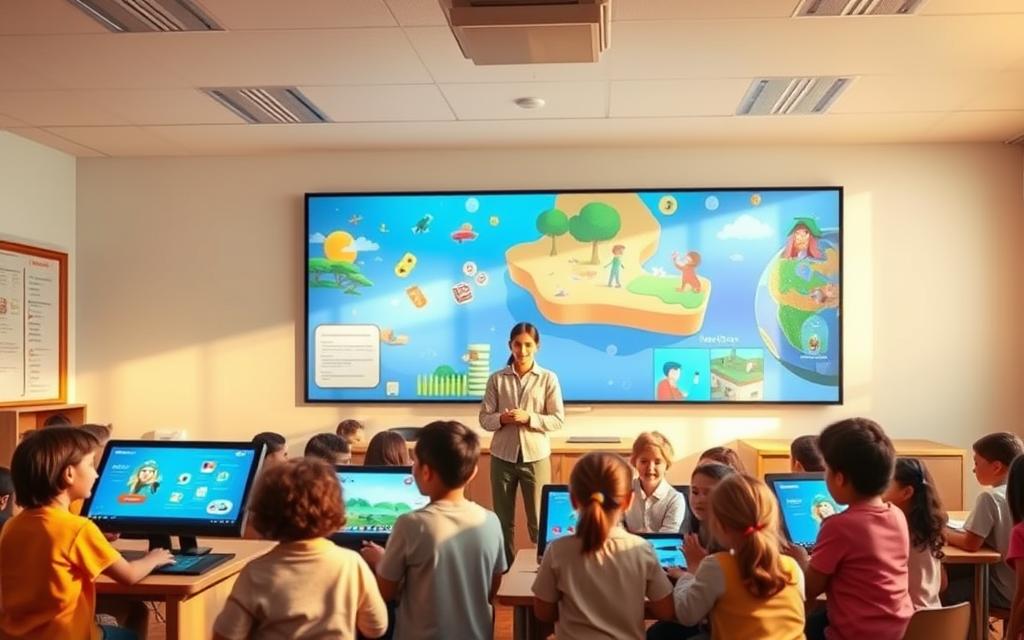
AI is changing how we teach character through advanced learning platforms. These platforms focus on kindness and understanding emotions. They use AI to make learning fun and personal for kids, teaching them important life skills.
Personalized Ethics and Values Education
AI learning platforms are great at teaching ethics and values. They use AI to understand each child’s needs and learning style. This way, every child gets lessons that really matter to them.
- Adaptive learning paths that adjust to a child’s progress
- Customized content that addresses specific values such as empathy and honesty
- Real-time feedback mechanisms to reinforce positive behaviors
Gamification of Prosocial Behaviors
Gamification makes learning fun and exciting. AI learning platforms use games to teach kids to be kind and helpful. This makes learning about good behavior fun and engaging.
Here’s how gamification works:
- Reward systems that acknowledge and reinforce positive actions
- Interactive stories that teach moral values through engaging narratives
- Challenges and quizzes that promote critical thinking and ethical decision-making
With AI learning platforms, parents and teachers can help kids grow in a fun and effective way. It’s a great way to teach important life lessons.
Digital Wellbeing: Balancing Screen Time with AI Monitoring
In today’s digital world, parents want to make sure their kids’ screen time is good and useful. They need a balance in screen time, using AI tools to help with healthier digital habits.
Smart Screen Time Management
AI tools can help parents manage their kids’ screen time better. They track usage, set limits, and check app use to follow rules. This lets parents focus on other important things for their kids’ wellbeing.
Content Filtering and Age-Appropriate Recommendations
AI helps filter content and suggests age-appropriate stuff. It looks at a child’s interests and how mature they are. This way, it finds safe and fun content for them.
This mix of AI monitoring, smart screen time, and content filtering helps parents. It answers if AI can help raise kinder kids by teaching good digital habits and positive online interactions.
AI-Powered Conflict Resolution Tools
AI tools are changing how we solve conflicts in families. They help parents find new ways to teach kids important skills for solving problems.
Teaching Negotiation Skills Through Technology
AI platforms teach kids how to negotiate through fun and interactive ways. They use AI-powered chatbots to mimic real-life situations. This lets kids practice talking things out in a safe space.
Virtual Mediators for Sibling Disputes
Sibling fights are common in many homes. AI virtual mediators offer a fair view to help solve these issues. They lead kids through a step-by-step process to find a solution that works for everyone.
Using AI tools, parents can teach their kids how to negotiate and solve problems. These tools offer quick help in conflicts and help kids grow up to be kinder and more understanding.
The Role of AI in Creating Inclusive Family Environments
Artificial Intelligence is changing how families connect and support each other. It helps families overcome language barriers, cultural differences, and accessibility needs. This makes family environments more inclusive and supportive.
Language Translation and Cultural Learning
AI tools are making it easier for families to talk, even when they speak different languages. These tools do more than translate words. They understand cultural nuances, helping families connect on a deeper level.
Key Features of AI Translation Tools:
- Real-time conversation translation
- Cultural context understanding
- Personalized learning for family members
Accessibility Tools for Diverse Family Needs
AI is also making family life more accessible for everyone. It helps all family members, no matter their abilities, to fully participate. From voice-controlled smart homes to AI-powered aids, technology is making a big impact.
| Accessibility Tool | Description | Benefit |
|---|---|---|
| Voice-controlled devices | Control home environment with voice commands | Eases life for family members with mobility issues |
| AI-powered visual aids | Assistive technology for visually impaired members | Enhances independence and safety |
| AI-enhanced hearing aids | Advanced hearing aids with noise cancellation and more | Improves communication for those with hearing impairments |
By using AI, families can build a more inclusive and supportive space. This ensures every member feels valued and understood.
Potential Concerns and Ethical Considerations
As we use more AI in parenting, we must think about the concerns and ethics. AI helps in child development, but it also brings up important issues. Parents and caregivers need to know these to use AI wisely.
Privacy and Data Security
Privacy and data security are big worries. AI tools collect personal info about kids and families. It’s important to keep this data safe from hackers and misuse.
These tools must follow strict data protection laws. This ensures our kids’ info stays private.
Avoiding Over-Reliance on Technology
Another worry is relying too much on tech. AI can help with child development, but we shouldn’t forget the importance of human touch. Too much AI can make parents less intuitive and less skilled in interacting with their kids.
Maintaining Authentic Human Connection
Keeping real human connections is vital. AI can make us spend less time with our kids. It’s important for AI to help, not replace, our interactions with our children.
In summary, AI has many benefits for parenting, but we must be mindful of the concerns and ethics. Knowing these helps parents use AI in a way that supports their kids’ growth.
Practical Implementation: Integrating AI into Your Parenting Approach
Adding AI to parenting might seem hard, but it can really change things. We’ll look at how to use AI tools in your daily life.
Age-Appropriate AI Tools
Choosing the right AI tools for your child’s age is key. Young kids can learn with AI apps that make learning fun. Older kids can do more advanced stuff like coding and thinking critically.
Creating a Balanced Technology Plan
Having a good tech plan is important. It makes sure AI tools help your parenting without too much screen time. You need to set rules for screen use and check what your kids are watching.
For Toddlers and Preschoolers
Young kids need fun and learning apps. ABCmouse and PBS Kids are great. They help kids learn and grow.
For Elementary School Children
Older kids can use AI for harder learning. Khan Academy and Code.org offer learning that fits their level. They help kids understand more subjects.
For Tweens and Teens
AI can help older kids be more independent. It can help with staying organized and managing time. It also supports their mental health, making parenting them easier.
By picking the right AI tools and planning tech use, parents can use AI to help their parenting. This makes for a healthier and more supportive family.
Conclusion: The Future of AI-Assisted Parenting
AI-assisted parenting is becoming a key tool for modern parents. It helps kids develop important skills for today’s fast-paced world. AI tools offer support and guidance for children’s growth.
AI is changing parenting in big ways. It helps with emotional intelligence and learning. This makes parenting more effective and caring.
It’s important for parents to keep up with AI advancements. This way, they can use AI tools to raise compassionate and understanding kids.