Top Eco-Friendly Baby Items for Sustainable Parenting

As a parent, you make many choices that affect your baby’s health and the planet. Choosing sustainable baby products is one key decision. This move is becoming more common as people worry about the environment.
This change is not just a trend. It’s a step towards a better future for our planet.
Deciding on the right baby products can be tough. But, picking sustainable ones makes it easier. Sustainable baby products are better for the environment. They help reduce waste and cut down on carbon emissions.
By making smart choices, parents can make a big difference for our planet.
Key Takeaways
- Opting for sustainable baby products is a key step in eco-conscious parenting.
- Sustainable products help reduce waste and cut carbon emissions.
- Smart choices can greatly impact the environment.
- Eco-friendly products are kinder to your baby’s skin and the planet.
- Many parents are now choosing sustainable products for a healthier planet.
The Rise of Sustainable Parenting: Why It Matters
As parents, we’re more aware of how our choices affect the environment. Sustainable parenting is becoming more popular. This change comes from understanding the harm traditional baby products cause.
Environmental Impact of Traditional Baby Products
Traditional baby products harm the environment a lot. This includes the resources used to make them and the waste they create.
Waste Generation Statistics
Traditional baby products lead to a lot of waste. For example, disposable diapers are a big part of municipal solid waste. Here are some waste generation statistics:
| Product | Estimated Annual Waste |
|---|---|
| Disposable Diapers | 3.5 million tons |
| Baby Wipes | 1.2 million tons |
| Packaging Waste | 0.8 million tons |
Chemical Concerns in Conventional Items
Many traditional baby products have harmful chemicals. These include phthalates and parabens. These chemicals can harm babies’ health. Eco-friendly alternatives can help avoid these risks.
Benefits of Choosing Eco-Friendly Alternatives
Choosing eco-friendly baby products is good for the environment and your baby’s health.
Health Advantages for Your Baby
Organic baby products and non-toxic baby products use safer ingredients. This lowers the chance of skin irritation and other health problems. They are a better choice for your baby’s health.
Long-term Environmental Benefits
Choosing sustainable parenting options helps the environment a lot. It reduces waste, saves resources, and cuts pollution. Sustainable parenting is key to a healthier planet for the future.
Eco-Friendly Baby Products Parents Are Switching To
More parents are choosing eco-friendly baby products. They want to lessen the harm traditional products cause to the environment. This includes pollution, waste, and damage to nature.
Current Trends in Sustainable Baby Care
The baby care world is changing fast. Parents are picking products that are good for the planet. They’re looking for things that make less waste and do more than one thing.
The Shift Toward Minimal Waste
Parents are worried about the waste from baby items. They want products with little or no packaging. Reusable items like cloth diapers and silicone bags are popular. They help cut down on trash.
Popularity of Multi-functional Products
Products that do more than one thing are in demand. For example, a baby carrier that’s also a blanket. Or furniture that changes from a crib to a toddler bed.
What Makes a Baby Product Truly Eco-Friendly
Not every “eco-friendly” product is really green. To find true eco-products, look for certain labels.
Certifications to Look For
Look for GOTS (Global Organic Textile Standard) for clothes and EcoCert for cosmetics. GOTS certification means the fabric is organic and meets high environmental and social standards.
Avoiding Greenwashing
Some companies falsely claim their products are eco-friendly. To spot this, check for third-party labels. Also, research the company’s environmental efforts.
By being smart and informed, parents can help the planet. They also keep their babies healthy and safe.
Organic and Sustainable Clothing Options
For eco-conscious parents, picking organic and sustainable clothes for their babies is key. More parents now choose eco-friendly options due to environmental and health concerns. This shift is driven by growing awareness of traditional clothing’s impacts.
Organic Cotton Bodysuits and Sleepwear
Organic cotton is a favorite for baby clothes. It’s soft, breathable, and lasts long. Parents who care about their baby’s comfort and the planet prefer organic cotton bodysuits and sleepwear.
Top Brands for Everyday Basics
Burt’s Bees Baby and Patagonia Baby are top picks for organic cotton basics. They offer comfy and sustainable products.
Seasonal Options and Layering Pieces
Hanna Andersson has organic cotton layering for all seasons. These pieces are versatile and durable, making them a smart choice for parents.
Bamboo and Hemp Clothing Alternatives
Bamboo and hemp are great alternatives to traditional materials. They’re sustainable, soft, and regulate temperature well.
Benefits of These Renewable Fibers
Bamboo and hemp keep babies cool in summer and warm in winter. They’re also good for sensitive skin.
Brands Leading the Way in Sustainable Baby Fashion
Many brands are making sustainable baby clothes. When picking a brand, consider price and how long the clothes last.
Price Points and Durability Comparison
Eco-friendly clothes might cost more, but Under the Nile offers affordable, quality options. Comparing prices and durability helps parents choose wisely.
Cloth Diapering Systems and Accessories
Cloth diapering systems are a green and flexible choice for parents. They have evolved to be both useful and good for the planet.
Modern Cloth Diaper Options
Today’s cloth diapers come in many styles, each with its own perks. Knowing these options helps parents make a smart choice.
All-in-Ones vs. Pocket Diapers vs. Prefolds
All-in-One diapers are easy to use, with the absorbent part sewn into the cover. Pocket diapers let you adjust how much they absorb. Prefolds are budget-friendly, needing a cover but allowing for custom absorbency.
- All-in-Ones: Simple to use, like disposables, but need washing more often.
- Pocket Diapers: You can change how much they absorb, saving money over time.
- Prefolds: Affordable and flexible, but cleaning and setting them up takes more effort.
Getting Started: Essential Supplies
To start cloth diapering, you’ll need diapers, a diaper pail, and extras like liners and wipes. The cost depends on the system and brand you choose.
| Essential Item | Description | Considerations |
|---|---|---|
| Cloth Diapers | Choose from AIOs, pocket diapers, or prefolds based on preference and budget. | Think about how many diapers you need daily and the cost per diaper. |
| Diaper Pail | A container for storing soiled diapers until wash day. | Look for a pail with a lid to keep smells down. |
| Liners and Wipes | Used for solid waste disposal and cleaning the baby’s bottom. | Choose biodegradable or compostable ones when you can. |
Eco-Friendly Disposable Alternatives
Parents who like disposables but want to be green can try biodegradable and compostable diapers.
Biodegradable and Compostable Options
Some brands make diapers that break down faster or can be composted. These diapers are better for the environment and are convenient.
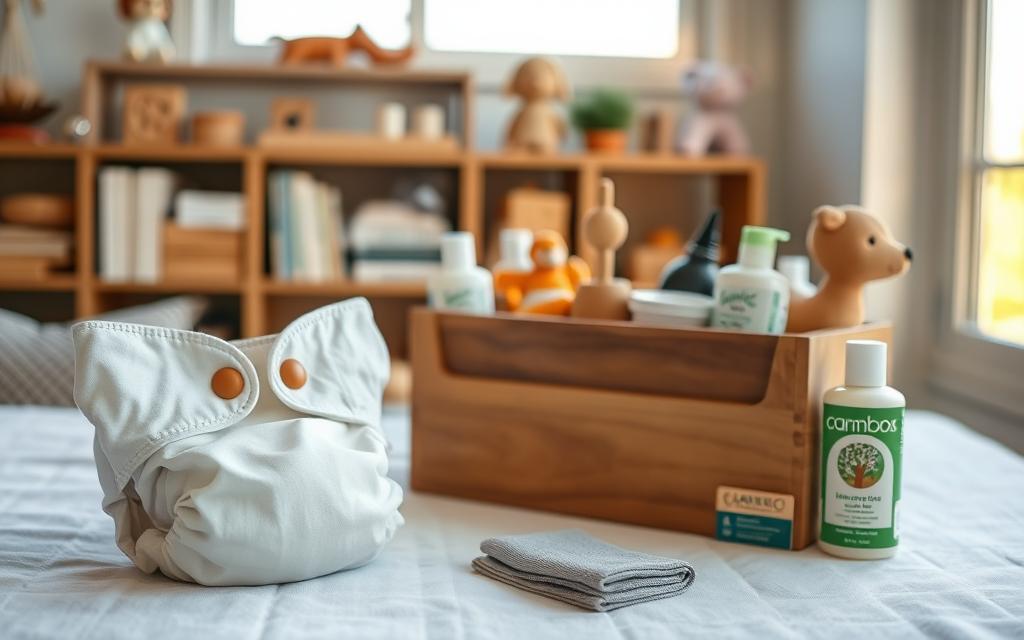
Diaper Accessories: Liners, Wipes, and Storage Solutions
Accessories can make cloth diapering better, making it easier and cleaner.
Creating a Functional Changing Station
A tidy changing station with everything you need nearby makes diaper changes easier. Look for storage that keeps diapers, wipes, and creams organized.
- Use a diaper caddy or changing table with storage.
- Keep a supply of clean diapers and wipes handy.
- Have a spot for soiled diapers and liners.
Choosing the right cloth diapering system and accessories helps parents find a green and affordable way to diaper. Whether you choose cloth, a mix, or eco-friendly disposables, there’s something for everyone.
Natural Feeding and Nursing Products
Parents today are choosing eco-friendly options for their babies. They want products that are safe and good for the planet. This shift is driven by a growing awareness of environmental impact.
Glass and Stainless Steel Bottles
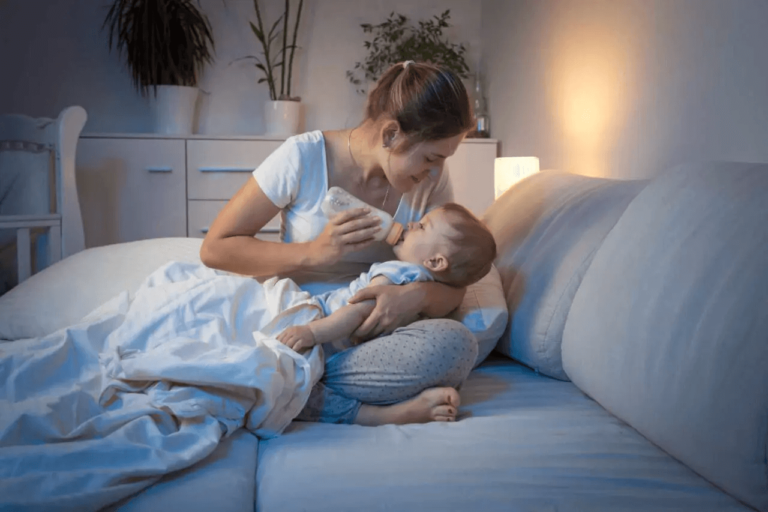
Glass and stainless steel bottles are becoming popular. They are safer than plastic because they are non-toxic and last longer. Glass bottles keep milk tasting fresh without adding chemicals.
Safety Features and Longevity
It’s important to pick bottles with safety features like shock resistance. Many have silicone sleeves to prevent breakage. These bottles last for years, cutting down on waste.
Silicone and Wooden Feeding Accessories
Accessories like plates and utensils are now made from sustainable materials. Silicone is chosen for its flexibility and ease of cleaning. Wooden items are natural, biodegradable, and safe for babies.
Plates, Utensils, and Food Storage
Silicone plates and utensils are easy to use and clean. Wooden spoons and forks are gentle on gums. Silicone containers are great for storing and serving food, reducing waste.
Organic Nursing Pillows and Covers
Organic nursing pillows and covers offer comfort and support. They are gentle on a baby’s skin and eco-friendly.
Materials to Look For and Avoid
Choose nursing pillows and covers made from certified organic materials. Avoid those with synthetic fillings or treated fabrics that could harm your baby.
Non-Toxic Nursery Furniture and Decor
Parents today are choosing eco-friendly nurseries. This choice is not just about looks. It’s about keeping their baby safe from harmful chemicals and toxins.
Sustainable Cribs and Bassinets
Cribs and bassinets are key in the nursery. Choosing sustainable options is good for the planet and safer for babies.
FSC-Certified Wood Options
Furniture from FSC-certified wood comes from well-managed forests. This ensures the wood is harvested responsibly. It’s a sign of caring for the environment.
Convertible Designs for Extended Use
Cribs that grow with your child are a smart choice. They last longer, saving money and reducing waste.
VOC-Free Paints and Finishes
Some paints and finishes can harm indoor air quality. Choosing VOC-free options is key to keeping the air clean.
Creating a Healthy Sleep Environment
A clean sleep space is vital for a baby’s health. Using VOC-free paints and finishes helps avoid health problems.
Organic Bedding and Mattresses
Organic bedding and mattresses are better for babies. They’re made from natural materials without harmful chemicals.
GOTS Certification and Natural Materials
The Global Organic Textile Standard (GOTS) ensures textiles are safe and sustainable. GOTS-certified products are made from at least 70% organic fibers.
| Product | Material | Certification |
|---|---|---|
| Crib | FSC-Certified Wood | FSC |
| Mattress | Organic Cotton | GOTS |
| Paint | Low-VOC | VOC-Free |
Green Bath and Skincare Products
Green bath and skincare products are getting more popular. Parents want their babies to be healthy and the planet to be safe. They look for organic and natural products that are good for their baby’s skin and the environment.
Organic Baby Soaps and Shampoos
Soaps and shampoos are key for baby skincare. Organic baby soaps and shampoos use natural ingredients. They avoid harsh chemicals like parabens and phthalates.
These products are kinder to the baby’s skin. They lower the chance of irritation and allergic reactions.
Ingredient Red Flags to Avoid
Parents should watch out for certain ingredients. Synthetic fragrances, dyes, and preservatives can be bad. Choosing products with natural fragrances or no fragrances is safer.
Always check the ingredient list. Look for USDA Organic or ECOCERT certifications.
Natural Diaper Creams and Lotions
Diaper creams and lotions are vital for a baby’s skin. Natural diaper creams use coconut oil, shea butter, and calendula. They protect against diaper rash without harsh chemicals.
Effective Plant-Based Formulations
Plant-based products are good for the planet and work well. Ingredients like aloe vera and chamomile soothe and protect the baby’s skin. Choose products without petroleum-based ingredients and artificial fragrances.
Plastic-Free Bath Toys and Accessories
Bath time can be fun and safe with plastic-free bath toys. Made from natural materials like rubber wood or bamboo, these toys are eco-friendly and last long. Organic cotton washcloths are also gentle on the baby’s skin.
Mold-Resistant Natural Options
One worry with bath toys is mold. Natural materials and designs that dry well prevent mold. Choosing these products makes bath time healthier.
Sustainable Toys and Play Items
Toys and play are changing, with more parents choosing green options. This change is not just about cutting down on waste. It’s about making a healthier world for our kids to grow in.
Wooden and Natural Fiber Toys
Wooden and natural fiber toys are gaining popularity. They’re not just durable but also break down naturally, which is better for the planet.
Age-Appropriate Selections
It’s key to pick the right toys for your child’s age. Young ones need safe, easy-to-hold toys like wooden blocks or soft dolls.
Brands Committed to Sustainability
Some brands are leading in making sustainable toys. PlanToys and HABA stand out for using eco-friendly materials and methods.
Non-Toxic Art Supplies
Art supplies are vital for kids’ growth, sparking creativity and self-expression. But many contain harmful chemicals. Choosing non-toxic supplies is essential.
Safe Options for Creative Expression
Look for art supplies that are safe and natural. Crayola offers a variety of non-toxic art supplies for kids.
Biodegradable Play Options
Outdoor and sensory play are key for kids’ development. Using biodegradable materials like sand or natural mats is a green way to encourage this play.
Outdoor and Sensory Play Materials
For outdoor and sensory play, think about natural latex or recycled paper. These materials are good for the planet and offer a special experience for kids.
As we explore sustainable parenting, it’s clear our choices matter. Choosing eco-friendly toys and play items helps create a better future for our kids.
- Choose toys made from sustainable materials.
- Opt for non-toxic art supplies.
- Consider biodegradable options for outdoor and sensory play.
“The toys we choose for our children reflect our values as parents. By choosing sustainable toys, we’re teaching our children the importance of caring for the planet.”
Conclusion: Building a Sustainable Future Through Conscious Parenting
As parents, we must make choices for our children’s future. Choosing eco-friendly baby products is key. These products help our kids and the planet.
Parents are now picking organic cotton bodysuits and bamboo clothes. They also choose natural feeding items. Cloth diapers and non-toxic nursery furniture are becoming more popular too.
These choices help reduce waste and keep our kids safe from harmful chemicals. By picking sustainable products, we help the environment. This also teaches our kids to live healthier and greener.
Choosing sustainable products is a big step towards a greener future. There are many eco-friendly options out there. These choices can make a big difference for our kids and the planet.