Solid Food Intro: Tips for Feeding Your Baby
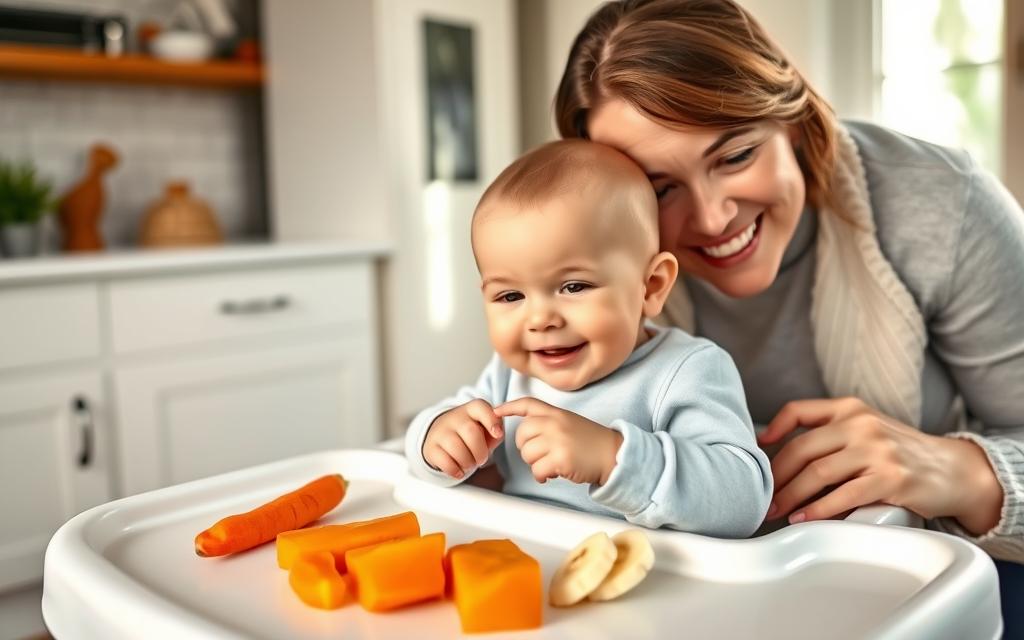
Introducing solid foods to your baby is a big step in their growth. The American Academy of Pediatrics suggests starting this around 6 months. This is when babies are ready to move beyond breast milk or formula.
At this time, babies need more nutrients than just milk or formula can offer. Starting solids might seem tough, but with the right help, parents can ease the transition for their babies.
Knowing the best time and way to introduce solid foods is key for your baby’s health and nutrition.
Key Takeaways
- Introduce solid foods at around 6 months.
- Start with single-ingredient purees.
- Gradually increase the variety of foods.
- Monitor for signs of allergy or intolerance.
- Consult a pediatrician for personalized advice.
When and How to Introduce Solid Foods to Your Baby
Starting solid foods is a big step for your baby. It’s important to think about when they are ready. Every baby grows at their own pace.
The Developmental Timeline for Starting Solids
The American Academy of Pediatrics suggests breast milk only for about six months. But, when to start solids depends on the baby. Usually, babies are ready between four to six months.
- By four months, some babies might be ready, but it’s not the same for all.
- By six months, most babies are ready to start solids.
Key Milestones to Watch For
There are important signs that show a baby is ready for solid foods. These include:
- Sitting up with support and having good head and neck control.
- Showing interest in food and being able to move food from the front of the mouth to the back for swallowing.
- Losing the “tongue-thrust reflex,” where the baby pushes food out of their mouth with their tongue.
The Role of Pediatrician Guidance
Pediatricians are key in helping parents know when to start solid foods. They check the baby’s health and growth, giving advice tailored to them.
Consulting with a pediatrician helps parents understand their baby’s unique needs. This ensures a smooth start to solid foods.
Recognizing Your Baby’s Readiness for Solid Foods
The journey to introducing solid foods starts with knowing your baby’s readiness signs. These signs are both physical and behavioral. They show your baby is ready to start eating solid foods.
Physical Signs Your Baby Is Ready
Physical readiness is key to knowing if your baby is ready for solid foods. Look for these signs:
- Sitting up alone or with support
- Controlling head and neck movements
- Opening mouth when offered food
- Swallowing food instead of pushing it back out
These signs mean your baby’s body is ready for solid foods.
Behavioral Cues That Indicate Readiness
Behavioral signs also show if your baby is ready for solid foods. Watch for:
- Showing interest in food
- Imitating eating actions
- Reaching for food
These actions show your baby is curious and ready to try solid foods.
| Signs of Readiness | Description |
|---|---|
| Sitting up with support | Indicates physical stability |
| Head and neck control | Essential for safe eating |
| Opening mouth for food | Shows readiness to accept solid foods |
By noticing these signs, you can start introducing solid foods to your baby. This sets them up for a lifetime of healthy eating.
The Best Age for Baby to Start Solid Foods
Starting solid foods is a big step in your baby’s growth. The American Academy of Pediatrics says to start at about 6 months. But, the best time can change based on your baby’s growth and when they’re ready.
The 4-Month Milestone: Early Introduction Considerations
Some doctors think babies can start solids at 4 months. But, starting too early can be a problem. At 4 months, babies are learning about the world and their stomachs are growing. It’s important to look for signs of readiness instead of just the age.
The 6-Month Recommendation: Current Guidelines
The American Academy of Pediatrics suggests starting solids at 6 months. By then, most babies are physically ready to try new tastes and textures. This time also meets their nutritional needs, as breast milk alone might not be enough after 6 months.
Individual Differences: Why Timing Varies
Every baby is different, and what’s right for one might not be for another. Things like the baby’s health, growth, and nutritional needs affect when to start solids. Talking to a pediatrician helps make a choice that’s right for your baby.
Creating a starting solids schedule means paying attention to your baby’s signs and being flexible. Whether it’s at 4, 6, or somewhere in between, the goal is to make starting solid foods a good experience for both you and your baby.
First Foods: What to Offer Your Baby
Starting your baby on solid foods can seem scary, but it’s a big step. Knowing the best foods to start with makes it easier. You’ll want to try single-ingredient purees, soft finger foods, and foods packed with nutrients.
Single-Ingredient Purees and Their Benefits
Single-ingredient purees are a great first choice for babies. They help you watch for any allergy signs. Foods like mashed sweet potatoes and avocado are good because they’re full of nutrients and easy to digest.
Soft Finger Foods for Baby-Led Weaning
Baby-led weaning means babies feed themselves from the start. Soft foods like soft cooked carrots, ripe bananas, and soft cheese are perfect. They help babies learn to feed themselves and make meals fun.
Nutrient-Rich Options to Prioritize
When you start solids, choose foods that are full of nutrients. Foods like fortified cereals and meat purees are great for breastfed babies. Also, pureed fruits and vegetables are full of vitamins and minerals.
Foods to Avoid in the First Year
There are foods you should avoid when starting solids. Honey can cause botulism, and foods like nuts and hard candies are choking hazards. Try to limit added sugars and salt in baby foods to help them develop healthy eating habits.
Traditional Spoon-Feeding vs. Baby-Led Weaning
There are different ways to introduce solid foods to babies. You can choose traditional spoon-feeding or baby-led weaning. Or, you can mix both based on your baby’s needs.
Traditional spoon-feeding means pureeing foods and feeding them with a spoon. It helps introduce different tastes and textures slowly. Baby-led weaning lets babies feed themselves solid foods right away, skipping purees and spoon-feeding.
The Puree Approach: Step-by-Step Guide
If you prefer traditional spoon-feeding, here’s a guide:
- Start with single-ingredient purees to watch for allergy signs.
- Introduce new foods one at a time, waiting a few days before adding another.
- Begin with a small amount (about 1-2 teaspoons) and increase it slowly.
- Listen to your baby’s cues; if they show no interest or push the food away, it might be too early or the wrong food.
Baby-Led Weaning First Foods and Techniques
Baby-led weaning is exciting and encourages self-feeding. Here are some tips:
- Offer soft, easy-to-grasp food pieces.
- Start with foods like avocado or soft fruits that are easy to chew.
- Watch closely during mealtime to ensure safety and prevent choking.
- Be patient; it can get messy, but it’s a valuable learning experience.
Combining Methods for a Hybrid Approach
Some parents mix traditional spoon-feeding with baby-led weaning. This hybrid approach is flexible and can meet your baby’s unique needs.
You might use purees for breakfast and baby-led weaning for other meals. The key is to listen to your baby’s cues and adjust as needed.
| Feeding Method | Key Characteristics | Benefits |
|---|---|---|
| Traditional Spoon-Feeding | Pureed foods, spoon-fed | Controlled introduction to tastes and textures, easier to manage allergies |
| Baby-Led Weaning | Self-feeding, solid foods from the start | Encourages self-feeding, potentially less messy in the long run |
| Hybrid Approach | Combination of purees and self-feeding | Flexible, tailored to baby’s needs, combines benefits of both methods |
Whether you choose traditional spoon-feeding, baby-led weaning, or a mix, the most important thing is to follow your baby’s cues. Make mealtime a positive experience.
Creating a Starting Solids Schedule
Creating a schedule for starting solids can make the transition smoother. It’s important to balance solids with breast milk or formula.
Sample Feeding Routines by Age
Feeding routines change with the baby’s age. Here’s a breakdown of sample schedules:
4-6 Months Schedule
At 4-6 months, start with one serving of solid food a day. Gradually increase to two servings. Begin with single-ingredient purees, like rice cereal or avocado.
6-8 Months Schedule
By 6-8 months, introduce two to three servings of solids a day. Add a variety of flavors and textures. Include soft finger foods for baby-led weaning first foods.
8-12 Months Schedule
At 8-12 months, babies have three solid meals a day. Keep their diet diverse with nutrient-rich foods. Offer soft, manageable pieces for self-feeding.
Balancing Solids with Breast Milk or Formula
It’s key to balance solid foods with breast milk or formula. At first, solids should complement, not replace, milk feeds. As your baby grows, adjust the proportions. A well-planned starting solids schedule aids in this transition.
Introducing Solids to Breastfed Babies
When introducing solids to breastfed babies, mothers should be aware of the impact on milk supply. It’s important to balance solid foods with breastfeeding benefits.
Breast milk is the best nutrition for infants. Solid foods should add to, not take away from, this nutrition. Maintaining milk supply is key, and mothers can do this by nursing often, even with solids.
Maintaining Milk Supply While Adding Solids
To keep milk supply up, breastfeeding mothers should nurse often. Nurse before solids to make sure the baby is hungry for breast milk. Then, introduce solids.
- Nurse before solids to ensure the baby is hungry for breast milk.
- Watch the baby’s output (wet diapers, bowel movements) to see if milk supply is enough.
- Don’t replace nursing with solid foods; instead, add solids to breastfeeding.
Nursing and Solid Food Timing Strategies
Timing is key when introducing solids to breastfed babies. Mothers can use different strategies to balance nursing and solid foods. For example, offer solids after nursing when the baby is not too full or too hungry.
“The introduction of solid foods should be a gradual process that complements breastfeeding, not a replacement for it.”
Nutrient Considerations for Breastfed Babies
Breastfed babies need different nutrients than formula-fed babies. When introducing solids, focus on nutrient-rich foods that match breast milk’s nutritional profile. Iron-rich foods are important around six months of age.
Some baby solid food tips include starting with single-ingredient purees. Gradually introduce new foods and watch for signs of allergy or intolerance.
Safely Preparing and Storing Baby Food
Preparing and storing baby food safely is very important. You want to make sure the food is nutritious and safe from harmful things. This is key when you start giving your baby solid foods.
Homemade vs. Store-Bought Baby Food
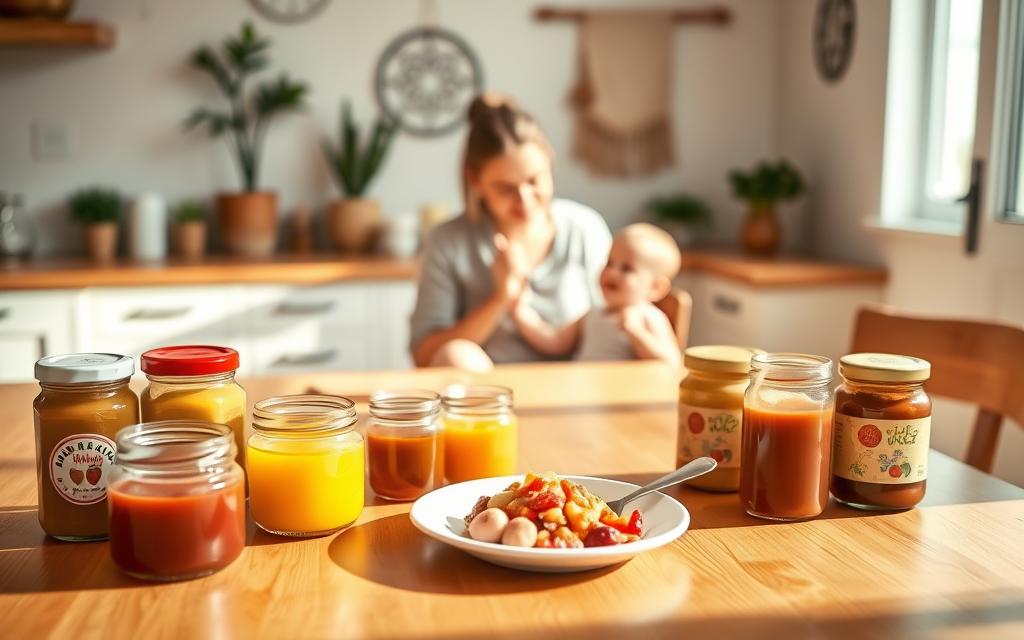
Parents can choose between making baby food at home or buying it. Homemade baby food lets you pick what goes in it and can save money. But, it takes time and you need to know how to keep it safe. Store-bought baby food is easy to get and follows strict rules. Yet, it might have preservatives and you have less control over what’s in it.
Food Safety Guidelines for Infants
It’s very important to follow food safety rules when making baby food. This means washing your hands well, using clean tools, and storing food in tight containers. Always check the food’s temperature before giving it to your baby to make sure it’s not too hot.
Equipment Essentials for Baby Food Preparation
Having the right tools makes making baby food easier and safer. You’ll need a blender or food processor, a steamer basket, and containers that close tight. Using a food thermometer helps make sure the food is cooked right.
Storage Times and Methods for Baby Food
Storing baby food right is key to keeping it fresh and safe. Homemade food can stay in the fridge for up to three days or be frozen for later. Labeling and dating the containers helps you remember how long they’ve been stored.
| Storage Method | Duration | Notes |
|---|---|---|
| Refrigerator | Up to 3 days | Store in airtight containers |
| Freezer | Up to 3 months | Use freezer-safe containers or bags |
| Room Temperature | Not recommended | Avoid storing baby food at room temperature |
Common Challenges and Baby Solid Food Tips
Starting your baby on solid foods can be tricky. But, knowing what to expect can help a lot. It’s important to understand the common problems and how to solve them.
Handling Food Refusal and Picky Eating
Babies often don’t like certain foods or can be picky. Try giving them different foods to see what they like. Keep trying the foods they don’t like, as they might get used to them later.
Managing Gagging vs. Choking Concerns
Gagging is normal and helps prevent choking. But, it’s key to tell the difference between gagging and choking. Watch your baby closely while they eat and make sure they sit up straight.
Dealing with Constipation When Starting Solids
Constipation can happen when you start solid foods. Drink more water and give foods high in fiber like pureed prunes or peaches to help.
Encouraging Self-Feeding Skills
Teaching your baby to feed themselves is important. Begin with soft finger foods and then move to harder textures as they get better.
| Challenge | Tips |
|---|---|
| Food Refusal | Offer variety, repeat exposure to refused foods |
| Gagging vs. Choking | Supervise mealtime, ensure upright position |
| Constipation | Increase fluids, offer high-fiber foods |
| Self-Feeding | Start with soft finger foods, progress to complex textures |
Conclusion: Nurturing Healthy Eating Habits from the Start
Starting your baby’s journey with solid foods is a big step. Creating a starting solids schedule is key. It helps introduce new foods slowly, lowering allergy and digestive risks. For breastfed babies, introducing solids to breastfed baby needs careful planning to keep milk supply up and make the transition smooth.
For a smoother start, follow baby solid food tips from pediatricians and nutrition experts. They stress the need for a variety of nutrient-rich foods. This helps your baby develop healthy eating habits and avoids picky eating later on.
Teaching your baby to eat well from the start is a lasting gift. By following the advice in this article and watching your baby’s needs, you’re on the path to raising a healthy and adventurous eater.