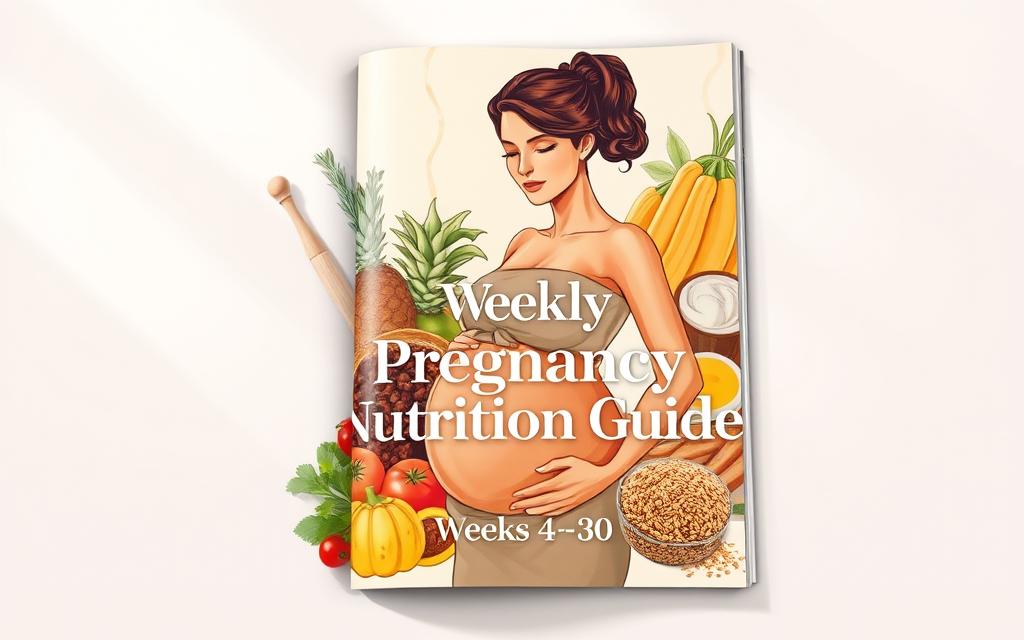
Weekly Pregnancy Nutrition Guide (Weeks 4-40)
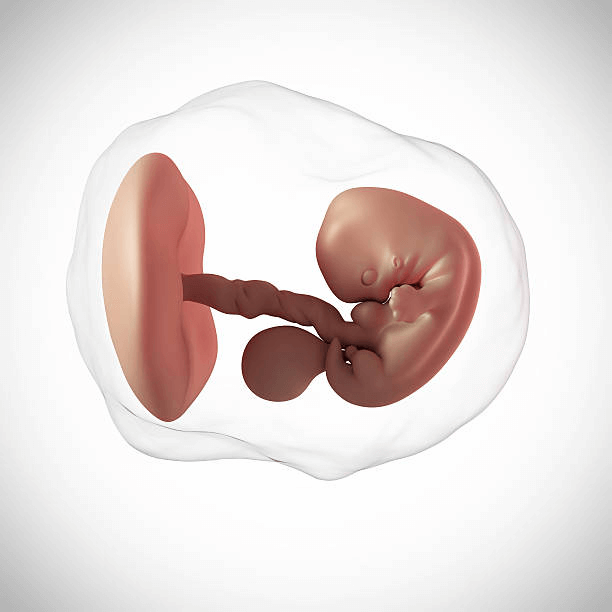
Eating a balanced diet during pregnancy is key for the baby’s health. At week 4, the body starts making the placenta and amniotic sac. Symptoms like abdominal pressure and tender breasts may show up.
A good prenatal nutrition guide ensures the mother and baby get the right nutrients. A weekly nutrition guide offers important pregnancy nutrition tips. It helps expectant mothers make smart diet choices.
Following a detailed nutrition plan supports the baby’s growth. This guide will cover the vital nutrients and diet advice for each week of pregnancy, from week 4 to week 40.
Key Takeaways
- A balanced diet is crucial during pregnancy.
- A prenatal nutrition guide can help expectant mothers make informed decisions.
- A weekly nutrition guide can provide valuable pregnancy nutrition tips.
- Essential nutrients support the baby’s growth and development.
- A comprehensive nutrition plan is vital for a healthy pregnancy.
The Foundation of Prenatal Nutrition
Nutrition during pregnancy is key for both mom and baby. A balanced diet keeps the mom healthy and helps the baby grow.
Why Nutrition Matters During Pregnancy
Nutrition is crucial in pregnancy. It helps the fetus grow and stay healthy. Important nutrients like folic acid, iron, and calcium are key for avoiding birth defects and ensuring the baby grows right.
Folic acid is especially important for the baby’s brain and spine early on.
- Folic acid prevents neural tube defects.
- Iron supports the mother’s and baby’s blood health.
- Calcium is vital for the baby’s bone development.
How Your Nutritional Needs Change
As pregnancy goes on, your nutritional needs change. You need more of certain nutrients to support the baby’s fast growth. For example, omega-3 fatty acids are needed more in the second trimester for the baby’s brain.
A prenatal vitamin can help fill any nutritional gaps. But it should not replace a healthy diet. Focus on these key nutrients:
- Vitamin D for bone health.
- Choline for fetal brain development.
- B vitamins for energy production.
First Trimester Nutrition: Weeks4-12
When you enter the first trimester, eating well is key. Your baby is growing fast, and they need nutrients for healthy growth. Focus on a diet rich in nutrients during weeks 4-12.
Weeks 4-6: Early Nutrition When You First Discover Pregnancy
At week 4, your embryo has two cell layers. By week 6, the gestational sac is seen. Eating foods rich in folate, like leafy greens and fortified cereals, is important for your baby’s brain development. A balanced diet with fruits, vegetables, whole grains, and lean proteins is essential.
Weeks 7-9: Managing Morning Sickness While Staying Nourished
Morning sickness is common from weeks 7-9. Eat small, frequent meals and choose bland foods like crackers or toast. Drinking plenty of water is also important. Try ginger tea or electrolyte-rich drinks to help.
Weeks 10-12: Supporting Critical Organ Development
By weeks 10-12, your baby’s organs are working well, and they’re growing fast. Eating more omega-3 fatty acids from fish and nuts helps your baby’s brain. Also, eat iron-rich foods like lean meats and beans to prevent anemia and support blood volume.
| Nutrient | Food Sources | Benefit |
|---|---|---|
| Folate/Folic Acid | Leafy greens, fortified cereals | Neural tube development |
| Omega-3 Fatty Acids | Fish, nuts, seeds | Brain development |
| Iron | Lean meats, beans, fortified cereals | Prevents anemia, supports blood volume |
Essential Nutrients for a Healthy Pregnancy
Having a healthy pregnancy is more than just eating right. It’s about focusing on key nutrients. These nutrients are vital for the health and growth of both mom and baby.
Folate and Folic Acid: The Neural Tube Builders
Folate, a B vitamin, is key to avoiding birth defects of the brain and spine. You can find folate in whole grains, green leafy vegetables, beans, bananas, broccoli, and milk. Folic acid, its synthetic form, is often suggested as a supplement to meet the daily needs.
Iron: Preventing Anemia and Supporting Blood Volume
Iron is crucial for making red blood cells and avoiding anemia during pregnancy. Iron-rich foods include red meat, poultry, fish, beans, lentils, and fortified cereals. It helps the mother’s blood volume and the baby’s growth.
Calcium: Building Baby’s Bones and Teeth
Calcium is vital for the baby’s bones, teeth, and muscles. It also keeps the mother’s bones strong. Dairy products, leafy greens, and fortified plant-based milk are great sources of calcium.
Omega-3 Fatty Acids: Brain Development Boosters
Omega-3 fatty acids, especially DHA, are good for the baby’s brain and eyes. Fatty fish, nuts, and seeds are full of omega-3s. These nutrients help in a healthy pregnancy and may lower the risk of premature birth.
| Nutrient | Role in Pregnancy | Food Sources |
|---|---|---|
| Folate/Folic Acid | Prevents neural tube defects | Whole grains, leafy greens, beans, bananas, broccoli, milk |
| Iron | Prevents anemia, supports blood volume | Red meat, poultry, fish, beans, lentils, fortified cereals |
| Calcium | Supports baby’s bones, teeth, and muscles | Dairy products, leafy greens, fortified plant-based milk |
| Omega-3 Fatty Acids | Supports brain and eye development | Fatty fish, nuts, seeds |
Second Trimester Nutrition: Weeks13-27
When you enter the second trimester, your baby grows fast. Your diet needs change to support this growth. Eating well is key for your baby’s health and getting ready for the last three months.
Weeks 13-18: Supporting Rapid Growth and Development
Between weeks 13 and 18, your baby’s organs and systems grow. Nutrients like folate, iron, and calcium are very important. Folate helps the brain develop, iron fights anemia, and calcium builds bones and teeth.
Eating foods full of these nutrients is crucial. Include leafy greens, lean proteins, and dairy in your diet.
Weeks 19-23: Balancing Increased Energy Needs
Your energy needs go up as your baby grows. From weeks 19-23, you need more calories for your baby’s growth. Adding about 300 calories a day is a good rule.
Eat foods that are full of nutrients like whole grains, lean proteins, and healthy fats. Drinking lots of water also helps keep your energy up and supports your baby.
Weeks 24-27: Preparing for the Final Trimester
Getting close to the end of the second trimester, keep up with a balanced diet. Omega-3 fatty acids are key for your baby’s brain. Add fatty fish, nuts, and seeds to your meals.
Also, keep a healthy weight and manage any pregnancy discomforts with food. This helps get your body ready for the last trimester and beyond.
Weekly Pregnancy Nutrition Guide (Weeks4–40): Trimester-Specific Meal Plans
Meal plans for each trimester can make pregnancy nutrition easier. Knowing what you need in each stage helps you eat right for your baby and yourself.
Nourishing Your Body in the First Trimester
In the first trimester, eat foods that fight morning sickness. Try:
- Whole grain toast with avocado and eggs
- Ginger-infused smoothies with banana and spinach
- Greek yogurt with berries and honey
These foods are full of folate, iron, and calcium. They’re key for your baby’s early growth.
Supporting Growth in the Second Trimester
When you’re in the second trimester, your baby grows fast. You need more nutrients. Good meals include:
- Grilled chicken with quinoa and steamed vegetables
- Salmon with brown rice and mixed greens
- Turkey and avocado wraps with mixed greens
These meals have protein, omega-3 fatty acids, and fiber. They help your baby grow and develop quickly.
Preparing for the Final Stretch in the Third Trimester
In the third trimester, focus on foods that help your baby grow and get ready for birth. Try:
| Meal | Key Nutrients |
|---|---|
| Beef and vegetable stew with whole grain bread | Iron, protein, and fiber |
| Lentil soup with whole grain crackers | Folate, protein, and fiber |
| Greek yogurt with honey and almonds | Calcium, protein, and healthy fats |
These meals give your baby the nutrients they need. They also help get your body ready for labor.
Third Trimester Nutrition: Weeks28-40
Nutrition in the third trimester is key for your baby’s last growth push and getting ready for labor. As your pregnancy goes on, your diet needs change. This is to help your baby grow fast and to get your body ready for labor.
Weeks 28-32: Fueling Baby’s Final Growth Spurt
In weeks 28-32, your baby grows really fast. Omega-3 fatty acids are very important for brain growth. Make sure to eat foods like salmon and walnuts. Also, eat enough protein to help your baby grow.
Weeks 33-36: Optimizing Nutrition for Brain Development
From weeks 33-36, keep up with omega-3s and add more complex carbs for energy. Eating a variety of fruits, veggies, whole grains, and lean proteins is key.
Weeks 37-40: Preparing Your Body for Labor and Delivery
Getting close to the end of your pregnancy, focus on nutrients like vitamin C and magnesium for labor. Drink lots of water and eat well to be healthy for labor and delivery.
| Nutrient | Food Sources | Benefit |
|---|---|---|
| Omega-3 Fatty Acids | Salmon, Walnuts, Chia Seeds | Brain Development |
| Protein | Lean Meats, Eggs, Legumes | Overall Growth |
| Complex Carbohydrates | Whole Grains, Fruits, Vegetables | Sustained Energy |
Managing Common Pregnancy Nutrition Challenges
It’s important to know and tackle common pregnancy nutrition challenges for a healthy pregnancy. Expectant mothers face many issues that can affect their health and their baby’s growth. By understanding these challenges and making the right dietary changes, women can have a smoother pregnancy journey.
Heartburn and Acid Reflux Solutions
Heartburn and acid reflux are common in pregnancy, especially later on. Eating smaller, more frequent meals can ease stomach pressure. Also, skip spicy, fatty, or acidic foods. Adding ginger to your diet, like in tea, candies, or meals, can offer extra relief.
Constipation Relief Through Diet
Constipation is a common problem during pregnancy, often made worse by iron supplements. Eating more whole grains, fruits, and vegetables can help. Drinking enough water is also key, as it softens stool and makes it easier to pass.
| Nutritional Challenge | Dietary Solution |
|---|---|
| Heartburn and Acid Reflux | Eat smaller meals, avoid spicy foods, incorporate ginger |
| Constipation | Increase fiber intake, stay hydrated |
| Gestational Diabetes | Monitor carbohydrate intake, choose complex carbs, balance meals |
Gestational Diabetes Dietary Management
Managing gestational diabetes means watching your carb intake and picking whole grains. Mixing protein, healthy fats, and fiber in your meals helps keep blood sugar stable.
Combating Food Aversions and Cravings
Food aversions and cravings are common in pregnancy. It’s important to listen to your body but also make sure you’re getting a balanced diet. Finding other nutrient-rich foods can help meet your needs, even if you don’t like them.
Hydration During Pregnancy: A Week-by-Week Guide
Drinking enough water is key for a healthy mom and baby during pregnancy. It helps with the baby’s growth and keeps the mom feeling good. It also boosts the mom’s energy and comfort.
First Trimester Hydration Needs
In the first three months, it’s important to drink lots of water. It helps with morning sickness and supports the baby’s early growth. Try to drink 8-10 glasses of water a day. If you’re throwing up, drink even more.
- Drink water regularly throughout the day
- Monitor urine output to ensure it’s pale yellow
- Avoid sugary drinks that can lead to dehydration
Second Trimester Hydration Strategies
In the second three months, your body needs more water because your blood volume increases. Drinking water helps prevent constipation and hemorrhoids. Add hydrating foods like watermelon and cucumbers to your diet.
Tips for staying hydrated:
- Eat foods with high water content
- Keep a water bottle with you at all times
- Drink a glass of water before each meal
Third Trimester Hydration Requirements
In the last three months, staying hydrated is very important. It helps prevent problems like Braxton Hicks contractions and helps with milk production after the baby is born. Drink lots of water and consider drinks with electrolytes to stay hydrated.
Remember, your hydration needs may change as your pregnancy progresses, so it’s essential to stay attuned to your body’s signals.
Foods to Avoid Throughout Your Pregnancy
When you’re pregnant, it’s key to watch what you eat. This helps keep you and your baby healthy. Some foods can make you sick or harm your baby’s growth.
High-Risk Foods for Foodborne Illness
Some foods are more likely to have harmful germs. These include:
- Raw or Undercooked Fish and Meat: Stay away from raw or undercooked fish, shellfish, and meat. They might have Salmonella or Listeria.
- Unpasteurized Dairy Products: Avoid unpasteurized milk, soft cheeses, and some yogurts. They can have bad bacteria.
- Raw Eggs: Raw or lightly cooked eggs can have Salmonella.
Substances to Limit or Eliminate
It’s also important to cut down or avoid certain things:
- Caffeine: Too much caffeine can raise your heart rate and blood pressure. Try to keep it under 200mg a day.
- Alcohol: Drinking alcohol while pregnant can cause serious problems for your baby.
- High-Mercury Fish: Fish like shark, swordfish, and king mackerel have too much mercury. They can harm your baby’s brain.
By knowing and avoiding these foods and substances, pregnant women can lower the risk of problems during pregnancy.
Weekly Grocery Shopping and Meal Preparation Tips
Getting the right food during pregnancy is easier with smart shopping and meal prep. Planning meals and making lists helps meet nutritional needs. A stocked pantry and fridge are key to a healthy diet.
First Trimester Shopping Lists
In the first trimester, eat whole foods, fruits, and veggies. Include foods rich in folate like leafy greens and fortified cereals. Lean proteins and whole grains are also important. Stay away from processed and sugary foods.
Second Trimester Meal Prep Strategies
In the second trimester, meal prep is vital due to increased energy needs. Make nutrient-dense meals like stir-fries and quinoa salads with nuts and fruits. Batch cooking and freezing meals saves time and keeps you healthy.
Third Trimester Time-Saving Nutrition Hacks
In the third trimester, quick meal solutions are a must. Use a slow cooker for meals that cook all day. Keep healthy snacks like nuts, fruits, and energy bars on hand to fight hunger and support nutrition.
Special Dietary Considerations During Pregnancy
Pregnancy can make women more aware of their diet needs. It’s important to eat right, whether you’re vegetarian, vegan, have food allergies, or follow certain cultural foods.
Vegetarian and Vegan Pregnancy Nutrition
Women on vegetarian or vegan diets need to plan their meals well. They should focus on getting enough protein, iron, calcium, and vitamin B12. Eating a variety of plant-based foods and taking supplements when needed is key to a healthy pregnancy.
Food Allergies and Sensitivities
Pregnant women with food allergies or sensitivities must avoid certain foods. They should read food labels carefully and talk to a healthcare provider or dietitian for help.
Cultural Food Preferences and Nutritional Adequacy
Cultural diets are important during pregnancy. It’s crucial to balance these diets with the nutritional needs of pregnancy. Talking to a healthcare provider or a registered dietitian can help make healthy choices within cultural diets.
| Dietary Consideration | Key Nutrients | Tips for Pregnant Women |
|---|---|---|
| Vegetarian/Vegan | Protein, Iron, Calcium, Vitamin B12 | Include a variety of plant-based foods and consider supplements. |
| Food Allergies/Sensitivities | Varies by allergy | Read labels carefully and consult a healthcare provider. |
| Cultural Preferences | Balanced nutrients within cultural diet | Consult a healthcare provider or dietitian for personalized advice. |
Conclusion: Nourishing Your Pregnancy Journey
A well-nourished pregnancy is key for the health of both mom and baby. We’ve looked at important nutrients, meal plans, and tips for a balanced diet in each trimester.
By eating whole foods, drinking plenty of water, and handling pregnancy challenges, moms can improve their nutrition. Nutrients like folate, iron, calcium, and omega-3 fatty acids are crucial for the baby’s growth and mom’s health.
Remember, a balanced diet is just part of staying healthy during pregnancy. Combining good eating habits with prenatal care and a healthy lifestyle is important. This way, you can have a positive pregnancy and a healthy start for your baby.