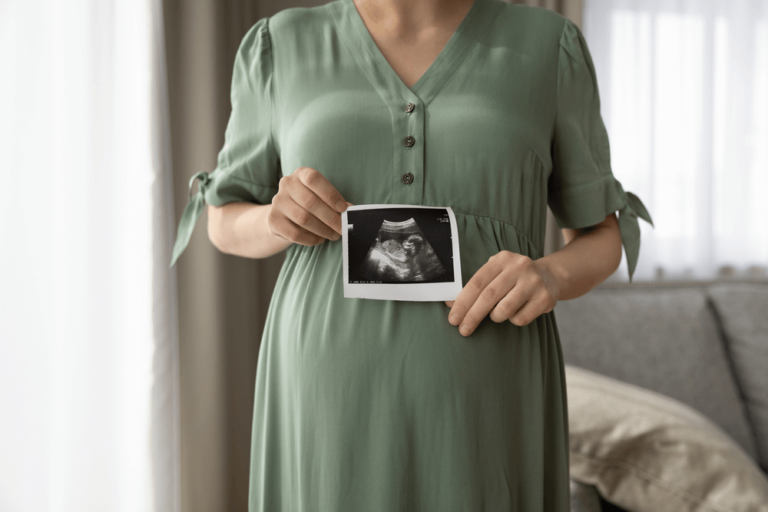
Omega-3 Rich Foods for Fetal Brain Development
During pregnancy, eating well is key for the baby’s growth. Omega-3 fatty acids are very important for the baby’s brain. They are found in seafood and also in supplements.
Knowing how important these nutrients are can help a lot. Expectant mothers should learn about the best sources of Omega-3-rich foods. This helps their baby’s brain grow strong.
Key Takeaways
- Omega-3 fatty acids are crucial for fetal brain development.
- DHA and EPA are key types of Omega-3s found in seafood and supplements.
- A well-balanced diet during pregnancy supports overall fetal development.
- Expectant mothers should incorporate Omega-3-rich foods into their diet.
- Omega-3 supplements are available for those who need additional support.
The Critical Role of Omega-3 Fatty Acids in Fetal Brain Development
During pregnancy, omega-3 fatty acids are key for the fetus’s brain and eye growth. These fats are vital for the baby’s health and development. Eating the right amount of omega-3s can greatly help the baby’s brain grow.
Understanding DHA, EPA, and ALA
There are three main types of omega-3 fatty acids: DHA, EPA, and ALA. DHA (docosahexaenoic acid) is especially important for the baby’s brain and eyes. EPA and ALA also help with overall health and growth.
How Omega-3s Support Neural Development
Omega-3s, especially DHA, help build the brain’s structure and improve brain function. Research shows that enough DHA during pregnancy leads to better brain and eye skills in kids. This makes omega-3s a must for pregnant women’s diets.
Research on Cognitive and Visual Benefits
Studies show that omega-3s are good for the fetus’s brain and eyes. DHA has been linked to better brain and eye skills in babies. It’s important to make sure pregnant women get enough omega-3s for their baby’s development.
Why Pregnant Women Need More Omega-3s
When a woman is pregnant, her body changes a lot. It needs more omega-3 fatty acids. This nutrient is key for the health and growth of the baby.
Recommended Daily Intake During Pregnancy
Pregnant women should get about 200 mg of DHA each day. They can get this from food or supplements. It’s best to talk to a doctor about how to get enough omega-3s.
Timing: When Omega-3s Matter Most
Omega-3s are very important in the third trimester. This is when the baby’s brain grows fast. Getting enough omega-3s helps with brain and eye development.
Benefits Beyond Brain Development
Omega-3s do more than help the brain. They also support heart health and might lower the chance of early labor. Getting the right amount of omega-3s helps make pregnancy healthier.
Best Omega-3 Sources for Fetal Brain Development
For pregnant women, eating foods rich in omega-3 is key for their baby’s brain growth. Omega-3 fatty acids, especially DHA and EPA, are vital for the baby’s brain.
Fish and Seafood Options
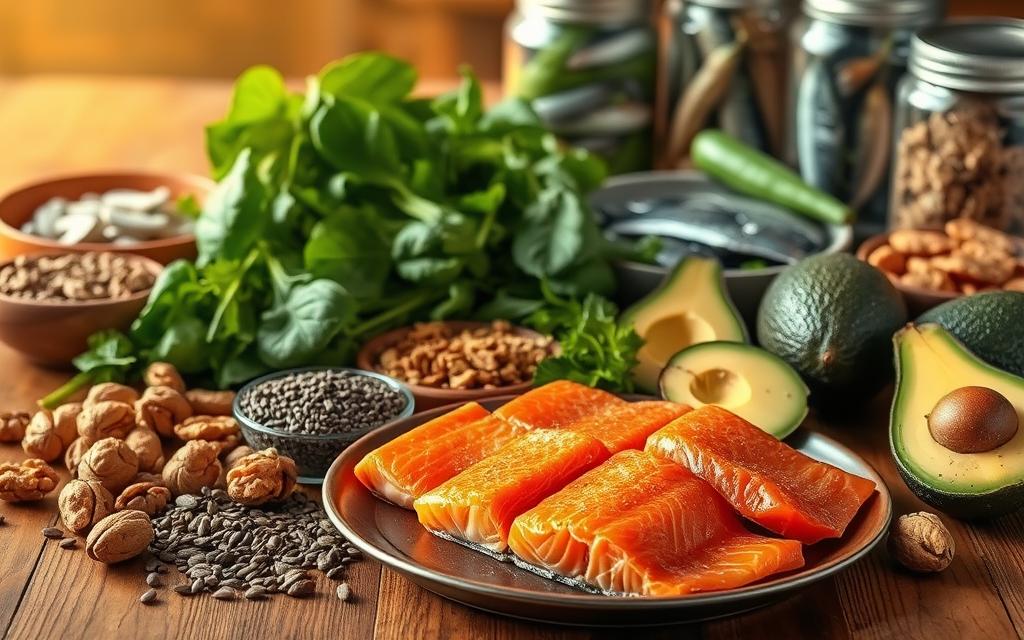
Fatty fish and seafood are top sources of omega-3s. Salmon, sardines, and mackerel are great because they have lots of DHA and EPA. These fish help the brain grow and keep you healthy.
Plant-Based Alternatives
If you can’t eat seafood, there are plant-based options. Flaxseeds, chia seeds, and walnuts have ALA, which your body can turn into DHA and EPA. While not as efficient, they still offer great benefits.
Supplements When Needed
If you can’t get enough omega-3 from food, omega-3 supplements might be an option. Always talk to a doctor first to make sure they’re safe and effective.
Bioavailability Considerations
How easily your body can use omega-3s varies by source. Fatty fish give you more DHA and EPA than plants do. Knowing this helps you choose the best foods for your diet.
Health experts say, “Eating a balanced diet with lots of omega-3 foods helps your baby’s brain grow.” Getting enough omega-3 is a smart way to support your baby’s health.
Top Fish Choices Rich in Omega-3s
Fatty fish are a great source of omega-3s, which are key for your baby’s brain growth during pregnancy. Adding these fish to your meals can greatly benefit your baby’s health.
Salmon: The Omega-3 Powerhouse
Salmon is famous for its omega-3s, especially DHA and EPA. It’s best to eat wild-caught salmon. It has more nutrients and fewer contaminants.
Sardines: Small Fish, Big Benefits
Sardines are tiny but full of omega-3s and low in mercury. They’re perfect in salads or on whole-grain crackers.
Trout: A Freshwater Option
Trout is a freshwater fish rich in omega-3s. Choose farm-raised trout for a healthy and sustainable option.
Mackerel: Types to Choose and Avoid
Mackerel is a fatty fish with lots of omega-3s. But, some types like King Mackerel have high mercury. Go for Atlantic or Spanish Mackerel instead.
Anchovies and Herring: Underrated Options
Anchovies and herring are small, oily fish. They’re not just rich in omega-3s but also in calcium and vitamin D. They’re great on pizzas or in salads.
Eating these fish can naturally increase your omega-3 intake. This supports your baby’s growth. Always check local advisories on fish safety and mercury levels.
Mercury Concerns: Balancing Benefits and Risks
Pregnant women can enjoy omega-3s safely by picking the right seafood. Omega-3s are key for the baby’s brain growth. But, some fish have too much mercury, which is bad for the baby.
Low-Mercury Fish Options
Opt for fish with low mercury to get omega-3s. Salmon, sardines, and trout are great choices. They’re low in mercury and full of DHA and EPA, which are good for the brain.
Fish to Avoid During Pregnancy
Stay away from high-mercury fish like shark, swordfish, and king mackerel. They have too much mercury, which can hurt the baby.
FDA and EPA Guidelines
The FDA and EPA have rules for fish eating during pregnancy. They say pregnant women should eat no more than 12 ounces of fish a week. Choose fish that are low in mercury.
Sourcing Sustainable and Safe Seafood
When buying seafood, pick sustainably sourced options. Look for MSC (Marine Stewardship Council) certifications. This ensures the seafood is safe and good for the planet.
Plant-Based Omega-3 Sources for Vegetarian Mothers
Omega-3 fatty acids are key for a baby’s brain growth. Vegetarian moms have many plant-based options. They can get omega-3s from foods and supplements without eating fish or seafood.

Flaxseeds and Flaxseed Oil
Flaxseeds are packed with alpha-linolenic acid (ALA), a type of omega-3. You can add ground flaxseeds to oatmeal, yogurt, or smoothies. Flaxseed oil, being more concentrated, is great for salad dressings or as a finishing touch for dishes.
Chia Seeds
Chia seeds are also full of ALA. Sprinkle them on salads, mix into baked goods, or soak in water or almond milk. This makes a gel-like texture that’s rich in omega-3s.
Walnuts and Other Nuts
Walnuts are a crunchy source of ALA. Almonds and pecans also have omega-3s, though in smaller amounts. Eating a handful of walnuts or adding them to dishes can increase omega-3 intake.
Algae-Based Options
Algae-based supplements are a direct source of DHA, an omega-3 important for brain development. These supplements come from algae and are a vegetarian choice instead of fish oil.
Hemp Seeds and Hemp Oil
Hemp seeds have a good mix of omega-3 and omega-6 fatty acids. Hemp oil, made from the seeds, is great for cooking. It adds omega-3s to your meals.
As Dr. Jane Smith, a well-known nutritionist, says,
“Adding plant-based omega-3 sources to your diet helps a lot with fetal brain development in vegetarian moms.”
Vegetarian moms can give their babies the omega-3s they need for brain growth by eating these plant-based foods.
Omega-3 Fortified Foods to Include in Your Diet
Omega-3 fortified foods are a handy choice for pregnant women. They help meet daily omega-3 needs. Many products now have added omega-3 fatty acids.
Fortified Eggs
Fortified eggs are packed with omega-3s. Hens eat special feed that makes eggs rich in DHA and EPA. Look for eggs labeled as “omega-3 enriched” or “high in omega-3s.”
Fortified Milk and Dairy Alternatives
Some milk and dairy alternatives have omega-3s. They’re a good choice for boosting intake. Make sure to check the labels for ALA, DHA, or EPA.
Fortified Breads and Cereals
Some breads and cereals are also fortified with omega-3s. They’re easy to add to your breakfast. Always check the labels for omega-3 content.
Reading Labels for Omega-3 Content
When picking fortified foods, always read labels. Look for specific omega-3 types (DHA, EPA, ALA) and their amounts. A nutrition expert says, “Understanding food labels is key to making informed choices about omega-3 intake.”
“The more you know about what’s in your food, the better you can support your baby’s development.”
Cooking Methods That Preserve Omega-3 Content
To get the most from omega-3 foods, it’s key to cook and store them right. Omega-3s are easily damaged by heat, light, and oxygen.
Low-Temperature Cooking Techniques
Cooking at low heat keeps omega-3s safe. Try steaming, poaching, and baking. These methods keep omega-3s and nutrients in the food.
Storage Tips for Omega-3 Rich Foods
Storing omega-3 foods right is important. Keep fish and seafood in the coldest part of the fridge. Eat them within a day or two. Freezing is good for longer storage.
Avoiding Omega-3 Degradation
Stay away from frying and grilling at high heat. They harm omega-3s. Also, don’t overcook, as it reduces nutritional value.
Pairing Foods for Better Absorption
Pair omega-3 foods with vitamin E-rich foods like nuts and seeds. This boosts absorption. Foods high in antioxidants also protect omega-3s from damage.
| Cooking Method | Omega-3 Preservation |
|---|---|
| Steaming | High |
| Frying | Low |
| Baking | Medium to High |
Omega-3 Supplements During Pregnancy
Omega-3 supplements are getting more attention from pregnant women. They want to make sure their baby’s brain develops well. Even with a good diet, supplements can be helpful sometimes.
When Supplements Are Recommended
Omega-3 supplements are a good idea when you don’t get enough from food. Pregnant women who don’t eat enough Omega-3 foods might need supplements. This helps with the baby’s brain growth.
Types of Prenatal Omega-3 Supplements
There are two main types of Omega-3 supplements: fish oil and algae-based. Fish oil has DHA and EPA. Algae-based supplements are for vegetarians and also have DHA.
Fish Oil vs. Algae-Based Supplements
Fish oil comes from fatty fish and has DHA and EPA. Algae-based supplements are vegetarian and just have DHA. Your choice depends on what you prefer and need.
Dosage Guidelines and Safety
The right amount of Omega-3 supplements is 200 to 300 mg of DHA daily. Always talk to your doctor before starting any supplements. This ensures they are safe and work well.
Potential Side Effects and How to Minimize Them
Omega-3 supplements are usually safe but can cause side effects. These might include a fishy taste or stomach issues. Choosing good quality supplements and following the right dosage can reduce these problems.
| Supplement Type | Key Benefits | Considerations |
|---|---|---|
| Fish Oil | Contains DHA and EPA | May have fishy aftertaste, sourced from fatty fish |
| Algae-Based | Vegetarian source of DHA | Suitable for vegetarians, may be more expensive |
Creating a Balanced Omega-3 Rich Meal Plan
Creating a meal plan rich in Omega-3s is easy and good for your baby’s brain. By adding Omega-3 foods to your diet, you help your baby grow smarter.
Weekly Meal Ideas
Begin by planning meals with fatty fish like salmon and sardines. They are full of DHA and EPA. Eat them at least twice a week. Also, add nuts and seeds like walnuts and chia seeds to your meals and snacks for more Omega-3s.
Omega-3 Boosting Recipes
Try making recipes rich in Omega-3s, like grilled salmon salads with walnuts, or chia seed pudding with fruit. These dishes are not only yummy but also full of nutrients.
Smoothies and Snacks with Omega-3s
Smoothies with walnuts, chia seeds, and fortified milk are a tasty way to get more Omega-3s. Eating nuts and seeds all day can also help.
Combining Sources for Optimal Absorption
Mixing different Omega-3 sources, like fatty fish, nuts, and seeds, ensures a balanced intake. This mix supports the best absorption and helps your baby’s brain grow.
Addressing Taste Preferences and Morning Sickness
If you have morning sickness, try bland Omega-3 foods like flaxseed crackers or smoothies with chia seeds. Trying different recipes can help find foods you like, even when your taste changes.
By following these tips and adding Omega-3 foods to your diet, you can make a balanced meal plan. This supports your baby’s brain development.
Signs of Omega-3 Deficiency During Pregnancy
Knowing the signs of omega-3 deficiency in pregnancy is key. It helps women get medical help and change their diet. Even if it’s not a full deficiency, not having enough omega-3s can cause tiredness and dry skin.
Common Symptoms to Watch For
Symptoms of omega-3 deficiency can be tricky to spot. They might include:
- Fatigue
- Dry skin
- Mood swings
Risk Factors for Deficiency
Some pregnant women are more at risk for omega-3 deficiency. This includes those who don’t eat enough foods rich in omega-3s. A diet without fish, nuts, and seeds can lead to lower omega-3 levels.
Testing Options Available
There are ways to check omega-3 levels. Blood tests can measure the omega-3s in red blood cells.
When to Consult Your Healthcare Provider
If you’re worried about omega-3 levels or have ongoing symptoms, talk to your doctor. They can give advice on diet and supplements tailored to you.
| Symptom | Possible Cause | Action |
|---|---|---|
| Fatigue | Low DHA levels | Increase fatty fish consumption |
| Dry Skin | Insufficient EPA | Consider omega-3 supplements |
It’s vital to keep omega-3 levels up for both mom and baby. Being aware of deficiency signs and acting early can help support health and development.
Conclusion: Nourishing Your Baby’s Brain Through Omega-3s
Omega-3 fatty acids, especially DHA, are key for a fetus’s brain and eye growth. Eating a balanced diet full of these nutrients is very important. It helps a lot with fetal brain development.
Adding Best Omega-3 Sources for Fetal Brain Development to your diet is very beneficial. Foods like fatty fish, nuts, and seeds are great for omega-3s. Also, fortified foods are a good way to increase DHA for Baby’s Brain.
Pregnant women can help their baby’s brain and eyes by choosing the right foods. By eating foods rich in omega-3s, mothers can give their babies a great start in life.
Eating a variety of foods with omega-3s is key for fetal brain growth. With the right nutrients, mothers can help their baby’s health and well-being in the future.