Introducing Solids Before 6 Months: What You Need to Know

Introducing solids is a big step in a baby’s life. The American Academy of Pediatrics (AAP) says it’s key for their growth. It helps with their nutrition and development.
Parents often ask when and how to start solids with their babies. The usual advice is to start at six months. But some might want to start earlier. It’s important to know the infant nutrition guidelines and when a baby is ready.
We’ll look into the latest advice, the good and bad of starting solids early. This info will help parents choose the best for their baby’s health.
Key Takeaways
- Understand the significance of introducing solids as a milestone in a baby’s life.
- Know the current recommendations for introducing solids.
- Recognize the signs of readiness in babies.
- Be aware of the benefits and risks of introducing solids before six months.
- Make informed decisions based on infant nutrition guidelines.
Current Recommendations on Infant Feeding
Health groups like the WHO and AAP give advice on feeding babies. These tips help parents know when to start solids.
WHO and AAP Guidelines
The World Health Organization (WHO) says to breastfeed only for the first six months. The American Academy of Pediatrics (AAP) agrees, saying breast milk is key. They both say to start solids around six months.
Evolution of Feeding Recommendations
Guidelines for feeding babies have changed a lot. Knowing these changes helps us understand today’s advice.
Historical Perspective on Infant Feeding
Before, doctors gave different advice on when to start solids. Some said to start as early as a few weeks.
How Guidelines Have Changed Over Time
Now, we know to breastfeed exclusively for the first six months. This change shows we better understand what babies need.
| Year | WHO Recommendations | AAP Recommendations |
|---|---|---|
| 2001 | Exclusive breastfeeding for 4-6 months | Exclusive breastfeeding for 4-6 months |
| 2011 | Exclusive breastfeeding for 6 months | Exclusive breastfeeding for 6 months |
Signs Your Baby Might Be Ready for Solids
Starting solids is a big step. But how do you know if your baby is ready? Look for developmental and physical signs to find out.
Developmental Milestones to Watch For
As your baby grows, they show signs they’re ready for solids. These signs include:
Head and Neck Control
Being able to control their head and neck is key. It means your baby can sit up with support and handle solid foods.
Sitting Skills and Stability
Sitting up unassisted is another important sign. If your baby can sit up without help, their back muscles are strong enough for eating solids.
Physical Readiness Indicators
There are also physical signs to look for:
Tongue Thrust Reflex
If your baby is losing the tongue thrust reflex, it’s time for solids. This reflex pushes food out of their mouth.
Interest in Food and Feeding Cues
Showing interest in food and watching you eat are good signs. If your baby leans forward to be fed or gets excited during meals, they’re ready for solids.
Why Some Parents Consider Introducing Solids Before6 Months
Parents might choose to introduce solids before 6 months for many reasons. These include cultural practices and medical advice.
Cultural and Historical Perspectives
In many cultures, starting solids early is a long-standing tradition. This practice has been passed down through generations. Some believe that early introduction of certain foods can boost a child’s health and strength.
Medical Reasons for Early Introduction
Medical reasons can also lead to early introduction of solids. These reasons fall into two main categories: growth concerns and specific nutritional needs.
Growth Concerns
Parents might start solids early if their baby needs more than just breast milk or formula. This is because some babies grow faster and need more nutrients.
Specific Nutritional Needs
Some parents introduce solids early for nutritional reasons. For example, they might want to give their baby iron-rich foods. Iron is important for preventing anemia and supporting growth.
Knowing these reasons can help parents make better choices about when to introduce solids to their babies.
Potential Benefits of Introducing Solids Before6 Months
Research shows that starting solids early might have good points for babies. The usual advice is to start at six months. But, some studies say starting earlier could be better in some ways.
Allergy Prevention Research
Starting solids before six months might help prevent allergies. Studies found that introducing some foods early can lower allergy risks.
The LEAP Study and Early Peanut Introduction
The LEAP study found that introducing peanuts early can lower peanut allergy risk. This study changed how we introduce allergenic foods.
Other Common Allergens
Research is also looking at other common allergens like eggs, fish, and dairy. Early introduction of these foods might also lower allergy risks.
Nutritional Considerations
Starting solids early can also be good for nutrition. As babies grow, they need more nutrients, and solids can provide them.
- Iron-rich foods can help prevent iron deficiency
- Other nutrient-rich foods can support overall growth and development
Impacts on Sleep Patterns
Some parents say starting solids early can help babies sleep better. While more research is needed, this is a benefit some parents see.
But, it’s important to weigh these benefits against the risks, like digestive problems or allergies. Always talk to your healthcare provider before making any decisions.
Risks and Concerns of Starting Solids Too Early
Starting solids too early can cause problems like digestive issues and choking. It’s important for parents to know these risks to decide wisely about their baby’s food.
Digestive System Development
The digestive system of babies grows slowly. Too early solids can stress it more than it should.
Gut Maturity and Permeability
A baby’s gut is not ready until about six months. Too early solids can make it more open, leading to allergies or intolerances.
Enzyme Production
Enzymes for digestion grow slowly. Some aren’t made enough until the baby is a few months old. This makes it hard to digest some foods.
Choking Hazards
Another big risk is choking. Babies need to sit up and have good head control before they can handle solids safely.
Impact on Breastfeeding
Starting solids too early can also harm breastfeeding. It’s key to know how it might affect milk supply and the baby’s nutrition.
Milk Supply Concerns
Early solids can sometimes cut down milk supply. This happens if the baby eats too much solid food instead of breast milk.
Nutritional Balance
Also, too early solids can push out breast milk. This can lead to an unbalanced diet if not managed right.
Key risks to consider:
- Digestive issues due to an immature digestive system
- Choking hazards from not being developmentally ready
- Impact on breastfeeding, including milk supply and nutritional balance
Knowing these risks helps parents decide when to start solids with their babies.
Introducing Solids Before6 Months: Best Practices
For parents thinking about introducing solids before 6 months, knowing the best practices is key. Experts say it’s important to talk to healthcare providers first.
Consulting with Healthcare Providers
Healthcare providers give personalized advice based on the baby’s health and development. Dr. Jane Smith, a pediatrician, says, “It’s vital for parents to talk to their healthcare provider before starting solids, even before 6 months.”
This talk helps parents understand the benefits and risks. It helps them make a well-informed choice.
Starting with the Right Foods
Choosing the right foods for first solids is essential. It’s best to start with single-ingredient options to watch for any bad reactions.
Single-Ingredient Options
Start with foods like pureed fruits or veggies. For example, a small amount of pureed sweet potato or avocado is a good first food.
Texture Considerations
The food’s texture matters too. Begin with very smooth purees. Then, slowly add more texture as the baby gets used to eating solids.
Monitoring for Adverse Reactions
Watching for bad reactions is key when introducing solids. Look for signs like rash, digestive issues, or fussiness after eating.
The American Academy of Pediatrics advises, “Introduce new foods one at a time and in small amounts. Watch for any signs of allergy or intolerance.”
By following these tips, parents can ensure a safe and healthy start to solids for their babies.
First Foods to Consider for Early Introduction
Choosing the right first foods for babies is important. Parents should pick foods that are full of nutrients. These foods help babies grow and develop.
Iron-Rich Options
Iron is key for babies. It helps prevent iron deficiency. Here are some good choices:
- Fortified Cereals: Many baby cereals have iron. They’re a great first food.
- Pureed Meats: Pureed chicken and beef are full of iron. They also have important proteins.
Vegetable and Fruit Purees
Vegetable and fruit purees are also great. They have vitamins and minerals. Start with one ingredient at a time. This helps watch for allergies.
Foods to Absolutely Avoid
It’s also key to know which foods to stay away from. Some can be choking hazards or cause allergies.
Choking Hazards
- Hard fruits like apples (unless pureed)
- Nuts and seeds
- Popcorn
Allergenic Foods Requiring Caution
- Peanuts (though recent guidelines suggest introducing them early to prevent allergy)
- Shellfish
- Fish with high mercury levels
Always talk to a doctor before trying new foods. This is very important if there’s a family history of allergies.
Baby Led Weaning vs. Traditional Spoon Feeding
Parents often face a tough choice when starting solids with their babies. They must decide between Baby Led Weaning (BLW) and spoon feeding. Each method has its fans and challenges, mainly for younger babies.
Comparing Approaches for Younger Babies
For babies under six months, both BLW and spoon feeding need careful thought and adjustments.
Modified BLW for Babies Under6 Months
Modified BLW for younger babies means giving soft, easy-to-grasp foods. These foods are safe from choking. It lets babies start feeding themselves right away.
Traditional Weaning Adaptations
For younger babies, traditional weaning starts with thin purees. As they get used to eating solids, the purees get thicker.
Safety Considerations for Each Method
Introducing solids safely is key, no matter the method.
Supervision Requirements
Both BLW and spoon feeding need constant watch to avoid choking. But BLW might need even more attention because babies handle food pieces.
Food Preparation Differences
For BLW, foods are cut into small pieces or cooked soft. Spoon feeding starts with purees, which get thicker as the baby grows.
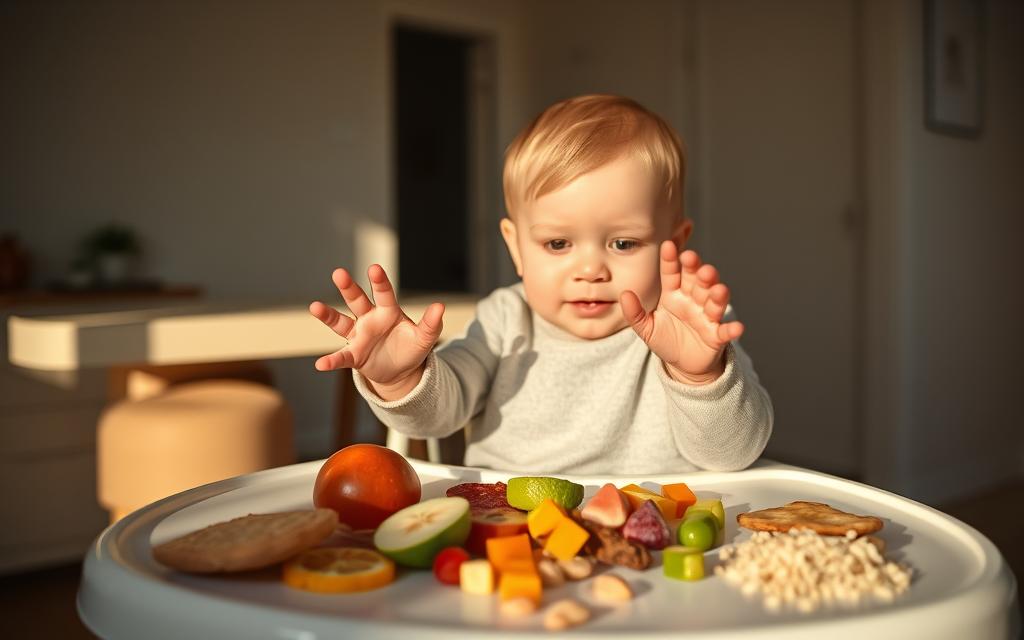
The choice between BLW and spoon feeding for younger babies depends on parents’ preferences. It also depends on the baby’s readiness and the family’s lifestyle.
Creating a Feeding Schedule for Babies Under6 Months
When introducing solids before six months, a balanced feeding schedule is key. It ensures the baby gets the nutrients they need. It also makes sure their digestive system is ready for solid foods.
Balancing Milk and Solid Foods
Creating a feeding schedule means balancing milk and solid foods. For babies under six months, milk is their main source of nutrition.
Maintaining Adequate Milk Intake
It’s important to keep up milk intake. Make sure solids don’t cut down on milk. Watch the baby’s milk intake and adjust the schedule if needed.
Gradual Introduction of Solids
Start solids slowly. Begin with small amounts (about 1-2 teaspoons). Then, increase the amount as the baby gets used to eating solids.
Meal Timing and Frequency
Choosing the right time and frequency for meals is important. Start with one meal a day. Then, add more meals as the baby grows.
Sample Feeding Schedules
Here’s a sample feeding schedule:
- 6 months: 1-2 teaspoons of solids once a day, alongside regular milk feedings
- 5-6 months: Gradually increase to 2-3 teaspoons, with a possible second meal
Monitoring Your Baby’s Response to Early Solids
When you start solids with your baby before 6 months, watching their response is key. This helps spot any problems early.
Signs of Food Allergies or Intolerances
Be on the lookout for signs of allergies or intolerances when introducing new foods. Some reactions happen right away, while others take time.
Immediate Reactions
Look out for rash, itching, or swelling right away. If you see these signs, call your healthcare provider fast.
Delayed Symptoms
Later, you might see digestive issues or skin problems. Keeping a food diary can help track these changes.
Digestive Changes to Expect
Starting solids can change your baby’s digestion. You might see different stool or gas. These changes are usually okay but need watching.
When to Slow Down or Stop
If your baby has severe reactions or keeps feeling uncomfortable, slow down or stop solids. Talk to your healthcare provider for advice.
Some important signs to watch for include:
- Severe rash or hives
- Vomiting or diarrhea
- Signs of discomfort or pain
If you’re not sure about your baby’s reaction to solids, always talk to your healthcare provider.
Research and Expert Opinions on Early Solid Introduction
Research is growing on introducing solids to babies before six months. This research, along with expert opinions, helps us understand the good and bad sides of early solid introduction.
Recent Scientific Studies
Studies have looked into how early solids affect baby health. For example, introducing solids early might lower allergy risks in some kids. Some studies suggest that early food variety can make the gut microbiome more diverse.
Pediatrician Perspectives
Pediatricians are key in guiding parents on when to start solids. Many pediatricians recommend a careful approach. They suggest talking to them before starting solids before six months. They stress watching how the baby reacts to new foods.
Nutritionist Recommendations
Nutritionists say to start with nutrient-rich foods. Iron-rich foods, like pureed meats or iron-fortified cereals, are good first choices. They also warn against adding sugars or salts.
By listening to pediatricians and nutritionists, parents can make smart choices about starting solids.
Conclusion
Deciding when to introduce solids to your baby can be tough. WHO and AAP say to breastfeed only for the first six months. But, some parents might want to start solids before then. It’s important to know the good and bad sides before making a choice.
Starting solids before six months can be good if done right. You should talk to your doctor to find the best time for your baby. They can tell you when your baby is ready and how to feed them well.
When introducing solids, think about the good and the bad. It can help with allergies and give nutrients. But, it might cause stomach problems or choking. Watch how your baby reacts and change things if they show signs of allergy or intolerance.
In the end, the choice to start solids early depends on knowing the facts and checking if your baby is ready. By getting advice from doctors, you can choose what’s best for your baby.