Baby-Led Weaning vs. Purees: Pros, Cons, and Which to Choose
Parents face a big decision when starting solids: Baby-Led Weaning or purees. Each has its pros and cons. The best choice depends on the baby’s needs and growth.
Starting solids is a big step for babies. There are many baby feeding approaches. Knowing the differences helps parents make a good choice. Some like purees, while others prefer Baby-Led Weaning.
Key Takeaways
- Understanding the differences between Baby-Led Weaning and puree feeding is key.
- The choice depends on the baby’s needs and growth.
- Baby-Led Weaning is less messy and promotes self-feeding with the right foods.
- Puree feeding gives more control over food amounts and types.
- Talking to a pediatrician helps parents make a smart choice.
The Journey to Solid Foods
Starting solid foods is a big step for babies. It’s important to think about when they’re ready and what they need. The American Academy of Pediatrics says babies usually start around six months.
Developmental Milestones for Starting Solids
Before starting solids, babies need to show they’re ready. They should be able to sit up with help, control their head and neck, and show interest in food. These signs mean they’re ready for solids.
Nutritional Needs During the Transition
It’s key to give babies the right food during this time. They need a mix of nutrients to grow fast.
Essential Nutrients for 6-12 Month Babies
Iron, protein, and healthy fats are important. Iron is key, found in fortified cereals and meats. Breast milk or formula should always be the main food, with solids added.
Maintaining Milk as the Primary Source
Milk, whether from a breast or formula, is the main food until they’re one. Solids should be added slowly. They should help with milk, not replace it.
What is Baby-Led Weaning?
Baby-Led Weaning (BLW) is a way to introduce solid foods that’s becoming popular. It lets babies feed themselves from the start, skipping spoon-feeding.
Core Principles and Philosophy
BLW lets babies control their eating, choosing what and how much they eat. It’s based on the idea that babies can manage their food intake. This can help them develop healthy eating habits.
The History and Evolution of BLW
Gill Rapley and Tracey Douglas introduced BLW in their book “Baby-Led Weaning: The Essential Guide.” It has quickly become popular worldwide. Many parents like it because it focuses on baby’s autonomy and can make mealtime easier.
When to Start Baby-Led Weaning
Deciding when to start BLW depends on the baby’s readiness. They should be able to sit up on their own and show interest in food.
Physical Readiness Indicators
- Sitting up without support
- Good head and neck control
- Showing interest in food
First Foods for BLW Approach
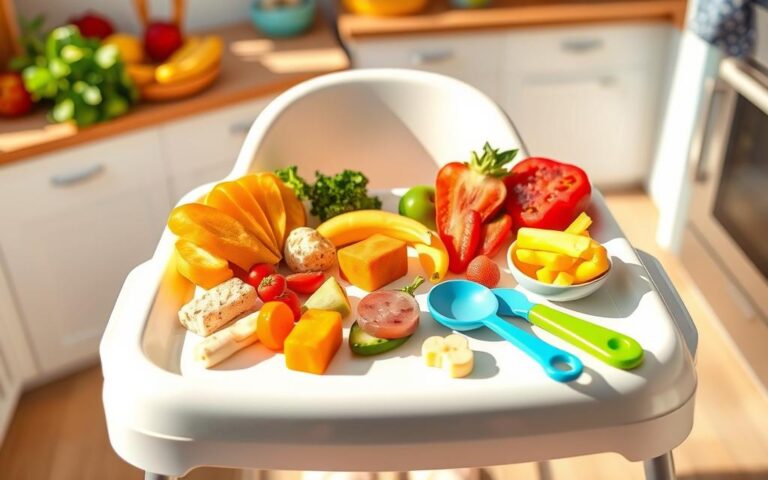
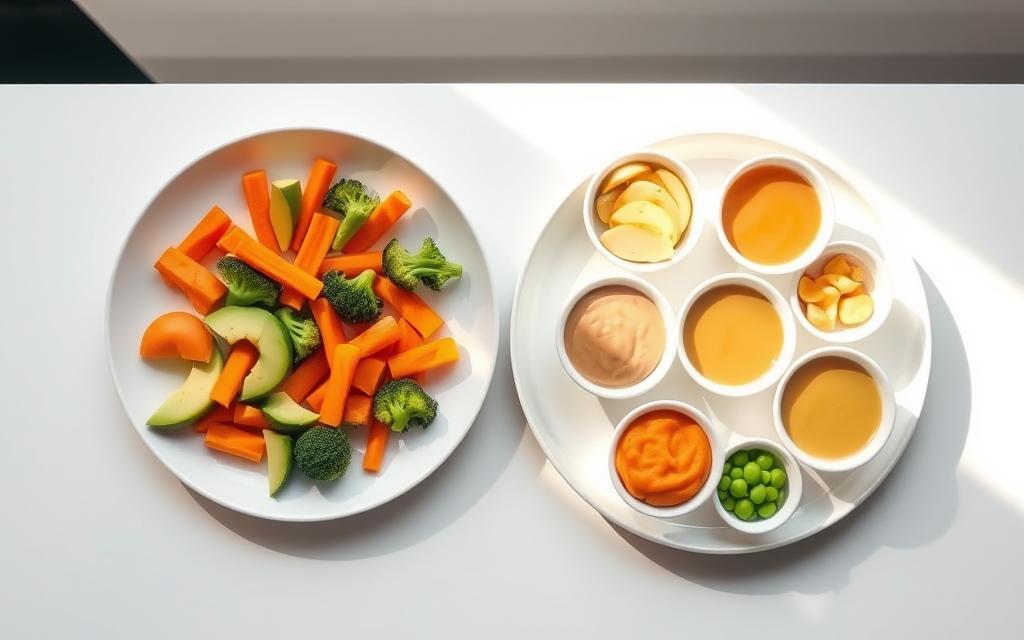
First foods for BLW should be soft and easy to grasp. They should be cut into small pieces to avoid choking. Good examples include avocado, banana, and cooked veggies.
Understanding Baby-Led Weaning helps parents make better choices for their baby’s feeding. It can make the feeding journey more positive and less stressful.
Traditional Puree Method Explained
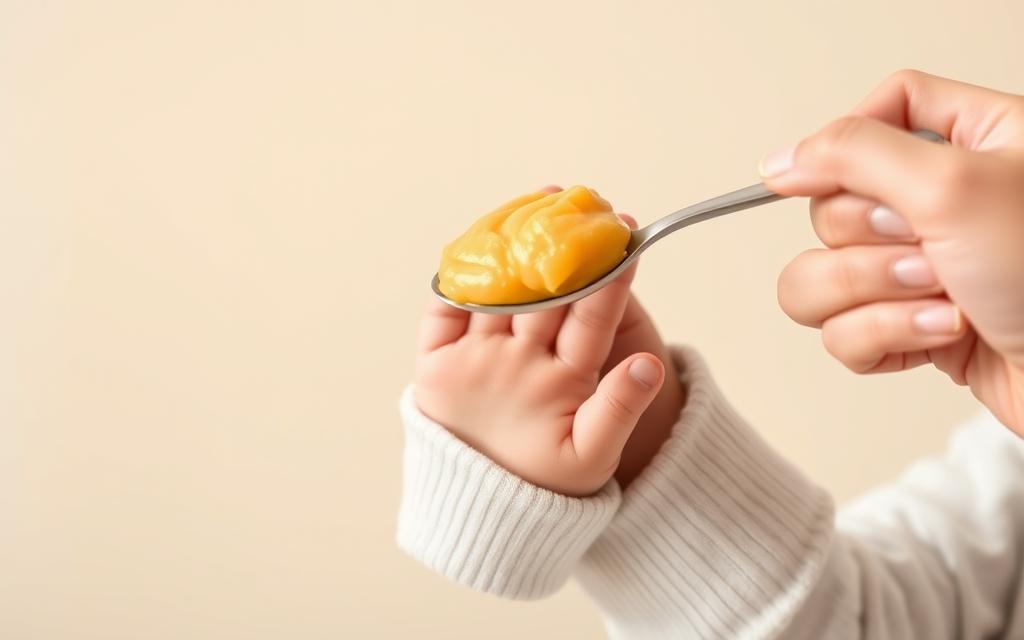
When introducing solid foods, the traditional puree method is often suggested. It starts with single-ingredient purees and then adds more complex foods. This helps infants get used to eating solids.
The Progression of Puree Textures
The texture of purees changes as infants get older. It begins with very smooth purees. Then, it moves to thicker, more textured ones.
Key steps in the progression include:
- Starting with single-ingredient purees
- Gradually introducing mixed-ingredient purees
- Increasing the texture from smooth to thicker purees
Commercial vs. Homemade Purees
Parents can choose between commercial and homemade purees. Many prefer homemade purees because they can pick the ingredients and avoid additives.
Some benefits of homemade purees include:
- Control over ingredients
- Avoidance of preservatives and additives
- Ability to introduce a wide range of foods
Traditional Puree Introduction Timeline
The timeline for introducing purees starts around 4-6 months. It has different stages.
Stage 1, 2, and 3 Foods
Stage 1 foods are introduced first, around 4-6 months. They include simple purees like apples or carrots.
Stage 2 foods come a few weeks later. They are mixed-ingredient purees or slightly thicker ones.
Stage 3 foods are introduced later. They have more texture and complexity.
Transitioning from Purees to Textured Foods
Switching to textured foods starts around 8-10 months. It involves adding small amounts of textured foods. Then, gradually increase the amount and texture.
Some tips for transitioning include:
- Start with soft, mashed foods
- Gradually increase the texture
- Be patient and monitor the infant’s cues
Baby-Led Weaning vs. Purees
Parents often wonder if they should choose Baby-Led Weaning or purees for their baby’s first foods. This choice depends on understanding the main differences between these two methods.
Fundamental Approach Differences
Baby-Led Weaning lets babies feed themselves solid foods from the start. This is different from purees, where babies start with soft foods and then move to thicker textures.
Parent vs. Baby Control Dynamics
In Baby-Led Weaning, babies decide what and how much to eat. This helps them learn to control their food intake. Purees, on the other hand, allow parents to control what their baby eats by preparing the food.
Food Preparation Comparisons
For Baby-Led Weaning, foods are cut into small pieces or sticks. Purees require cooking and blending foods into a smooth consistency.
Time Investment Considerations
Baby-Led Weaning is quicker to prepare because babies eat the same foods as the family. But, it might take more time to watch the baby during meals.
Equipment and Tools Needed
Purees need blenders or food processors. Baby-Led Weaning requires little special equipment, mainly a willingness to let the baby learn to eat solids.
Some parents mix both methods to fit their baby’s needs and their lifestyle.
| Aspect | Baby-Led Weaning | Traditional Puree Method |
|---|---|---|
| Control Dynamics | Baby is in control | Parents are in control |
| Food Preparation | Cutting foods into manageable pieces | Cooking and blending into purees |
| Time Investment | Less preparation, more monitoring | More preparation, potentially less monitoring |
| Equipment Needed | Minimal special equipment | Blenders or food processors |
Benefits of Baby-Led Weaning
The Baby-Led Weaning method is popular among parents. It’s a natural way to introduce solid foods to babies. This method makes starting solids easier and offers many benefits for development.
Development of Fine Motor Skills
Baby-Led Weaning helps babies learn to feed themselves. This improves their fine motor skills. They get better at hand-eye coordination and dexterity by handling food.
Promoting Healthy Food Relationships
BLW helps babies develop a healthy relationship with food. They get to explore different tastes, textures, and smells at their own pace. This self-directed eating can make them more adventurous with food.
Potential Impact on Picky Eating
Studies show Baby-Led Weaning might reduce picky eating. By introducing babies to many foods early, parents help them accept different flavors and textures.
Family Mealtime Integration
BLW makes family meals more inclusive. Babies join in, learning social cues and mealtime behaviors from others. This helps them feel part of the family.
Social Learning Opportunities
At family meals, babies learn important social skills. They learn to wait, not interrupt, and talk with others. These moments help them feel connected and build social bonds.
Reduced Meal Preparation Burden
With Baby-Led Weaning, preparing meals is easier. Babies eat the same food as the family. This means no need for separate meals, making mealtime more efficient.
| Benefits | Description |
|---|---|
| Fine Motor Skills Development | Improves hand-eye coordination and dexterity through self-feeding. |
| Healthy Food Relationship | Fosters a positive eating attitude through exploration of different foods. |
| Reduced Picky Eating | Exposes babies to various flavors and textures, reducing the likelihood of picky eating. |
| Family Mealtime Integration | Encourages social learning and bonding during family meals. |
Advantages of Puree Feeding
Puree feeding is more than just food; it’s a way to help babies grow strong. It’s a key part of how babies learn to eat well.
Precise Nutritional Monitoring
One big plus of puree feeding is that it lets parents control what their babies eat. They can make sure their babies get the right mix of nutrients without harmful extras.
Gradual Texture Introduction
Purees help babies get used to different textures slowly. This makes it easier for them to move from liquids to solids without trouble.
Convenience Factors for Busy Parents
Purees can be made ahead of time and kept for later. This is a big help for parents who are always on the go.
Caregiver Comfort and Confidence
Puree feeding makes it easier for caregivers to feel confident, even when they’re not the main one feeding the baby. This is really helpful when there are two people caring for the baby.
Easier Feeding in Public Settings
Feeding purees is often less messy than other foods. This makes it easier to feed babies in public without stress.
Simplified Daycare or Caregiver Instructions
For parents who use daycare, puree feeding makes it simpler to tell caregivers how to feed their baby. This helps keep the baby’s diet consistent.
| Benefits | Description | Impact |
|---|---|---|
| Precise Nutritional Monitoring | Control over ingredients and nutritional content | Ensures a balanced diet for infants |
| Gradual Texture Introduction | Progressive introduction to different textures | Reduces the risk of feeding difficulties |
| Convenience for Busy Parents | Purees can be prepared in advance | Flexible feeding option for busy families |
In conclusion, puree feeding has many benefits for babies and their caregivers. Knowing these advantages helps parents make the best choices for their baby’s diet.
Safety and Practical Considerations
When choosing between Baby-Led Weaning and puree feeding, safety and practicality are key. Both methods have their own safety concerns and practical aspects. Understanding these can help make the transition to solid foods smoother.
Choking vs. Gagging: Understanding the Difference
One major worry with Baby-Led Weaning is choking. But it’s important to know the difference between choking and gagging. Gagging is a natural reflex that helps prevent choking by pushing food forward or out of the mouth. Choking happens when something gets stuck in the throat, blocking air.
Research on Safety Outcomes
Many studies have looked into the safety of Baby-Led Weaning compared to puree feeding. They show that BLW is safe when done right. A study in the Journal of Pediatrics found that BLW babies gag more but don’t choke.
Allergenic Food Introduction
Introducing allergenic foods is a big part of infant feeding. The American Academy of Pediatrics says to introduce these foods early to lower allergy risk. Foods like peanuts, tree nuts, milk, eggs, fish, shellfish, wheat, and soy are common allergens.
Common Allergens and Introduction Strategies
Start with a small amount of allergenic foods and watch for allergy signs. For example, you can mix peanut butter with breast milk or water to make a thin paste for babies.
Monitoring for Reactions
Watch for signs of an allergic reaction, like rash, itching, swelling, stomach cramps, diarrhea, or vomiting. If you see any of these, get medical help right away.
| Allergen | Introduction Method | Signs of Allergy |
|---|---|---|
| Peanuts | Mix peanut butter with breast milk or water | Rash, itching, swelling |
| Eggs | Start with a small amount of cooked egg | Stomach cramps, diarrhea |
| Milk | Gradually introduce cow’s milk | Vomiting, diarrhea |
Mess Management Strategies
Both Baby-Led Weaning and puree feeding can get messy. Use bibs, place a mat under the feeding area, and have wipes ready. Seeing the mess as part of learning can also help reduce stress.
Implementing Your Chosen Method
Starting your chosen feeding method can seem tough. But, with the right help, it can be a good experience for you and your baby. You might choose Baby-Led Weaning (BLW), purees, or a mix of both. Knowing how to begin is key.
Baby-Led Weaning: Getting Started
For BLW, first check if your baby is ready. They should be able to sit up with help, have good head and neck control, and like food.
Food Preparation and Safety
For BLW, give your baby solid foods in whole form but cut into safe sizes. Stay away from foods that can choke, like nuts or raw carrots. Make sure the food is soft and easy to pick up.
Creating a Supportive Environment
For BLW, let your baby explore food at their own speed. Be patient and ready for messes. This helps them learn at their own pace.
Puree Method: Best Practices
With purees, start with one ingredient at a time. This helps watch for allergies or intolerance.
Making and Storing Homemade Purees
Homemade purees let you control what’s in them. Make new ones often and store leftovers in airtight containers in the fridge or freezer.
Responsive Feeding Techniques
Responsive feeding means listening to your baby’s signs, like turning their head away. It helps you know when they’re hungry or full.
Hybrid Approach Strategies
Some parents mix BLW and purees. This way, they can adapt to different situations, like at home or out.
Understanding each method and being flexible helps parents find the best feeding plan for their family.
Making the Right Choice for Your Family
Choosing between Baby-Led Weaning and Purees is not simple. It depends on many factors unique to your family.
Assessing Your Baby’s Temperament and Readiness
It’s important to know your baby’s personality and when they’re ready for solids. Some babies love trying new foods right away. Others might need a slower start with Purees.
Considering Parental Preferences and Lifestyle
Your own preferences and lifestyle also matter. Busy parents might find Purees easier. Others might like the simple way of Baby-Led Weaning.
Some things to think about include:
- Your baby’s developmental stage
- Your lifestyle and schedule
- Your comfort level with gagging and choking risks
Cultural and Family Traditions
Family traditions can also shape your choice. Some families stick to one method, while others might mix it up.
When to Consult Healthcare Providers
If you’re worried about your baby’s eating, talk to your doctor. They can give advice tailored to your baby’s needs.
Healthcare experts say, “trust your instincts and ask for help when you need it.”
Conclusion
Choosing between Baby-Led Weaning and purees can be tough for parents starting solids. Both have their good and bad sides, as we’ve seen in this article. The right choice depends on your baby’s needs, your lifestyle, and what you prefer.
When introducing solids, think about your baby’s readiness and nutritional needs. Baby-Led Weaning encourages self-feeding and can help your baby develop a good food relationship. On the other hand, purees offer a controlled way to introduce different tastes and textures. Knowing the benefits and drawbacks of each can help you decide what’s best for your family.
It doesn’t matter if you pick Baby-Led Weaning or purees. The most important thing is to make sure your baby gets a balanced diet. Talking to healthcare providers can give you advice that fits your baby’s specific needs. By picking the right way to introduce solids, you’re helping your baby develop healthy eating habits for life.