Discover the Basics of Baby Sign Language

Learning baby sign language basics can greatly improve communication between parents and their babies. It’s a valuable tool that helps reduce frustration in infants and boosts their cognitive development. By using baby sign language, parents can better understand their baby’s needs and wants. This creates a stronger bond between them.
Understanding baby sign language basics can seem overwhelming at first. But with the right guidance, parents can easily learn and teach their babies to sign. It’s not just about teaching signs. It’s about creating a supportive and engaging environment that fosters learning and development.
By incorporating baby sign language into daily routines, parents can help their babies develop essential communication skills. This builds a stronger relationship with them.
Introduction to Baby Sign Language
As a parent, it’s vital to understand the importance of baby sign language. It can greatly benefit your child’s development. By learning baby sign language basics, you can create a more engaging and interactive environment. This encourages learning and growth.
Whether you’re a new parent or an experienced one, learning baby sign language is rewarding. It brings you closer to your child.
Key Takeaways
- Learning baby sign language basics can enhance communication between parents and babies
- Baby signing can reduce frustration in infants and improve cognitive development
- Infant communication is a key part of a child’s development
- Baby sign language can create a stronger bond between parents and babies
- Incorporating baby sign language into daily routines can foster learning and development
- Baby signing is a valuable tool for parents to understand their baby’s needs and wants
Understanding Baby Sign Language Basics
Baby sign language is a fun way to talk with your little one before they can speak. Using ASL for babies and sign language for infants helps them express their needs. It’s simple and easy to learn, making it a great activity for you and your baby.
Teaching your baby sign language early is key. You can start introducing signs as early as six months old. Here are some tips to get you started:
- Start with simple signs like “milk” and “more”
- Use sign language for infants in context, such as during mealtime or bath time
- Be consistent and patient, as it may take some time for your baby to learn and understand the signs
It’s important to know the difference between American Sign Language (ASL) and baby signing. ASL is a full language with its own rules. Baby signing is a simpler system for babies and toddlers. By using ASL for babies and baby sign language techniques, you can help your little one develop essential communication skills and strengthen your bond with them.
Remember, the key to successful baby sign language is to make it fun and engaging. Use sign language for infants in a way that feels natural and enjoyable for both you and your baby. With patience, consistency, and practice, you can help your little one develop essential communication skills and create a stronger, more loving bond with them.
The Science Behind Infant Communication Development
Infant communication is key to a child’s growth. Baby sign language basics can really help. Studies show that babies as young as six months can start to learn and copy simple signs. This is the start of their language journey.
Knowing how infant communication works helps parents see its importance. It affects a child’s thinking, social skills, and feelings. By teaching baby sign language basics early, parents give their child a solid base for talking and learning.
Some big pluses of infant communication and baby sign language basics are:
- Boosted thinking skills
- Better social abilities
- More emotional smarts
- Deeper bond with parents
By supporting infant communication and baby sign language basics, parents give their child a powerful tool. This tool helps them succeed and connect with others for their whole life.
Benefits of Teaching Your Baby to Sign
Teaching baby sign language brings many benefits for both infants and their parents. It greatly reduces frustration and tantrums. When babies can express their needs, they feel less frustrated, making the home environment more peaceful.
It also boosts cognitive development by stimulating the brain and encouraging learning. By adding baby sign language to daily routines, parents can grow closer to their child. This closeness can lead to earlier language skills, as babies learn from their parents.
Some key advantages of baby sign language include:
- Reduced frustration and tantrums
- Enhanced cognitive development
- Stronger parent-child bonding
- Earlier language development
The benefits of baby sign language are clear. By understanding these benefits, parents can decide if it’s right for their child.
Getting Started with Baby Sign Language
To start how to start baby sign language, you need to know the baby sign language basics. Begin by teaching simple signs like “milk,” “more,” and “all done.” Use these signs every time you talk to your baby.
Teaching your baby how to start baby sign language takes patience and consistency. Start with just one or two signs. Then, add more as your baby gets used to it. Use baby sign language basics in everyday situations, like during meals or playtime, to show how signs relate to things.
- Start early: Introduce signs to your baby as early as 6 months old.
- Be consistent: Use signs consistently when interacting with your baby.
- Keep it simple: Begin with basic signs and gradually add more complex ones.
- Make it fun: Use songs, games, and other activities to make signing a enjoyable experience for your baby.
By following these tips and understanding how to start baby sign language, you can help your baby develop essential communication skills. This will also strengthen your bond with them. Always make signing fun and interactive, and be patient as your baby learns and grows.
| Age | Signs to Introduce | Tips |
|---|---|---|
| 6 months | Milk, more, all done | Use signs during mealtime and play |
| 9 months | Ball, book, toy | Use signs during play and reading |
| 12 months | Want, need, help | Use signs to encourage communication |
Essential First Signs to Teach Your Baby
Teaching your baby sign language is key. Start with signs that fit their daily life. Using baby sign language techniques helps them tell you what they need. This can stop tantrums and frustration. 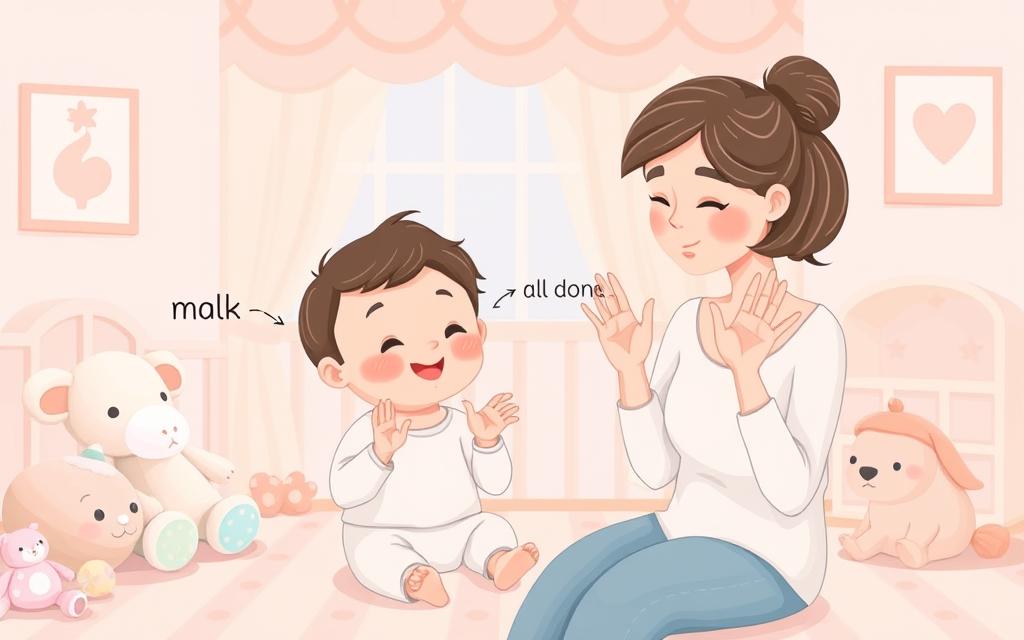
Mealtime signs are a great place to begin. Signs like “eat,” “drink,” and “more” are useful. They help your baby tell you they’re hungry or want more.
Mealtime Signs
- Eat
- Drink
- More
Comfort and Emotion Signs
- Hug
- Kiss
- Sleep
Daily Routine Signs
- Bath
- Book
- Play
Adding these signs to your daily routine helps your baby’s communication skills. It also makes your bond stronger. Be patient and consistent when teaching baby sign language. If you need help, don’t hesitate to ask.
| Sign | Meaning |
|---|---|
| Eat | To eat or food |
| Drink | To drink or water |
| More | To ask for more |
Common Challenges and Solutions in Baby Signing
Teaching babies to sign can be tough. Parents often face challenges like not being consistent. This might happen because they’re busy or don’t get help from others.
Some worry they started too late. But, infant communication is always ongoing. It’s never too late to begin. Another problem is when different caregivers use different signs. This can confuse the baby.
To solve these problems, parents can try a few things:
- Make signing a regular part of your routine, like during meals or bedtime.
- Play and talk with your baby using baby signing. Always respond when they try to communicate.
- Talk to other caregivers to make sure everyone uses the same signs.
By knowing these common issues and finding ways to fix them, parents can help their babies learn to sign. This creates a supportive space for infant communication and strengthens their bond through baby signing.
| Challenge | Solution |
|---|---|
| Consistency issues | Establish a regular signing routine |
| Late starting concerns | Start teaching baby sign language as soon as possible |
| Multiple caregiver coordination | Communicate with other caregivers to ensure consistency |
Creating a Supportive Learning Environment
To help your baby learn baby sign language basics, create a supportive space. Make your home signing-friendly, engage with your baby, and encourage learning. This will help your baby develop strong infant communication skills.
Here are some tips to create a supportive learning environment:
- Set aside dedicated time for signing and communication
- Use visual aids and props to make learning fun and engaging
- Encourage your baby to ask questions and explore their surroundings
Remember, every baby learns at their own pace. Be patient and don’t hesitate to seek help if needed. With consistency and practice, your baby will master baby sign language basics and develop strong infant communication skills.
By following these tips and creating a supportive learning environment, you’ll help your baby thrive. Always keep in mind that learning should be fun and enjoyable for both you and your baby.
| Age | Sign Language Milestones |
|---|---|
| 6-9 months | Begins to understand and imitate simple signs |
| 9-12 months | Starts to use signs to communicate basic needs |
| 1-2 years | Expands vocabulary and uses signs to express emotions and wants |
Tracking Your Baby’s Sign Language Progress
Teaching your baby sign language is a fun journey. It’s important to track their progress. This means watching for developmental milestones and knowing when to introduce new signs. Using baby sign language techniques helps tailor your teaching to your baby’s needs.
Keeping a signing journal is a great way to monitor progress. You can use a notebook or a digital app to record signs, when they were first used, and any interesting observations. This journal helps you see patterns, track progress, and make smart decisions about teaching baby sign language. Look out for these milestones:
- First signs: When your baby starts using their first signs, such as “milk” or “more.”
- Vocabulary expansion: As your baby’s signing vocabulary grows, you’ll notice them using more complex signs and combining them to communicate.
- Improved communication: When your baby starts using signs to initiate conversations or express their needs and wants.
Tracking your baby’s progress and using effective baby sign language techniques creates a supportive learning environment. This environment helps their language development and strengthens your bond. Be patient, consistent, and responsive to your baby’s needs. This will help them master teaching baby sign language.
| Age | Sign Language Milestones |
|---|---|
| 6-9 months | First signs, such as “milk” or “more.” |
| 9-12 months | Vocabulary expansion, combining signs to communicate. |
| 1-2 years | Improved communication, using signs to initiate conversations. |
Incorporating Sign Language into Daily Routines
As you start your baby signing journey, it’s key to add sign language to your daily routines. This makes your baby more familiar with infant communication and baby sign language basics. By making sign language a part of your daily talks, you create a supportive space for your baby to learn and grow.
Mealtime Signing Activities
Mealtime is a perfect chance to practice baby signing with your baby. Start by teaching signs for foods like “milk” or “banana.” As your baby gets better, introduce signs like “eat” or “drink.”
Bedtime Signing Rituals
Bedtime is also a great time for infant communication with your baby. Create a calming bedtime routine with sign language. Teach your baby the sign for “sleep” or “night-night” to help them relax and get ready for bed.
Playtime Sign Integration
Playtime is a great chance to practice baby sign language basics with your baby. Use signs like “ball” or “toy” while playing. This helps your baby improve their infant communication skills and makes playtime more fun.
| Activity | Sign Language Opportunity |
|---|---|
| Mealtime | Teach signs for different foods |
| Bedtime | Create a calming bedtime routine with sign language |
| Playtime | Incorporate signs into playtime activities |
Conclusion: Embracing the Journey of Baby Sign Language
Starting your journey with baby sign language is exciting and rewarding. It brings many benefits and joys. You’ll see less frustration and tantrums, better thinking skills, and a stronger bond with your child. Plus, your baby will start talking earlier.
There might be some tough spots, like keeping up with consistency or working with others. But with patience and a supportive place to learn, you can get through it. Seeing your baby grow and reach new milestones will keep you excited and involved.
Discover the magic of baby sign language and the special bond it creates. This journey will help your child communicate better in the future. It will also make your relationship even stronger. Start this adventure with joy, and watch your baby’s language skills grow. This will lead to a lifetime of meaningful talks and connections.